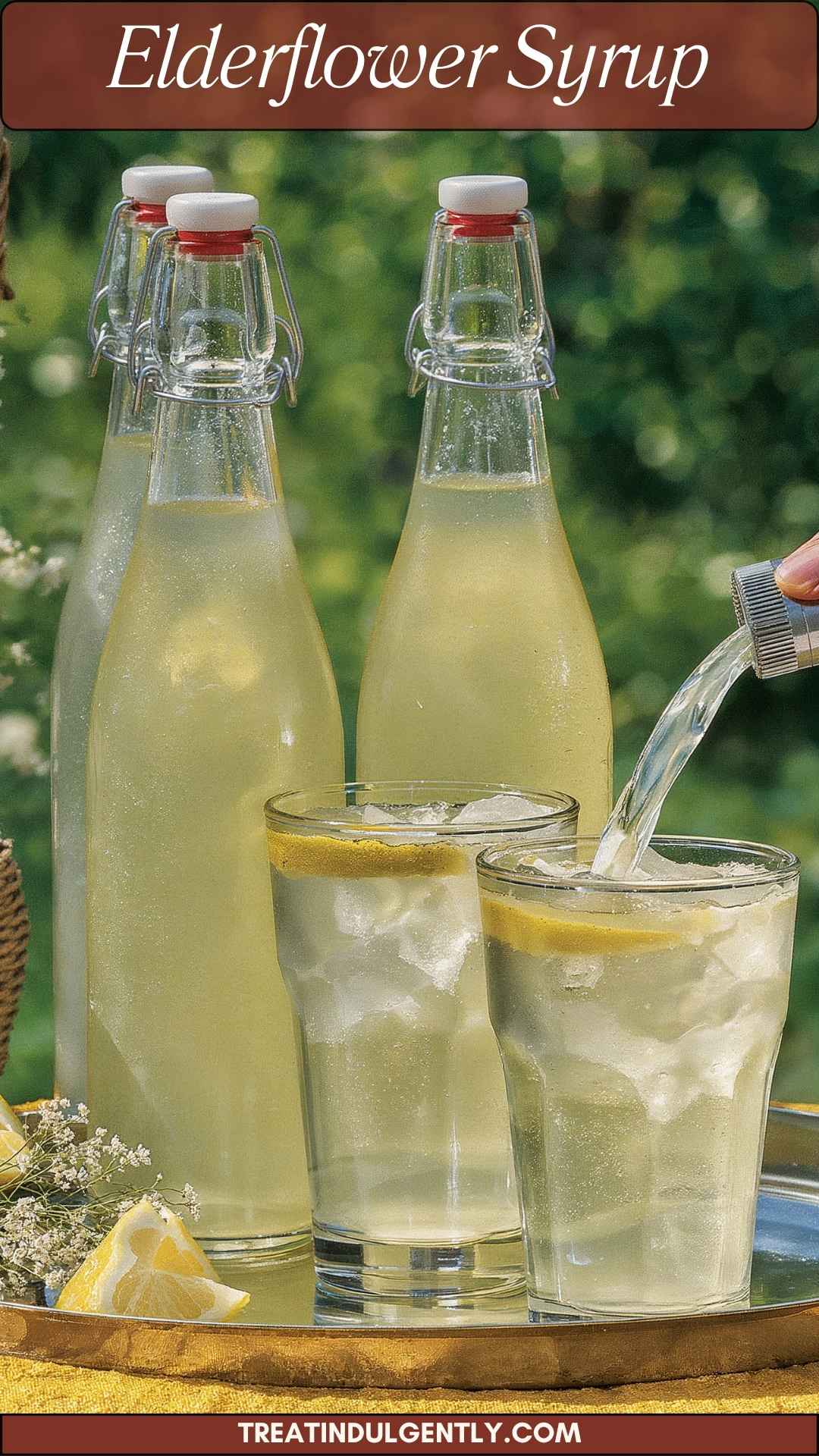
Ingredients
Method
Step 1: Collect Your Elderflowers
- The first step is the most fun! Go out and gather fresh elderflower heads. When selecting them, make sure they’re completely open, fragrant, and free of any blemishes. Be mindful of where you’re picking; ensure it’s pesticide-free and safe.
Step 2: Prepare Your Ingredients
- Once you have your elderflowers, rinse them gently under cold water to remove any bugs or dirt. It’s crucial to keep the heads whole; this helps maintain their delicate flavor. Set them aside in a large bowl.
Step 3: Create the Syrup Base
- In a medium saucepan, combine 4 cups of granulated sugar with 1 quart of purified water. Heat this mixture over medium heat, stirring until the sugar fully dissolves. This creates the base syrup.
Step 4: Infuse the Flavor
- Once your sugar-water mix is boiling, remove it from the heat. Pour the hot syrup over the elderflower heads in the bowl. Add in the lemon juice, zest, citric acid, lemon verbena, and mint if desired. Stir gently to combine, and then cover the bowl with a clean cloth. Let this infusion sit for 24-48 hours in a cool place.
Step 5: Strain the Syrup
- After infusing, strain the mixture through a fine mesh sieve or cheesecloth into a clean glass jar. Discard the elderflower heads and any solids from the syrup. If you like, you can double strain it to ensure clarity.
Step 6: Store the Syrup
- Store your elderflower syrup in sterilized bottles or jars. Make sure you leave some headspace to allow for temperature changes. Once cooled, seal tightly and store in the refrigerator.
Notes
- Freshness is Key: Use fresh elderflowers for the best flavor. Dried elderflowers won't provide the same sweet and fragrant notes.
- Straining: To achieve a clear syrup, ensure you strain it well. Avoid pressing the flowers, which can release unwanted bitterness.
- Experiment with Herbs: Feel free to play with different herbs. Thyme or basil can add unique flavors that complement the elderflower.
- Adjust Sweetness: If you prefer a less sweet syrup, reduce the sugar gradually. You can always add more if needed.
- Keep Everything Clean: Ensure that all of your equipment, including jars and utensils, is thoroughly sanitized to extend the shelf life of your syrup.