This post contains affiliate links. As an Amazon Associate I earn from qualifying purchases.
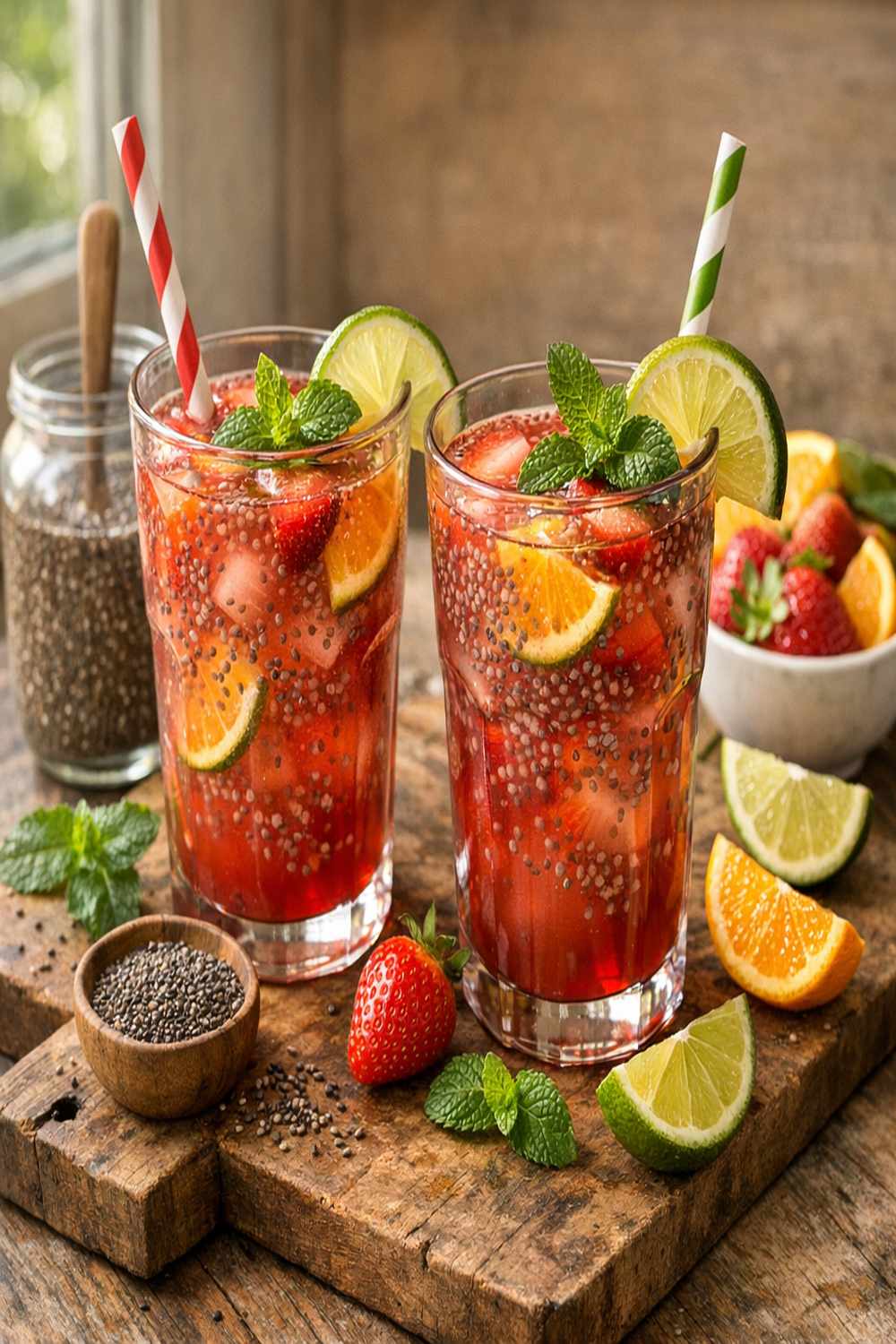
Whether you’re keto, vegan, or gluten-free, you don’t have to miss out on a refreshing, nutrient-dense drink that truly nourishes your body. I created this chia juice recipe specifically for anyone who’s ever felt excluded from simple pleasures at the table. As a registered dietitian, I know firsthand that dietary restrictions don’t mean deprivation—they mean intentionality. This drink celebrates that philosophy while delivering hydration and whole-food nutrition in every single sip. If you’re looking for other ways to indulge mindfully, my blender sorbet recipe offers another refreshing option that adapts beautifully across dietary needs.
The Ultimate Chia Juice Recipe for Every Diet (Keto, Vegan, Gluten-Free)
I’ll never forget the afternoon my cousin Maria came to visit from out of state. She’d recently gone vegan and seemed almost apologetic about it when she arrived. My family was hosting one of our legendary kitchen gatherings—the kind where we’d spend hours cooking together, testing flavors, and celebrating life through food. Maria hung back, worried she’d be a burden at the table. That’s when I realized something profound: dietary differences shouldn’t create distance; they should inspire creativity. I went to my kitchen and started experimenting with what I already had—seeds, citrus, water—and created a drink so simple, so naturally adaptable, that every single person at that table could enjoy it their own way. Maria had tears in her eyes when I handed her a glass customized just for her needs. That moment changed how I approach every recipe I develop. This chia juice has become my love letter to everyone who’s ever felt they had to compromise on joy because of their dietary choices.
Which Version Is Right for You?
The beauty of this chia juice recipe lies in its flexibility. The base is naturally compliant with virtually every eating philosophy you can imagine, but the sweetener and liquid components are where personalization happens. Let me walk you through each version so you can choose what aligns with your goals and lifestyle.
- Keto Version – Swap honey for monk fruit or erythritol (zero carbs, maintains ketosis). The chia seeds themselves contain only 2g net carbs per tablespoon, making them a keto powerhouse. Expect a slightly different sweetness profile—monk fruit has a subtle cooling sensation that some people love and others find unusual at first.
- Vegan Version – Use maple syrup, agave nectar, or coconut sugar instead of honey. All three work beautifully and add their own subtle flavor complexity. The result is equally hydrating and mineral-rich without any animal products.
- Gluten-Free Version – This is naturally gluten-free as written, but be cautious if you’re buying pre-mixed chia seed products. Always check labels for cross-contamination warnings, especially if you have celiac disease.
- Dairy-Free Version – Already dairy-free by default. The water base makes this accessible for anyone with lactose intolerance or milk allergies. You’re getting pure hydration without any processed ingredients.
The Base Ingredients (Works for All Versions)
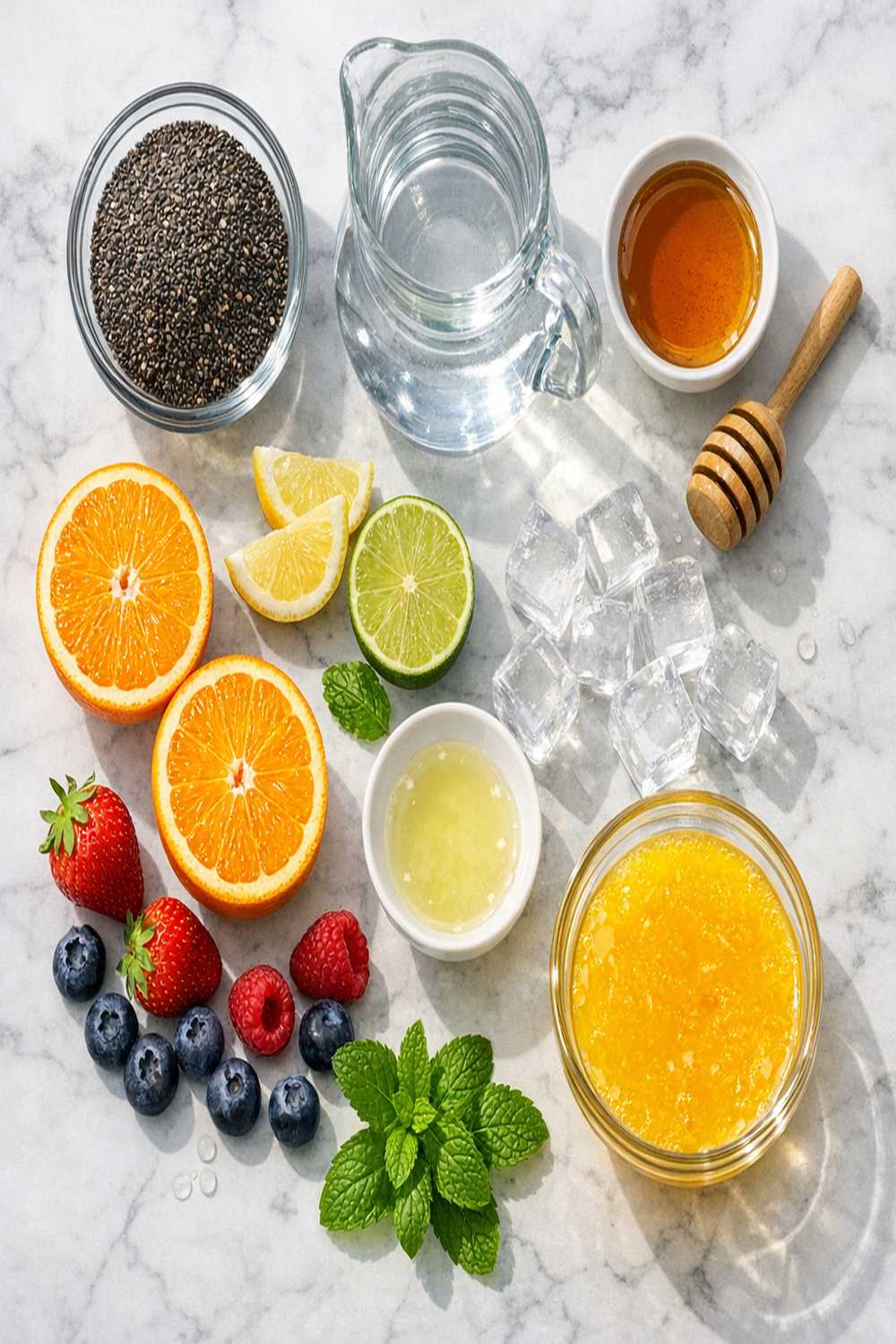
These ingredients form the foundation of every version of this recipe. I’ve chosen each one deliberately—high-quality, minimally processed, and each contributing something specific to your hydration and nutritional profile. Most of these are pantry staples in my kitchen, and I encourage you to source them thoughtfully.
- Optional: ¼ teaspoon fresh ginger (grated, adds subtle warmth and aids digestion)
- ½ small lime (freshly juiced for brightness; Persian limes work beautifully)
- ½ teaspoon raw honey (unheated and unpasteurized when possible; adds gentle sweetness and trace minerals)
- 1 pinch pink Himalayan salt (balances flavor and replaces electrolytes lost during hydration)
- 2 cups filtered water (room temperature or chilled, depending on season and preference)
- 1 tablespoon raw chia seeds (whole seeds hydrate better than ground; look for organic, third-party tested brands)
- Optional: 3-4 fresh mint leaves (bruised gently before adding, enhances freshness)
Dietary Substitution Chart
This chart gives you the exact swaps to make for each dietary approach. I’ve tested every single combination, and each one maintains the intended flavor profile while honoring your dietary goals. Think of this as your personalized recipe card—keep it handy.
- Pink Himalayan salt -> All versions: sea salt or kosher salt in equal measure works | Keto: essential for electrolyte balance during adaptation | Vegan: no changes needed
- Water base -> Keto: coconut water for electrolytes, but limit to 1 cup (adds 4g carbs) | Vegan: use filtered water as written | Gluten-Free: filtered water or spring water | Dairy-Free: any water type works
- Honey -> Keto: monk fruit sweetener (⅓ teaspoon for same sweetness) | Vegan: pure maple syrup (½ teaspoon) | Gluten-Free: honey is naturally GF (use as written) | Dairy-Free: any sweetener listed above
- Lime juice -> All versions: lemon juice works as substitute (slightly more acidic) | Keto: no carb concerns with citrus juice in this quantity | Vegan: no changes needed
How to Make Chia Juice Recipe Your Way
This is where the magic happens. The method itself is forgiving and hard to mess up, but I’m going to walk you through it with the precision I use in my nutrition practice. Small details matter when you’re working with whole seeds that need proper hydration. You’ll notice I mention timing and texture checks—these are critical for getting the right consistency.
Step 1: Combine Your Liquid Base and Sweetener
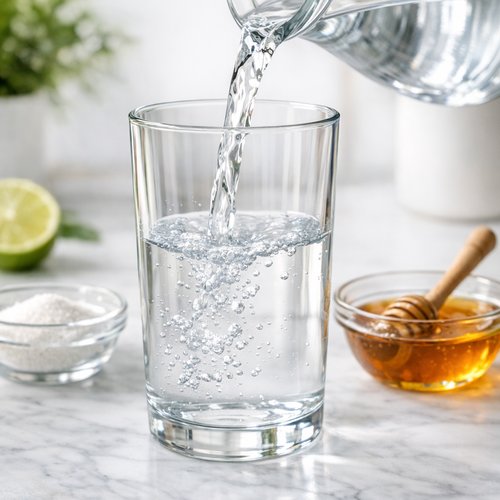
Pour your 2 cups of filtered water into a tall glass (I prefer 16-ounce drinking glasses with straight sides—they make it easier to see the seeds hydrating). Add your sweetener of choice now while the water is still. This allows the sweetener to dissolve completely without any grittiness. If you’re making the keto version, use ⅓ teaspoon monk fruit and stir for about 20 seconds until fully dissolved. For the vegan version, use ½ teaspoon pure maple syrup—maple dissolves slightly slower than honey, so give it 30 seconds of stirring. For the standard version, use ½ teaspoon raw honey.
Step 2: Add Your Citrus and Salt
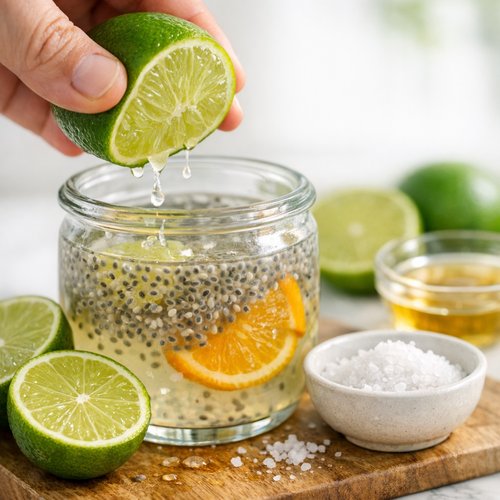
Squeeze your lime juice fresh directly into the glass—never use bottled lime juice for this recipe. The fresh juice carries aromatic compounds that bottled versions simply can’t match. I typically get about ½ ounce of juice from half a small lime. Add your pinch of pink Himalayan salt now. The salt serves two purposes: it balances the acidity of the lime and adds electrolytes (sodium, potassium, magnesium) that support hydration at the cellular level. This is where my nutrition background shines through—these trace minerals are essential, especially if you’re following a keto diet where electrolyte management is crucial.
Step 3: Add the Chia Seeds and Initial Stir
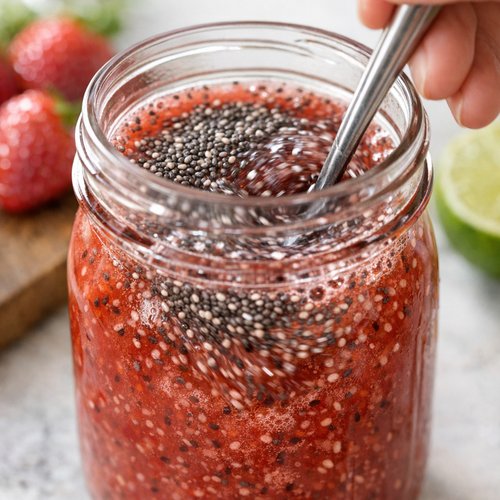
Pour your 1 tablespoon of raw chia seeds directly into the liquid. Now comes the important part: stir vigorously for about 45 seconds. This initial aggressive stirring prevents the seeds from clumping together at the bottom of the glass. Chia seeds have a gel-forming coating (mucilage) that activates when it contacts liquid, and if you don’t stir immediately, they’ll stick together into clumps rather than distributing evenly. Use a long spoon and really work it—scrape the bottom of the glass, break up any forming clumps, and ensure every seed is separate and suspended.
Step 4: The First Rest Period
Set your glass aside for 10 minutes. During this time, the chia seeds will begin absorbing water and developing that characteristic gel layer. Don’t touch it—this is when the magic happens at the molecular level. The seeds will settle somewhat, which is completely normal and expected.
Step 5: The Critical Second Stir
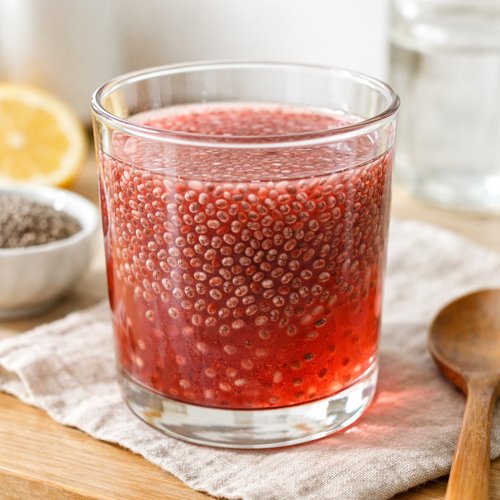
After 10 minutes, give your chia juice another good stir. You’ll notice the seeds have absorbed liquid and settled toward the bottom. This is your chance to redistribute them. Stir for 30-45 seconds, again scraping the bottom and sides. This prevents that dense layer of seeds from forming at the bottom, which would create an unpleasant texture when you drink it. You’re looking for even distribution throughout the liquid.
Step 6: The Final Hydration Wait
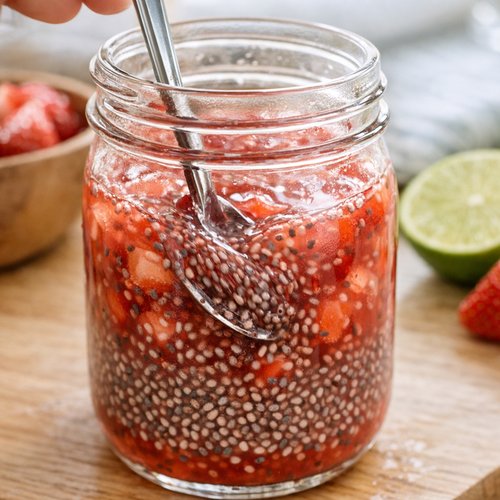
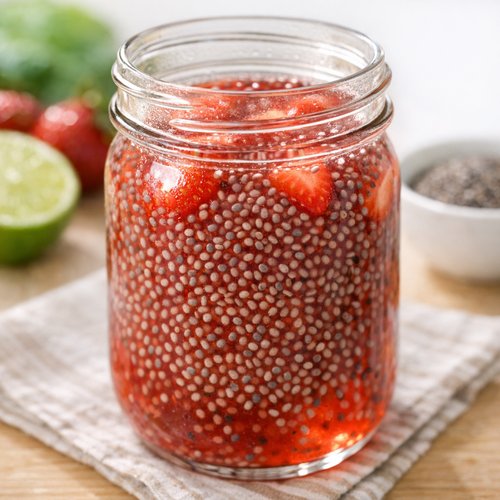
Now set it aside for another 5 minutes. Total time from start to finish is about 15 minutes. During this final period, the seeds continue hydrating. When fully hydrated, each chia seed should look like a tiny sphere surrounded by a translucent jelly coating—almost like a miniature tapioca pearl. This gel coating is made of soluble fiber, which supports digestive health and creates that luxurious mouthfeel.
Step 7: The Final Stir and Serve
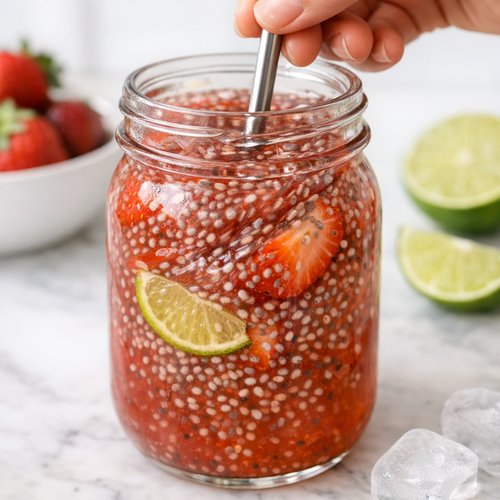
Give your chia juice one final stir—just 15-20 seconds to ensure even distribution. Drink it immediately after this final stir. The optimal texture happens right now, while the seeds are perfectly hydrated but haven’t started to over-absorb liquid. Pour into a fresh glass if you’d like a presentation moment (I always do—food is about experience, not just nutrition), add a lime wheel if you’re feeling luxurious, and savor it slowly. Don’t rush through this. Notice the texture, the brightness of the citrus, the mineral quality from the salt.
Expert’s Nutritional Tip: Why Chia Seeds Are My Secret Weapon
As a registered dietitian, I’ve spent years studying nutrient bioavailability—essentially, how well your body can actually use the nutrients in food. Chia seeds are remarkable because they deliver their benefits in a form your body recognizes immediately. One tablespoon contains approximately 3 grams of plant-based omega-3 fatty acids (ALA), 2 grams of complete protein, and 2.4 grams of fiber. What makes this special is the gel-forming property we developed through the hydration process. When those seeds hydrate, you’re creating a matrix that slows down digestion, which means more stable blood sugar and prolonged satiety. This is especially valuable if you’re following a keto protocol—the fiber supports ketone production without interfering with ketosis, and the minimal net carbs make this an ideal hydration choice. I recommend this drink particularly for anyone managing energy levels throughout the day.
Nutrition Comparison Across Versions
Let me give you the precise nutritional breakdown for each version, based on USDA FoodData Central values. These numbers reflect the complete drink as prepared with each specific sweetener. I’ve included net carbs for anyone tracking macronutrients on a keto protocol.
- Standard Version (with honey): 64 calories | 2.9g fat | 7.8g carbohydrates | 2.4g fiber | 1.6g net carbs | 1.9g protein | Excellent source of omega-3s and electrolytes
- Keto Version (with monk fruit): 52 calories | 2.9g fat | 1.2g carbohydrates | 2.4g fiber | 0g net carbs (monk fruit doesn’t impact blood glucose) | 1.9g protein | Ideal for maintaining ketosis while supporting hydration
- Vegan Version (with maple syrup): 72 calories | 2.9g fat | 10.1g carbohydrates | 2.4g fiber | 2.2g net carbs | 1.9g protein | Adds polyphenols from maple that support antioxidant status
- Gluten-Free Version: Identical nutrition to standard version (64 calories). Already naturally gluten-free when using certified-clean chia seeds
- Dairy-Free Version: Identical nutrition to standard version. No dairy involvement means no lactose concerns and compatible with any animal-based allergy profile
The chia seeds contribute the same nutritional profile across all versions—they’re the nutritional anchor. What changes is the sweetener, which is where you see carbohydrate variation. Notice that even the highest-carb version sits at under 10g total carbohydrates, making this drink appropriate for virtually any macronutrient approach.
How Each Version Tastes Different
I want to be honest about flavor here—this isn’t a sweetened juice where you can hide behind sugar. You’re tasting real ingredients, and each version has a distinct character.
The standard version with honey tastes like what it is: fresh lime, water, and a gentle floral sweetness. Honey adds subtle complexity without overpowering. It’s the most balanced version, and if you’re new to this drink, I’d start here. The chia seeds create a texture that’s almost creamy despite containing zero dairy.
The keto version with monk fruit has a slightly different sweetness profile. Monk fruit arrives with a subtle cooling sensation—some people describe it as the aftertaste of artificial sweeteners, though monk fruit is actually a natural extract. It’s not unpleasant; it’s just different. The cooling effect becomes pleasant once you expect it. The citrus brightness becomes more pronounced because the sweetness isn’t as round and full as honey provides.
The vegan version with maple syrup tastes noticeably richer. Maple adds a subtle woodsy undertone that complements lime beautifully. If you love maple in your coffee or oatmeal, you’ll adore this version. The trade-off is that maple doesn’t dissolve quite as quickly as honey, so you might taste slight sweetness variations if you don’t stir thoroughly enough. The chia gel texture is identical, but the overall drinking experience feels more indulgent.
All versions share that luxurious, almost creamy mouthfeel from the hydrated chia seeds. That texture is non-negotiable—it’s what makes this drink feel like more than water with flavor.
Common Mistakes to Avoid
I’ve made every mistake in this list, and learned from each one. Let me save you the frustration.
Mistake 1: Not stirring immediately after adding seeds. This is the biggest culprit behind disappointing chia juice. If you don’t stir right away, those seeds clump together at the bottom into a gloppy mass that’s unpleasant to drink. The solution is exactly what I outlined: immediate, aggressive stirring. Scrape that glass bottom.
Mistake 2: Using pre-ground chia seeds. Ground chia seeds create a murky, gritty texture that tastes like sand. Whole seeds develop that beautiful gel coating and create a luxurious mouthfeel. Always buy whole seeds. If you see ground chia, keep walking.
Mistake 3: Waiting too long before drinking. If you let this sit for 30 minutes, the seeds continue absorbing liquid and the texture becomes overly thick and gel-like. The optimal window is right after that final stir at the 15-minute mark. Drink it then.
Mistake 4: Forgetting the salt. That single pinch of pink Himalayan salt is not negotiable. It transforms this from tasting like “water with stuff in it” to tasting intentional and balanced. Salt enhances all the other flavors and replaces electrolytes. Don’t skip it.
Can I Store Chia Juice Recipe?
Yes, but with important caveats about texture. Chia juice is best consumed immediately after that final stir. If you make it ahead, the seeds continue absorbing water and the drink becomes progressively thicker and more gel-like.
For short-term storage (up to 24 hours): Prepare the liquid base, sweetener, lime juice, and salt separately. Keep the chia seeds separate in a sealed container. When you’re ready to drink, add the seeds to the liquid and follow the hydration process. This gives you fresh texture every time.
For pre-made storage (if you must): Prepare the complete drink and refrigerate in a sealed glass container for up to 8 hours. After 8 hours, the texture becomes unpleasantly thick and separated. You’ll need to stir vigorously before drinking. Beyond 12 hours, I don’t recommend it—the experience changes too much.
For meal prep: Make the liquid base (water + sweetener + lime juice + salt) in bulk and store in the refrigerator for up to 3 days. Each morning, pour 2 cups of the prepared liquid into a fresh glass, add 1 tablespoon whole chia seeds, and follow the 15-minute hydration process. This keeps the texture perfect while still giving you convenience.
My preferred approach is the meal-prep liquid method. It takes 5 minutes to prepare the base, and then each drink takes just 15 minutes of hands-off time.
Make-Ahead Guide: Strategic Preparation for Your Week
From my experience managing busy nutrition practice days, I’ve developed a system that keeps me hydrated and nourished without becoming a chore. Here’s exactly what I do.
Sunday Preparation (10 minutes total): I prepare three batches of the liquid base. I use a 32-ounce glass measuring cup and combine 6 cups filtered water, 1.5 teaspoons of my chosen sweetener (let’s say honey), 1.5 limes (juiced), and 3 pinches of pink Himalayan salt. I stir this until fully combined and pour it into three 16-ounce glass containers with lids. Label each one with the preparation date. Store these in the refrigerator.
Daily Preparation (3 minutes total): Each morning, I pour one prepared liquid base into my favorite drinking glass. I add 1 tablespoon of whole chia seeds, stir for 45 seconds, wait 10 minutes, stir again for 30 seconds, wait 5 minutes, give it a final stir, and drink. The ritual of this process is meditative—it’s my moment before the day begins.
For Busy Weeks (even faster): On nights when I know the next day will be chaotic, I prepare individual drinks with the liquid base and seeds mixed together. I store these in sealed glass containers in the refrigerator. They won’t have optimal texture after more than 6 hours, but they’re still perfectly drinkable. When I need them, I simply grab one, give it a vigorous stir, and consume immediately.
Pro Tip from My Kitchen: I keep a small glass jar of pre-portioned chia seeds (1 tablespoon each, separated by parchment) in my pantry. This means I never have to measure—I just grab a portion, add it to my prepared liquid, and begin the hydration process. This small system eliminates friction and makes the drink accessible even on my most demanding days.
Seasonal Variations: Adapting Your Chia Juice Throughout the Year
One thing I’ve learned through years of developing recipes is that the same dish tastes and feels different depending on the season. Chia juice is surprisingly adaptable. Here’s how I adjust it.
Spring Version: Spring is about renewal and brightness. I add 3-4 fresh mint leaves (bruised gently) and switch to lemon juice instead of lime for a sharper brightness. Sometimes I’ll add a tiny pinch of cardamom—just ⅛ teaspoon—which adds an almost floral quality. I use this version chilled but not ice-cold; room temperature better showcases the delicate flavor additions.
Summer Version: Summer demands maximum refreshment. I prepare my liquid base as written but add it to a glass packed with ice. I muddle 5-6 fresh mint leaves directly in the liquid and squeeze additional lime to intensify the brightness. Sometimes I’ll add 1 teaspoon of fresh ginger juice (grated ginger pressed through a fine mesh) for a subtle spice. The chia seeds take on a different character when chilled—they feel even more luxurious and creamy.
Fall Version: This is my favorite seasonal adaptation. I swap the lime for ½ small orange (freshly juiced) and add ¼ teaspoon fresh ginger. The sweetener switches to maple syrup if I’m doing the vegan version—maple tastes absolutely right in autumn. I serve this at room temperature and sometimes add a small cinnamon stick as a stirrer and flavor infuser. The overall feeling becomes warmer, more grounding.
Winter Version: In winter, I actually heat the water to about 105°F (slightly warmer than body temperature but not hot). I prepare it as a warming drink rather than a cold refresher. I add ⅓ teaspoon fresh ginger, a tiny pinch of turmeric for its warm earthiness, and use honey as the sweetener. The chia seeds still hydrate properly in warm liquid, creating almost a warm pudding-like experience. I’ll occasionally add a stick of cinnamon as a stirrer. This version feels less like juice and more like a nourishing ritual.
Each seasonal variation keeps the nutritional integrity intact while honoring what my body intuitively craves at different times of year. This is mindful eating in practice.
What to Serve With Chia Juice Recipe?
Chia juice works beautifully as a standalone hydration moment, but it also pairs gorgeously with certain foods. The citrus brightness and subtle sweetness complement specific breakfast and snack items wonderfully. If you’re building a complete morning, consider pairing this with something more substantial. My salted peanut butter chip cookies might seem like an odd pairing, but hear me out—the slight saltiness and rich texture actually balance the lightness of chia juice beautifully.
- Fresh fruit with yogurt – Works with all versions. The hydration from chia juice supports digestion of the protein and probiotics in yogurt. Keto version pairs particularly well since full-fat yogurt provides satisfying fat content.
- Toast with almond butter – The nuttiness contrasts perfectly with the lime brightness. Gluten-free version pairs well with gluten-free toast alternatives. Vegan version works when using almond butter without dairy additives.
- Simple scrambled eggs – The chia juice’s salt complements egg richness. Keto version makes this a complete, balanced breakfast with proper macronutrients and hydration.
- Sliced cheese and olives – Mediterranean-inspired pairing. Try my warm sautéed olives alongside chia juice for a sophisticated moment. The salt in both creates beautiful harmony.
- Fresh berries – Simple and elegant. The tartness of berries mirrors the citrus in the juice, creating a cohesive flavor experience. Keto version pairs well with lower-sugar berries like raspberries and blackberries.

Chia Juice Recipe
Ingredients
Method
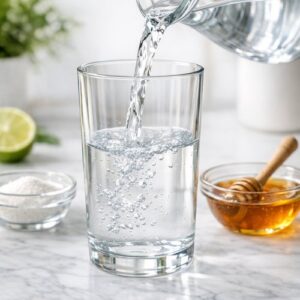
- Pour your 2 cups of filtered water into a tall glass (I prefer 16-ounce drinking glasses with straight sides—they make it easier to see the seeds hydrating). Add your sweetener of choice now while the water is still. This allows the sweetener to dissolve completely without any grittiness. If you're making the keto version, use ⅓ teaspoon monk fruit and stir for about 20 seconds until fully dissolved. For the vegan version, use ½ teaspoon pure maple syrup—maple dissolves slightly slower than honey, so give it 30 seconds of stirring. For the standard version, use ½ teaspoon raw honey.
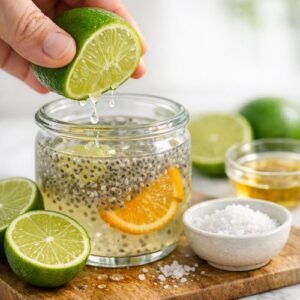
- Squeeze your lime juice fresh directly into the glass—never use bottled lime juice for this recipe. The fresh juice carries aromatic compounds that bottled versions simply can't match. I typically get about ½ ounce of juice from half a small lime. Add your pinch of pink Himalayan salt now. The salt serves two purposes: it balances the acidity of the lime and adds electrolytes (sodium, potassium, magnesium) that support hydration at the cellular level. This is where my nutrition background shines through—these trace minerals are essential, especially if you're following a keto diet where electrolyte management is crucial.
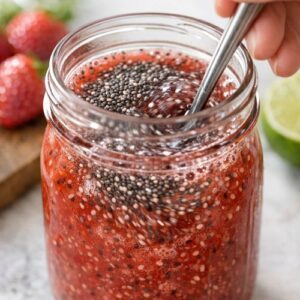
- Pour your 1 tablespoon of raw chia seeds directly into the liquid. Now comes the important part: stir vigorously for about 45 seconds. This initial aggressive stirring prevents the seeds from clumping together at the bottom of the glass. Chia seeds have a gel-forming coating (mucilage) that activates when it contacts liquid, and if you don't stir immediately, they'll stick together into clumps rather than distributing evenly. Use a long spoon and really work it—scrape the bottom of the glass, break up any forming clumps, and ensure every seed is separate and suspended.
- Set your glass aside for 10 minutes. During this time, the chia seeds will begin absorbing water and developing that characteristic gel layer. Don't touch it—this is when the magic happens at the molecular level. The seeds will settle somewhat, which is completely normal and expected.
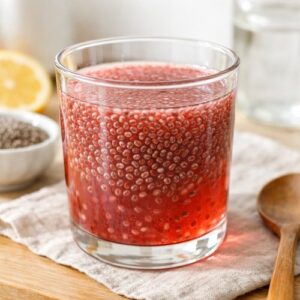
- After 10 minutes, give your chia juice another good stir. You'll notice the seeds have absorbed liquid and settled toward the bottom. This is your chance to redistribute them. Stir for 30-45 seconds, again scraping the bottom and sides. This prevents that dense layer of seeds from forming at the bottom, which would create an unpleasant texture when you drink it. You're looking for even distribution throughout the liquid.
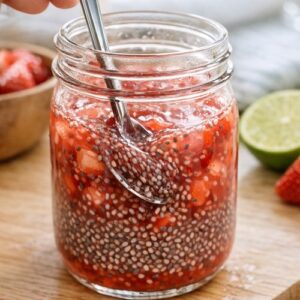
- Now set it aside for another 5 minutes. Total time from start to finish is about 15 minutes. During this final period, the seeds continue hydrating. When fully hydrated, each chia seed should look like a tiny sphere surrounded by a translucent jelly coating—almost like a miniature tapioca pearl. This gel coating is made of soluble fiber, which supports digestive health and creates that luxurious mouthfeel.
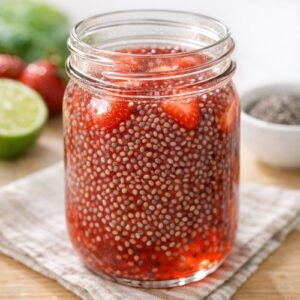
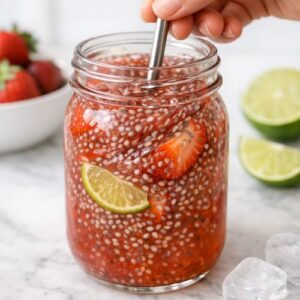
- Give your chia juice one final stir—just 15-20 seconds to ensure even distribution. Drink it immediately after this final stir. The optimal texture happens right now, while the seeds are perfectly hydrated but haven't started to over-absorb liquid. Pour into a fresh glass if you'd like a presentation moment (I always do—food is about experience, not just nutrition), add a lime wheel if you're feeling luxurious, and savor it slowly. Don't rush through this. Notice the texture, the brightness of the citrus, the mineral quality from the salt.
FAQs
Can I make this ahead and freeze it?
I don’t recommend freezing prepared chia juice. The texture transforms dramatically when frozen—the chia seeds become hard and unpleasant rather than maintaining that luxurious gel coating. However, you can absolutely freeze the liquid base (water + sweetener + lime juice + salt) in ice cube trays. Each cube represents about ¼ cup of base. When you’re ready for a drink, let 8 cubes thaw to room temperature, pour into a glass, add 1 tablespoon chia seeds, and follow the hydration process. This gives you convenience without compromising texture.
What if my chia seeds won’t hydrate properly?
This almost always indicates stale seeds. Chia seeds have a shelf life—typically 12-18 months if stored properly in a cool, dark place. Old seeds won’t hydrate the same way. Check your purchase date. Also ensure you’re using whole seeds, not ground. If your seeds are fresh and whole but still not hydrating, try stirring more vigorously initially. Sometimes seeds need that aggressive initial stirring to activate the mucilage properly. If none of this works, the seeds are likely past their prime—time for a fresh bag.
Is this appropriate for kids?
Absolutely, with one important caveat. Chia seeds can be a choking hazard for very small children (under 3 years). For older kids, this is a wonderful hydration option. I recommend introducing it slowly—maybe start with ½ tablespoon of seeds rather than a full tablespoon—to let their digestive systems adjust. The fiber content in chia is beneficial but can be too much too quickly for little systems. Older kids usually love the texture and the fact that they feel like they’re drinking something special. Most kids I know prefer the maple syrup version (vegan version).
Why must I use filtered water instead of tap water?
The seeds will hydrate fine in tap water—this isn’t a safety issue. However, tap water often contains chlorine and sometimes mineral content that can affect the final taste. Since this drink has so few ingredients, each one matters dramatically. Filtered water gives you a clean slate so the lime, salt, and chia flavor shine through without any background competition. If filtered water isn’t available, whatever water you have access to will work; just understand that it might taste subtly different.
Can I use chia juice as a pre-workout hydration drink?
Yes, and I actually recommend it specifically for this purpose. The combination of water, electrolytes (from salt), and carbohydrates (from your chosen sweetener) provides genuine hydration support. The chia seeds add complete protein and omega-3 fatty acids. Drink this 30-45 minutes before your workout. The carbohydrates provide immediate energy, while the protein supports muscle recovery during and after exercise. Keto athletes sometimes modify this by eliminating the sweetener—just water, salt, chia, and lime—which provides hydration and electrolytes without carbohydrate energy. This works beautifully for low-intensity movement.
More Diet-Friendly Recipes
- my go-to banana bread – A nutrient-dense breakfast cake that adapts beautifully across dietary approaches and pairs wonderfully after chia juice hydration
- Blender Sorbet Recipe – Another refreshing frozen option that works across keto, vegan, and gluten-free diets for when you want something colder and thicker
- Boba Balls Recipe – Similar textural experience to hydrated chia if you want to explore other seed-based beverages and desserts
Final Thoughts: Your Body Deserves Nourishment Without Compromise
Every time I make this chia juice, I think about that afternoon with my cousin Maria. I think about how food should never make anyone feel excluded, limited, or like they’re settling. Dietary restrictions don’t mean restrictions on joy, on flavor, on the experience of savoring something delicious. They simply mean being intentional about your choices.
This recipe exists in that intersection where nutrition meets pleasure. It’s science-backed and dietitian-approved, but it’s also luxurious. Each tiny chia seed carries omega-3 fatty acids and protein. Each pinch of salt carries minerals. Each squeeze of fresh lime carries brightness and a reminder that simplicity can be profound. You don’t need long ingredient lists or complicated techniques to nourish yourself beautifully.
I encourage you to make this drink your own. Try each seasonal variation. Experiment with which sweetener resonates with your palate and your dietary goals. Maybe you’ll make it every morning, or maybe it becomes your ritual drink on Sundays when you have time to slow down. Either way, you’re honoring your body’s need for hydration while celebrating the joy of cooking.
Savor the joy of cooking!