This post contains affiliate links. As an Amazon Associate I earn from qualifying purchases.
This Chicken Jiaozi Recipe brings together Chinese culinary mastery and American home-cooking warmth in a way that honors both traditions while creating something entirely new. I first fell in love with these delicate dumplings during a clinical nutrition rotation at a teaching hospital in Birmingham, where I spent my lunch breaks learning from the cafeteria’s head chef—a woman who had immigrated from Shanghai decades earlier and still prepared jiaozi the way her grandmother taught her. Years later, when I started experimenting with poultry in my own kitchen, I realized that ground chicken thighs (with their luxurious fat content and deep flavor) could transform this ancient recipe into something that felt both reverent and innovatively mine. When you combine the precision of Chinese dumpling-making with the indulgent quality of American pasture-raised proteins, you create a dish that proves mindfulness and decadence absolutely coexist. Like my favorite memories of baking holiday meals with my family, these jiaozi invite you to slow down, get your hands involved, and savor the meditative joy of pleating each wrapper with intention. Whether you’re boiling them for a lighter meal or pan-frying them until golden, this recipe celebrates how two food cultures can honor each other while something magnificent emerges in the middle.
Chicken Jiaozi Recipe: Where Ancient China Meets Modern Kitchens
I remember the exact moment I decided to create my own version of jiaozi. I was preparing a nutrition seminar on traditional proteins across cultures, and I kept returning to how Chinese cuisine has honored the whole bird for thousands of years—particularly the thighs and legs that Western cooking often overlooks. Meanwhile, I was becoming increasingly passionate about sourcing chicken from local farms right here in Alabama, producers who raise birds with genuine care. The collision of these two realizations felt electric: what if I honored the ancient Chinese dumpling-making tradition while celebrating the incredible quality of heritage chicken breeds available to us today?
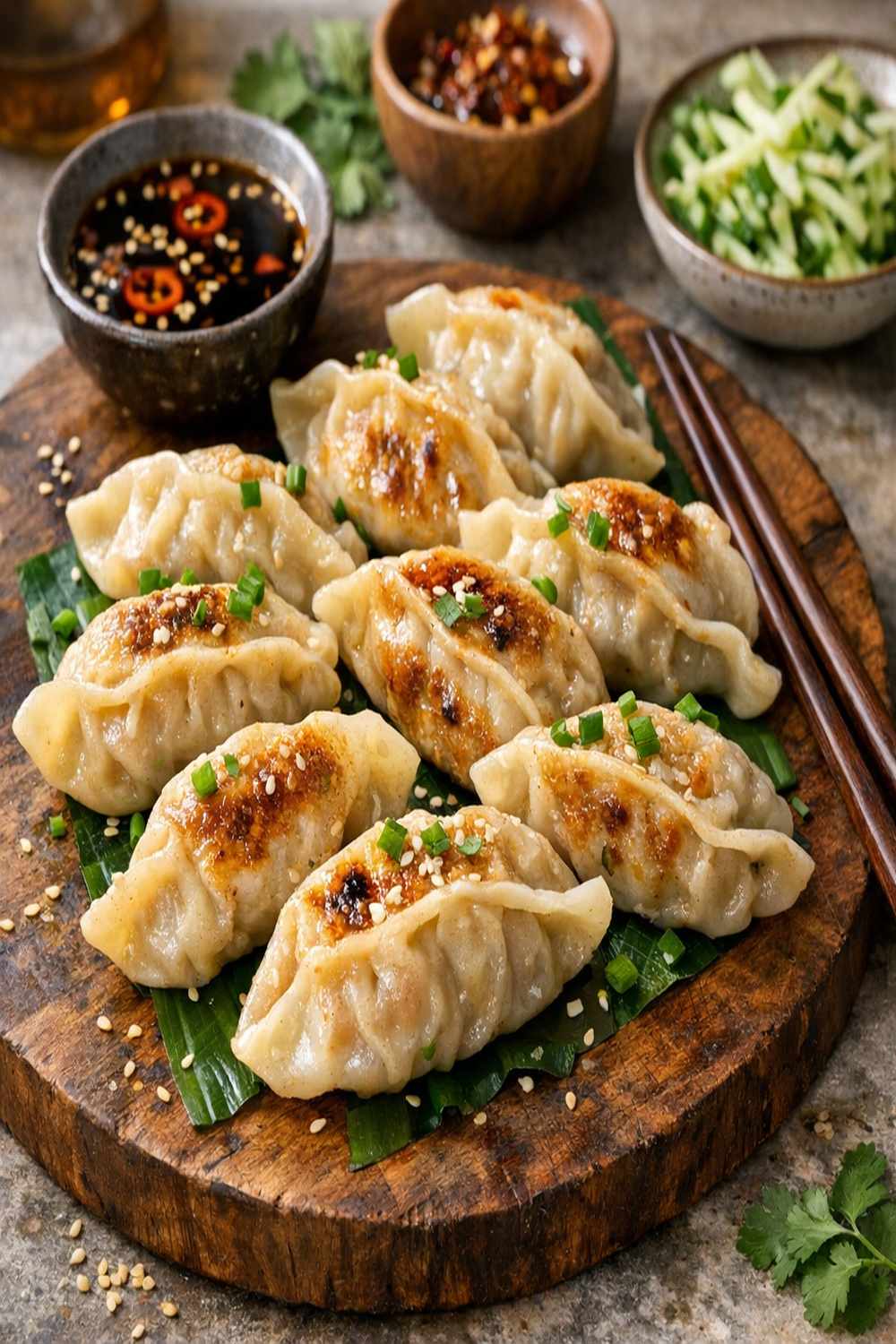
That night in my kitchen, surrounded by my grandmother’s wooden cutting board and a fresh batch of chicken thighs from my favorite local supplier, I started pleating my first batch. The process felt like a conversation between two culinary worlds—the deliberate, mathematical precision of Chinese dumpling-making married to the warm, indulgent abundance I’ve always associated with American home cooking. These dumplings became my love letter to both traditions.
The Two Traditions Behind This Dish
Understanding where jiaozi fit within Chinese culinary history helps us appreciate why this fusion works so beautifully. Jiaozi represent over 1,800 years of Chinese cooking ingenuity—they emerged during the Han Dynasty and became the quintessential symbol of family togetherness, celebration, and nourishment. Every pleat carries intention. The filling-to-wrapper ratio speaks to balance and respect for ingredients. The cooking method (whether boiled or pan-fried) determines texture and mouthfeel with scientific precision.
American comfort cooking, by contrast, celebrates abundance, generosity, and the confidence to adapt recipes based on what’s available locally. Where Chinese tradition asks “how can we honor this ingredient with minimal waste?” American kitchens often ask “how can we make this more luxurious and satisfying?” Both philosophies are valid, and when woven together, they create something extraordinary.
- Chinese culinary contribution – The meditative pleating technique, the balance of fresh aromatics with umami-rich soy, the understanding that proper wrapper thickness changes everything, and the wisdom of using both boiling and pan-frying methods for different textural experiences
- American culinary contribution – The celebration of premium, locally-sourced poultry, the permission to indulge in richness (using chicken thighs instead of breast), the confidence to adapt fillings seasonally, and the joy of gathering around simple, handmade food
Why This Fusion Works
From a nutritional and flavor-science perspective, this fusion makes profound sense. Ground chicken thighs contain approximately 15% fat compared to just 1% in chicken breast—that fat is where flavor lives, and it’s also where the fat-soluble vitamins A, D, E, and K concentrate. Chinese cuisine has always understood that fat carries flavor and satisfies the palate in ways lean proteins cannot. By choosing thighs specifically, I’m honoring that ancient wisdom while using an ingredient that speaks to my American training and values.
The umami foundation comes from quality soy sauce and sesame oil—ingredients that activate the same taste receptors that make us feel deeply nourished. The fresh ginger and scallions provide brightness and digestive support, something Chinese medicine has recognized for millennia. The Napa cabbage adds textural contrast, nutritional density, and a subtle sweetness that balances the savory elements. When you pan-fry these dumplings after boiling them, the Maillard reaction creates a golden crust that satisfies the American appetite for crispy, indulgent textures.
This is why the fusion succeeds: Chinese tradition provides the architectural blueprint and flavor principles, while American abundance culture gives us permission to use premium ingredients and techniques that make the experience feel truly luxurious. Neither tradition dominates. Instead, they elevate each other.
The Ingredients—A Tale of Two Traditions
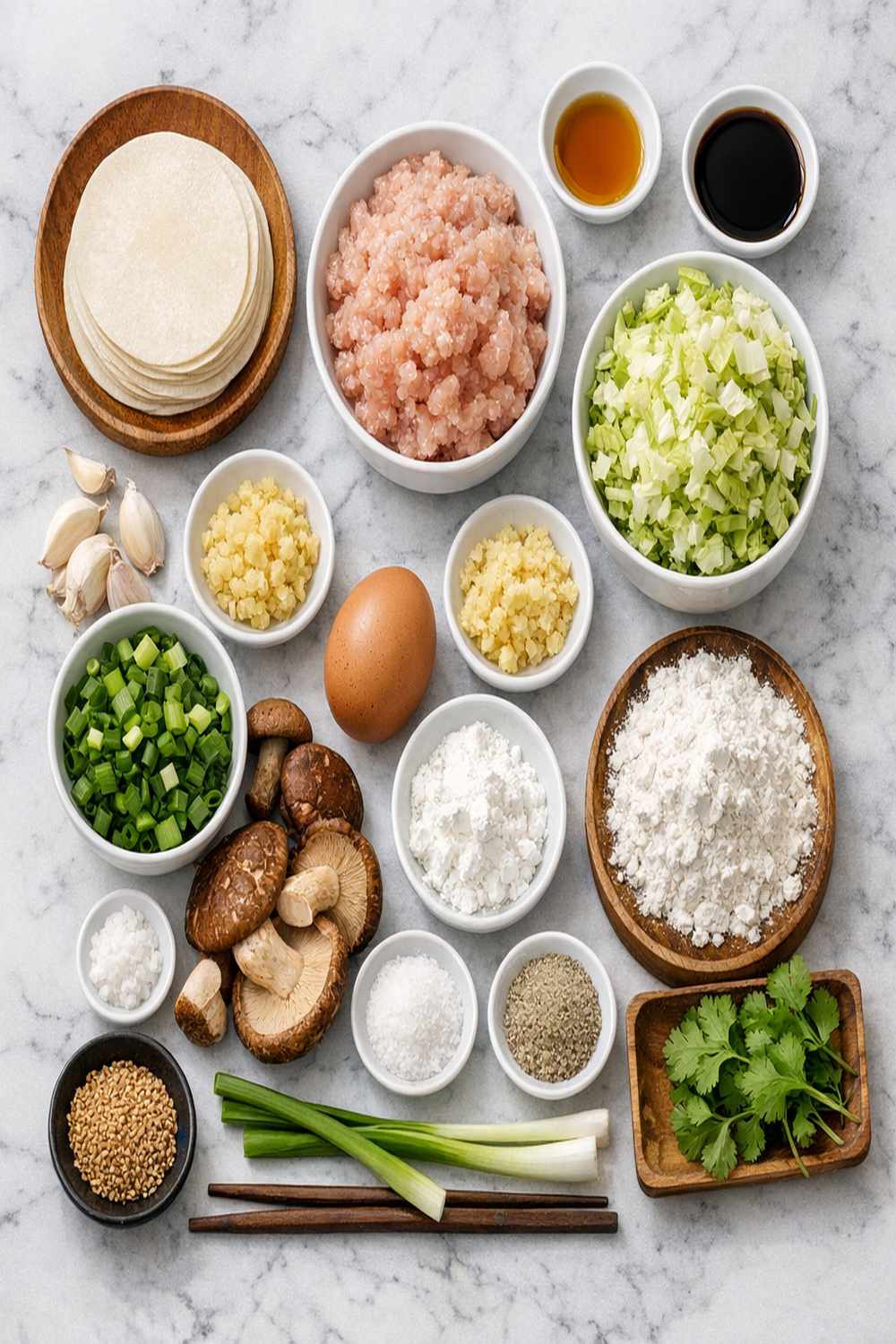
Each ingredient in these jiaozi tells a story about where it comes from and what culinary tradition it honors. I’ve sourced each element with intention, choosing premium versions that reflect both my clinical nutrition background and my passion for indulgent home cooking.
For the Dumpling Wrappers
- ¼ teaspoon fine sea salt (enhances gluten development for tender, supple wrappers)
- ¼ cup plus 1 teaspoon water (room temperature, added gradually as you knead)
- extra all-purpose flour (for dusting your work surface and rolling pin)
- 1 cup all-purpose flour (spooned and leveled, never packed—this is your foundation)
For the Chicken Filling
- 8 oz ground chicken thighs (from pastured birds if possible—the darker meat contains superior flavor and more micronutrients than breast)
- pinch of fine sea salt (to taste, understanding that soy sauce already contains sodium)
- 2 tablespoons soy sauce (or tamari for gluten-free; choose naturally fermented varieties when possible)
- 1 teaspoon cornstarch (prevents the filling from becoming watery during cooking)
- 8 oz Napa cabbage (finely sliced, adding textural contrast and prebiotic fiber)
- ½ teaspoon toasted sesame oil (never skip quality here—it’s the difference between good dumplings and extraordinary ones)
- 3 dashes white pepper (freshly ground if you have a grinder; it’s more aromatic than black pepper)
- 1 tablespoon fresh ginger (grated finely, using a microplane for maximum potency)
- 1 tablespoon fresh scallions (chopped, providing sulfur compounds that aid digestion)
For Cooking and Serving
- water (for boiling)
- chili oil (optional, but I recommend it—the Sichuan peppercorn varieties create a numbing sensation called “málà” that’s addictive)
- Chinese black vinegar (or rice vinegar; use as your primary dipping sauce)
- 2 tablespoons neutral oil (avocado oil or light sesame oil for pan-frying)
Yield: Makes approximately 40-48 dumplings, serving 4-6 people as an appetizer or 2-3 as a main course
How to Make This Fusion Chicken Jiaozi Recipe
Creating these dumplings is a meditation on precision meeting creativity. I encourage you to approach this as a mindful practice—there’s no rushing. Set aside an afternoon, perhaps pour yourself something you love to drink, and let your hands learn the rhythm of pleating. This is where both culinary traditions come alive: in the deliberate, joyful act of feeding people you care about.
Step 1: Create Your Dumpling Wrappers (Or Prep Store-Bought)
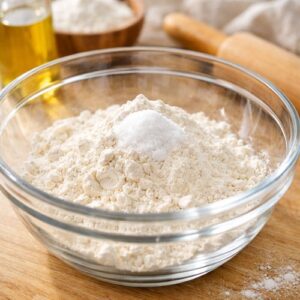
If you’re making wrappers from scratch—and I deeply encourage this at least once, as it connects you to the tradition—combine your flour and salt in a large mixing bowl. Create a small well in the center, then add your water gradually while mixing with chopsticks or a fork. This Chinese technique prevents the water from spreading everywhere and gives you better control over hydration. Once the mixture becomes shaggy, turn it out onto a lightly floured surface and knead for 8-10 minutes using the heel of your hand, folding the dough back toward you with each push.
You’ll know the dough is ready when it transforms from rough to silky and smooth, almost like a baby’s skin. This is the moment when glutenin and gliadin proteins have properly networked, creating elasticity that will allow you to roll impossibly thin wrappers. Cover your dough with a damp kitchen towel and let it rest for 30 minutes—this is non-negotiable. Resting allows the gluten network to relax, making the dough far easier to work with. This step honors the Chinese understanding that patience produces superior results.
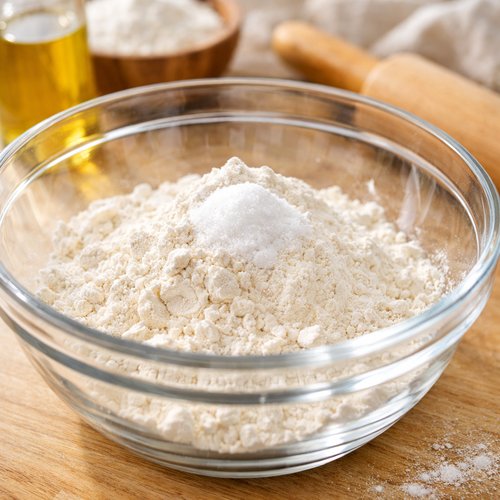
After resting, divide your dough into four equal portions. Roll one portion into a tight cylinder about the thickness of your pinky finger, then cut it into 12 small pieces. Using a wooden rolling pin (I prefer wood because it grips the dough better than metal), roll each piece into a thin circle approximately 3.5-4 inches in diameter. The edges should be slightly thinner than the center—this prevents thick, doughy borders that American palates sometimes expect. Stack your finished wrappers between parchment paper to prevent sticking, and cover with plastic wrap until you’re ready to fill them.
If using store-bought wrappers, simply remove them from the refrigerator about 10 minutes before assembling to bring them to room temperature. They’ll be more pliable and less prone to tearing.
Step 2: Prepare Your Filling With Respect for Both Traditions
This is where your ingredient quality becomes absolutely apparent. I recommend purchasing your chicken thighs from a farmer’s market or specialty butcher if at all possible. Ask them to grind it fresh for you, or bring it home and pulse it yourself in a food processor—you’ll have better texture control than pre-ground versions. The color should be darker than chicken breast, almost rosy, with visible marbling of fat throughout.
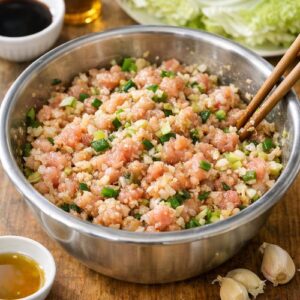
In a medium mixing bowl, combine your ground chicken with the Napa cabbage, ginger, scallions, soy sauce, sesame oil, white pepper, salt, and cornstarch. The cornstarch is crucial—it absorbs excess moisture that the cabbage will release during cooking, preventing soggy, weeping dumplings. Using a spoon or your (clean) hands, mix gently but thoroughly until all ingredients are evenly distributed. Do not overmix, as this can develop too much gluten and create a dense, bouncy filling rather than a tender one.
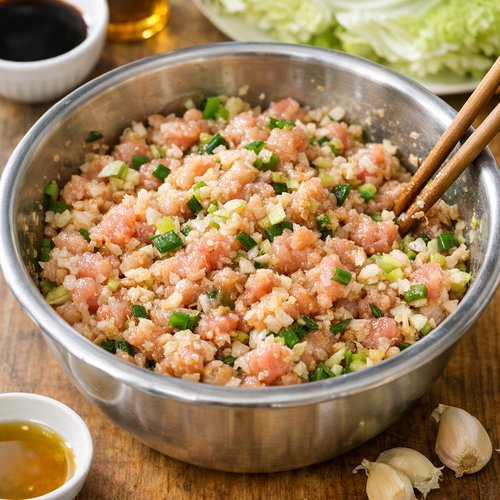
Taste a tiny pinch of the raw filling—yes, raw chicken is safe in very small quantities, and this is how professionals adjust seasoning. Does it need more soy sauce? More ginger? This is your moment to achieve perfect balance between the umami-forward Chinese base and the bright American emphasis on fresh aromatics. Cover and refrigerate your filling for at least 30 minutes, or up to 8 hours ahead.
Step 3: Assemble Your Dumplings With Meditative Intention
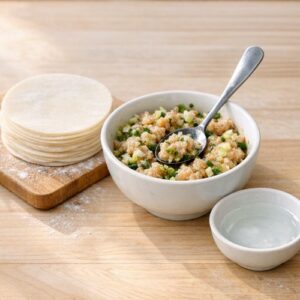
Set up your workspace with three components: your stack of wrappers, your filling in a small bowl with a teaspoon inside, and a small dish of water. This is where the meditative magic happens. I recommend assembling in batches of 12-16, which takes about 15-20 minutes and keeps your wrappers from drying out.
Place a wrapper in the palm of your non-dominant hand. Spoon exactly 1 teaspoon of filling into the center—this is the critical measurement that separates beautiful dumplings from messy ones. Too much filling, and your wrapper won’t seal properly; too little, and your dumplings feel insubstantial. Dip your index finger into the water dish and run it around the entire outer edge of the wrapper, creating a seal zone.
Now fold your wrapper in half, creating a half-moon shape. Press the center of the seal firmly between your thumb and index finger. This is where you can get creative while honoring the Chinese tradition of precise pleating by adding your own touch—perhaps a slight wave or two along the sealed edge, or a decorative press with your pinky. This isn’t about perfect uniformity; it’s about intentional, careful work.
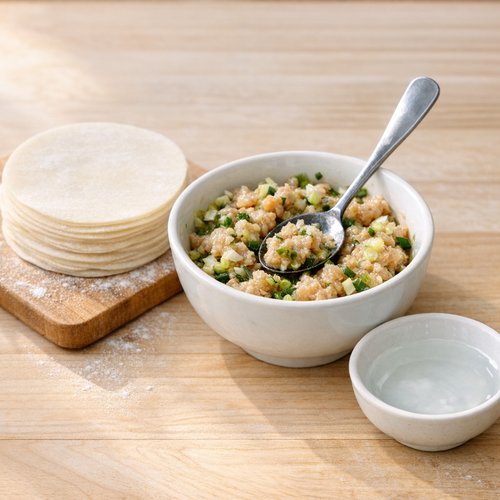
Place your finished dumplings seam-side up on a parchment-lined sheet pan or wooden board. Don’t let them touch, as they’ll stick together. If you’re not cooking immediately, cover them loosely with plastic wrap and refrigerate for up to 4 hours, or freeze for up to 3 months. Frozen dumplings can go directly into boiling water—no thawing needed.
Step 4: Boil Your Dumplings (The Traditional Chinese Method)
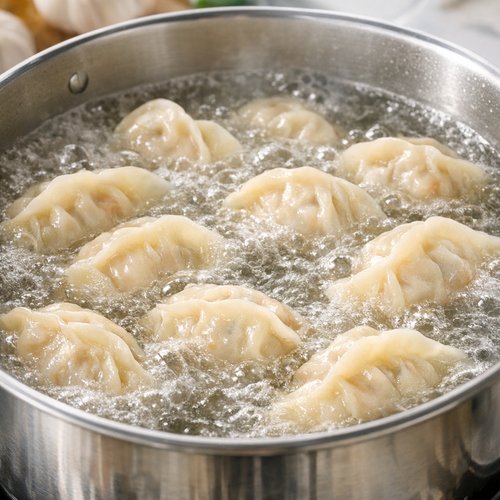
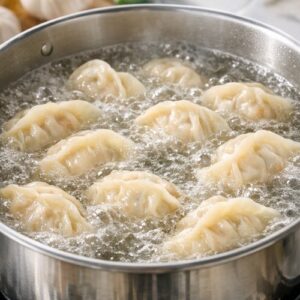
Bring a large pot of water to a rolling boil—you want enough water that the dumplings have room to float freely without crowding. This is important for even cooking. Working in batches of 12-16 dumplings, gently drop them into the water using a slotted spoon, then give them a gentle stir to prevent sticking to the bottom. They’ll sink initially, then float to the surface after 3-4 minutes as the filling cooks and expands.
Once they’re floating, give them another 2-3 minutes of cooking time, then remove them with a slotted spoon and transfer to a parchment-lined plate. They should be tender, with the filling cooked through but still moist. Repeat until all your dumplings are boiled. At this point, you can serve them immediately with your dipping sauce, or proceed to the next step for that luxurious pan-fried finish.
Step 5: Pan-Fry for Indulgent Texture (The American Addition)
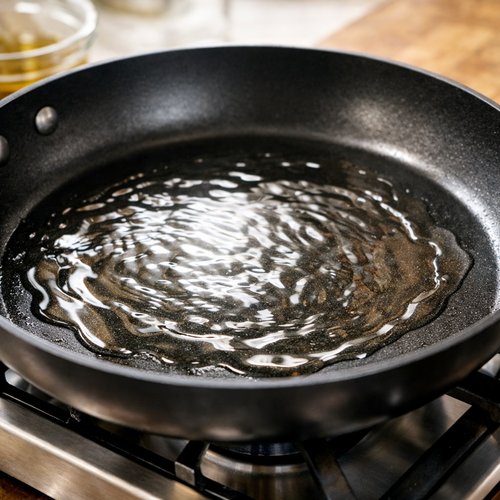
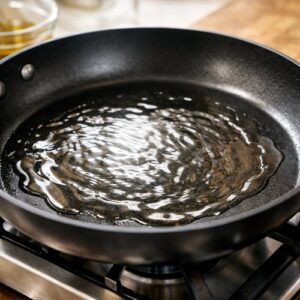
Heat a large skillet over medium-high heat and add 1 tablespoon of your neutral oil. Once it’s shimmering—you should see ripples across the surface—arrange about 8-10 boiled dumplings flat-side down in the pan. Don’t move them. This is where patience pays dividends. Let them sit undisturbed for 2-3 minutes until the bottoms develop a golden-brown crust. You’re looking for color, which indicates that the Maillard reaction is occurring—a chemical transformation that creates hundreds of new flavor compounds.
Gently flip each dumpling and cook the other side for another 1-2 minutes until it’s also golden and crispy. Transfer to your serving plate and repeat with the remaining dumplings, adding another ½ tablespoon of oil for each batch. This dual-cooking method—gentle boiling followed by luxurious pan-frying—creates texture that neither culture achieves alone: tender, delicate wrappers with pockets of crispy, caramelized edges.
How to Customize the Fusion Ratio
One of the beautiful aspects of fusion cooking is the ability to lean into whichever tradition speaks to you most on any given day. Here’s how to adjust this recipe to emphasize one culture or the other:
- Leaning More Into Chinese Tradition – Skip the pan-frying step entirely and serve your boiled dumplings with just Chinese black vinegar and a touch of chili oil. Add more ginger and less salt. Make your own wrappers every single time, using the traditional resting period. Serve alongside other Chinese sides like a simple bok choy with garlic or jasmine rice. Focus on the meditation of the preparation rather than the indulgence of the final texture.
- Leaning More Into American Comfort Cooking – Pan-fry all your dumplings without boiling first (they’ll take about 5-7 minutes total, cooking through on medium heat with a lid partially covering the pan to steam them). Serve with a trio of dipping sauces: traditional black vinegar, a sriracha-mayo blend, and sweet chili sauce. Use store-bought wrappers to save time. Pair with crispy french fries or roasted vegetables. Embrace the luxurious abundance and skip the meditative aspect if you’re cooking for a casual gathering.
- Protein Customization – Ground pork creates a richer, more traditional filling; use 6 oz pork to 2 oz ground chicken. Ground shrimp creates a delicate, almost sweet filling. Ground beef creates something closer to American dumplings entirely.
- Vegetable Variations – Swap Napa cabbage for finely shredded carrots and celery for more American flavor profiles. Add minced mushrooms for umami depth. Include finely chopped chives instead of scallions for a milder onion note.
Other Great Chinese × American Combinations
If this fusion resonates with you, you’ll likely love exploring other dishes where these two culinary traditions enhance each other beautifully. Consider these combinations:
- Chinese Tea-Smoked Duck With American Cornbread Dressing – Combine the elegant technique of Chinese tea smoking with the comforting grain-based sides of American holiday cooking. The richness of duck pairs beautifully with the sweetness of cornbread.
- Kung Pao Chicken Using Heritage American Poultry – The technique is completely Chinese, but using pastured American chicken creates superior depth of flavor that industrial proteins can’t achieve.
- Hand-Pulled Noodles With American BBQ-Style Meat – Make traditional Chinese hand-pulled wheat noodles, then top them with slow-cooked, smoky American barbecue chicken. The contrast is magnificent.
- Fried Rice Using Premium American Butter and Farm Eggs – Chinese technique for leftover rice transformation, elevated with American-style dairy and fresh eggs from pastured birds. The butter creates richness that traditional vegetable oil cannot.
Expert’s Nutritional Tip: The Power of Chicken Thighs
As a registered dietitian, I see far too many people approaching poultry with a “low-fat, white meat only” mentality that actually undermines their nutrition. Chicken thighs contain approximately 25% more iron than breast meat, plus significantly higher levels of selenium, zinc, and B vitamins. The fat isn’t something to fear—it’s actually where those fat-soluble vitamins concentrate, and it’s what allows your body to absorb the water-soluble vitamins in the ginger and cabbage. Studies show that fat consumed with vegetables enhances carotenoid absorption by as much as 400%. In other words, the richness of these dumplings isn’t indulgent excess; it’s actually more nourishing than a leaner version would be. This is what makes them so satisfying—your body recognizes real nutrition.
Can I Store Chicken Jiaozi Recipe?
Uncooked dumplings can be refrigerated for up to 4 hours on a parchment-lined plate, loosely covered with plastic wrap. For longer storage, freeze them on the same plate for 2-3 hours until solid, then transfer to a freezer bag or airtight container. Frozen uncooked dumplings keep for up to 3 months and can go directly from freezer to boiling water—no thawing needed, though they may take an extra minute or two to cook through.
Cooked dumplings keep in the refrigerator for up to 4 days in an airtight container. Reheat gently by steaming them for 3-4 minutes or pan-frying them briefly with a touch of oil. You can also freeze cooked dumplings for up to 2 months—they’re excellent for quick meals when you need something nourishing in 10 minutes.
One professional tip: if you’re meal-prepping, I recommend cooking and pan-frying about half your dumplings at a time. This ensures you always have some with that fresh, crispy texture on hand. Frozen boiled dumplings can be quickly pan-fried from frozen, creating a wonderful shortcut for busy weeknights.
Make-Ahead Guide: Preparing Dumplings Throughout the Week
From my clinical nutrition background, I understand that food preparation is one of the most reliable predictors of actual nutrition adherence. Here’s how I approach making these dumplings as part of my meal-prep routine:
Sunday Evening: Make the Filling – Prepare your filling and store it in an airtight container. It keeps for up to 2 days, and the flavors actually deepen as the ginger and soy permeate the chicken.
Monday or Tuesday: Make Wrappers (If Homemade) – Mix, knead, and rest your dough. You can make wrappers ahead and freeze them stacked between parchment paper, though they’re easier to work with fresh. The dough itself keeps in the refrigerator for up to 3 days, tightly wrapped.
Wednesday Evening: Assembly Line – Set up your assembly station and make about 30-40 dumplings in one session. This takes about 45 minutes and feels meditative when you’re not rushing. Arrange them on parchment-lined sheet pans and freeze until solid.
Throughout the Week: Cook as Needed – Boil dumplings directly from frozen for weeknight dinners, or pan-fry them for more indulgent weekend meals.
Common Mistakes to Avoid
Overfilling Your Dumplings – I see this constantly, especially with home cooks eager to maximize deliciousness. Resist the urge. More than 1 teaspoon of filling makes it nearly impossible to seal properly, and the filling can leak into the water, creating cloudy broth and disappointing dumplings. One teaspoon is the perfect amount—trust the tradition.
Not Using Enough Water for Sealing – Your dipping finger must run generously around the entire edge of the wrapper. If you’re skimping on water, your seals will fail, especially after boiling. The wrapper needs to be slightly tacky all around, not bone-dry. If your filling is leaking during cooking, it’s almost always a sealing issue.
Overcrowding the Pot While Boiling – If you dump all your dumplings in at once, they’ll stick to each other and to the bottom of the pot. Work in batches. Give them space. This patience is rewarded with beautiful, separate dumplings.
Using Chicken Breast Instead of Thighs – I understand the impulse toward lean protein, but it genuinely undermines this dish. Breast meat has nearly no fat, which means minimal flavor and no satisfaction. The dumplings will taste mealy and one-dimensional. Thighs aren’t a compromise—they’re the right choice. Your body and palate will thank you.
Seasonal Variations
Spring – Replace some of the Napa cabbage with fresh English peas and tender asparagus, finely chopped. Add fresh mint and chives for brightness. The dumplings will taste lighter and more awakening, perfect for warming weather.
Summer – Add corn kernels and finely diced zucchini to your filling. Serve your boiled dumplings chilled with a refreshing vinegar dipping sauce made with rice vinegar, fresh lime juice, and a touch of honey. The chilled dumplings become an elegant appetizer for summer gatherings.
Fall – Fold in finely diced mushrooms (shiitake if possible, for their meaty depth) and add a touch of miso paste to the filling for earthiness. Increase the ginger slightly. Pan-fry all your dumplings and serve with hot dipping sauce, embracing the warming, grounding nature of fall.
Winter – Add minced water chestnuts for crunch and a hint of natural sweetness. Use the maximum amount of ginger recommended, as warming spices are traditional in winter Chinese cooking. Serve all dumplings boiled in a light broth instead of plain water, creating a nourishing dumpling soup. This version feels especially luxurious on cold evenings.
Nutrition Information
Based on USDA nutritional database analysis, each dumpling (using the boiled and pan-fried method) contains approximately:
- Calories: 85-95 (about 50% from the filling, 50% from the wrapper)
- Protein: 6-7 grams (primarily from the chicken thighs, with supporting amino acids from the cabbage)
- Fat: 3-4 grams (the luxurious fat from chicken thighs that makes these dumplings satisfying)
- Carbohydrates: 8-9 grams (from the flour wrapper and the natural sugars in cabbage)
- Fiber: 0.5 grams (from the vegetables in the filling)
- Sodium: 220-250 mg (primarily from the soy sauce)
From a clinical nutrition perspective, what I find most remarkable about these dumplings is their micronutrient density. A serving of 4-6 dumplings provides approximately 15% of your daily selenium needs (supporting thyroid function), 12% of your zinc (crucial for immune function), and 8% of your iron (especially important for menstruating individuals and vegetarians, though chicken provides heme iron which is more bioavailable). The ginger contributes gingerols and shogaols, compounds with demonstrated anti-inflammatory properties in multiple clinical studies. The sesame oil provides both omega-6 and omega-3 fatty acids in a favorable ratio for cardiovascular health.
Traditional Chinese medicine recognizes chicken as warming and nourishing, particularly beneficial for those recovering from illness or supporting digestive health. The combination with ginger amplifies these warming properties while supporting the body’s natural detoxification processes.
What to Serve With Chicken Jiaozi Recipe?
These dumplings are spectacular on their own, but they truly shine when surrounded by complementary sides. Here are my favorite pairings that honor both culinary traditions:
- Simple Bok Choy With Garlic and Ginger – The subtle bitterness and tender texture contrast beautifully with the dumpling richness. This is pure Chinese tradition, requiring just 5 minutes of cooking in a hot skillet with garlic, ginger, and sesame oil.
- Crispy Roasted Broccoli With Sesame Seeds – An American vegetable preparation that carries Asian flavors. The crispy edges and roasted depth complement the tender dumplings perfectly.
- Jasmine Rice or Sticky Rice – A traditional Chinese accompaniment that lets the dumplings be the star. The subtle jasmine fragrance provides aromatic balance without competing for attention.
- Cucumber Salad With Rice Vinegar Dressing – Refreshing, bright, and cooling. The acidity prepares your palate for the next dumpling. This bridges both traditions beautifully.
- Sweet and Spicy Dipping Sauce Trio – Set out three small bowls: traditional black vinegar, sriracha mixed with mayonnaise, and sweet chili sauce. Let people customize their experience. This celebrates American abundance and choice.
I also adore serving these dumplings alongside homemade sorbet for dessert—the light, refreshing finish after the rich, umami-forward dumplings feels like culinary poetry. And if you’re serving them at a gathering where you want impressive desserts, the profiterole recipe creates an elegant final course that feels celebratory without being heavy.

Chicken Jiaozi Recipe
Ingredients
Method
- If you're making wrappers from scratch—and I deeply encourage this at least once, as it connects you to the tradition—combine your flour and salt in a large mixing bowl. Create a small well in the center, then add your water gradually while mixing with chopsticks or a fork. This Chinese technique prevents the water from spreading everywhere and gives you better control over hydration. Once the mixture becomes shaggy, turn it out onto a lightly floured surface and knead for 8-10 minutes using the heel of your hand, folding the dough back toward you with each push. You'll know the dough is ready when it transforms from rough to silky and smooth, almost like a baby's skin. This is the moment when glutenin and gliadin proteins have properly networked, creating elasticity that will allow you to roll impossibly thin wrappers. Cover your dough with a damp kitchen towel and let it rest for 30 minutes—this is non-negotiable. Resting allows the gluten network to relax, making the dough far easier to work with. This step honors the Chinese understanding that patience produces superior results. After resting, divide your dough into four equal portions. Roll one portion into a tight cylinder about the thickness of your pinky finger, then cut it into 12 small pieces. Using a wooden rolling pin (I prefer wood because it grips the dough better than metal), roll each piece into a thin circle approximately 3.5-4 inches in diameter. The edges should be slightly thinner than the center—this prevents thick, doughy borders that American palates sometimes expect. Stack your finished wrappers between parchment paper to prevent sticking, and cover with plastic wrap until you're ready to fill them. If using store-bought wrappers, simply remove them from the refrigerator about 10 minutes before assembling to bring them to room temperature. They'll be more pliable and less prone to tearing.
- This is where your ingredient quality becomes absolutely apparent. I recommend purchasing your chicken thighs from a farmer's market or specialty butcher if at all possible. Ask them to grind it fresh for you, or bring it home and pulse it yourself in a food processor—you'll have better texture control than pre-ground versions. The color should be darker than chicken breast, almost rosy, with visible marbling of fat throughout. In a medium mixing bowl, combine your ground chicken with the Napa cabbage, ginger, scallions, soy sauce, sesame oil, white pepper, salt, and cornstarch. The cornstarch is crucial—it absorbs excess moisture that the cabbage will release during cooking, preventing soggy, weeping dumplings. Using a spoon or your (clean) hands, mix gently but thoroughly until all ingredients are evenly distributed. Do not overmix, as this can develop too much gluten and create a dense, bouncy filling rather than a tender one. Taste a tiny pinch of the raw filling—yes, raw chicken is safe in very small quantities, and this is how professionals adjust seasoning. Does it need more soy sauce? More ginger? This is your moment to achieve perfect balance between the umami-forward Chinese base and the bright American emphasis on fresh aromatics. Cover and refrigerate your filling for at least 30 minutes, or up to 8 hours ahead.
- Set up your workspace with three components: your stack of wrappers, your filling in a small bowl with a teaspoon inside, and a small dish of water. This is where the meditative magic happens. I recommend assembling in batches of 12-16, which takes about 15-20 minutes and keeps your wrappers from drying out. Place a wrapper in the palm of your non-dominant hand. Spoon exactly 1 teaspoon of filling into the center—this is the critical measurement that separates beautiful dumplings from messy ones. Too much filling, and your wrapper won't seal properly; too little, and your dumplings feel insubstantial. Dip your index finger into the water dish and run it around the entire outer edge of the wrapper, creating a seal zone. Now fold your wrapper in half, creating a half-moon shape. Press the center of the seal firmly between your thumb and index finger. This is where you can get creative while honoring the Chinese tradition of precise pleating by adding your own touch—perhaps a slight wave or two along the sealed edge, or a decorative press with your pinky. This isn't about perfect uniformity; it's about intentional, careful work. Place your finished dumplings seam-side up on a parchment-lined sheet pan or wooden board. Don't let them touch, as they'll stick together. If you're not cooking immediately, cover them loosely with plastic wrap and refrigerate for up to 4 hours, or freeze for up to 3 months. Frozen dumplings can go directly into boiling water—no thawing needed.
- Bring a large pot of water to a rolling boil—you want enough water that the dumplings have room to float freely without crowding. This is important for even cooking. Working in batches of 12-16 dumplings, gently drop them into the water using a slotted spoon, then give them a gentle stir to prevent sticking to the bottom. They'll sink initially, then float to the surface after 3-4 minutes as the filling cooks and expands. Once they're floating, give them another 2-3 minutes of cooking time, then remove them with a slotted spoon and transfer to a parchment-lined plate. They should be tender, with the filling cooked through but still moist. Repeat until all your dumplings are boiled. At this point, you can serve them immediately with your dipping sauce, or proceed to the next step for that luxurious pan-fried finish.
- Heat a large skillet over medium-high heat and add 1 tablespoon of your neutral oil. Once it's shimmering—you should see ripples across the surface—arrange about 8-10 boiled dumplings flat-side down in the pan. Don't move them. This is where patience pays dividends. Let them sit undisturbed for 2-3 minutes until the bottoms develop a golden-brown crust. You're looking for color, which indicates that the Maillard reaction is occurring—a chemical transformation that creates hundreds of new flavor compounds. Gently flip each dumpling and cook the other side for another 1-2 minutes until it's also golden and crispy. Transfer to your serving plate and repeat with the remaining dumplings, adding another ½ tablespoon of oil for each batch. This dual-cooking method—gentle boiling followed by luxurious pan-frying—creates texture that neither culture achieves alone: tender, delicate wrappers with pockets of crispy, caramelized edges.
FAQs
Can I Make These Dumplings Without Making the Wrappers From Scratch?
Absolutely. Store-bought round dumpling wrappers are available at any Asian market and most conventional groceries. They work beautifully for this recipe. However, I encourage you to make wrappers at least once, even if only for 12-16 dumplings. The experience of transforming simple flour and water into silky, pliable sheets teaches you so much about dough, hydration, and gluten development. It’s a meditation that connects you to the 1,800-year tradition you’re cooking within. After that first time, you might find yourself choosing to make wrappers from scratch not because you must, but because you want to.
What’s the Difference Between Jiaozi and Potstickers?
Technically, “potsticker” is the English term for jiaozi that have been pan-fried after boiling—the dual-cooking method I recommend in my recipe. Traditional jiaozi are boiled exclusively. So these dumplings are both jiaozi and potstickers, depending on how you finish them. The culinary distinction matters less than understanding that cooking method changes texture: boiled dumplings are tender and delicate, while pan-fried dumplings develop crispy, caramelized edges. My fusion approach celebrates both textures.
How Do I Know When My Filling Is Cooked Through?
The filling cooks as the dumplings boil. Once they float to the top and cook for another 2-3 minutes, the filling is completely cooked through. If you want to verify this, cut one dumpling open—you should see no pink in the chicken, and the cabbage should be tender and slightly translucent rather than bright green and raw. The heat penetrates the wrapper quickly, so by the time the wrapper is cooked, so is the filling.
Can I Use Different Types of Vinegar for Dipping?
Chinese black vinegar is traditional and has a complex, slightly sweet undertone that’s spectacular with these dumplings. However, rice vinegar works beautifully as a lighter alternative, and apple cider vinegar creates an interesting American twist. Avoid regular white vinegar, which tastes sharp and one-dimensional by comparison. Quality vinegar makes a surprising difference in the final experience—it’s worth sourcing a good one.
Why Does My Filling Leak Into the Water?
This is almost always a sealing issue rather than a filling quantity issue. Your dipping water must create a tacky seal around the entire edge of the wrapper. If even a small section of the edge is dry, steam will escape through that gap, pulling filling with it. The second most common cause is overfilling—more than 1 teaspoon of filling makes it difficult to seal properly, especially for beginners. The third possibility is wrapper thickness: if your wrappers are too thick, they take too long to cook and the filling can leak through before the wrapper sets.