This post contains affiliate links. As an Amazon Associate I earn from qualifying purchases.
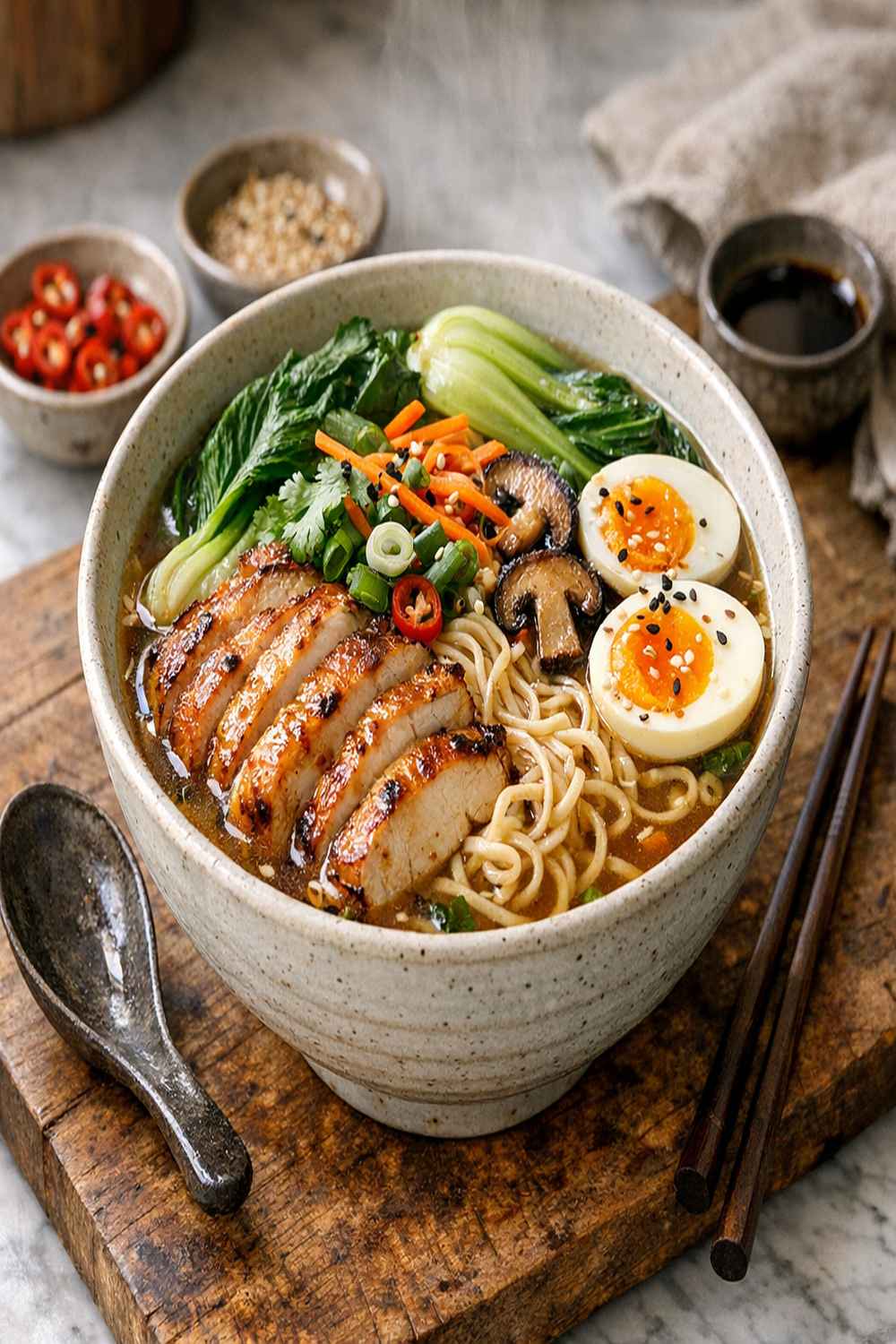
Before you throw those leftover chicken breasts away, turn them into something even better. This Chicken Ramen Recipe was born from exactly that moment—when I realized that mindful cooking isn’t about perfection, it’s about transformation. That extra poached chicken from Sunday dinner? The half-used container of mirin from my last Asian-inspired meal? These aren’t failures waiting to happen; they’re the foundation for something truly luxurious. As a registered dietitian, I’ve learned that the most nourishing meals often come from creative resourcefulness, and this recipe proves that indulgence and zero-waste cooking can absolutely coexist.
How to Turn Last Night’s Chicken Into Something Even Better Than the Original
I’ll never forget the evening this recipe truly came alive in my kitchen. I had prepared bone-in, skin-on chicken breasts for a simple weeknight dinner, but life happened—my family’s plans changed, and I was left with two perfectly good breasts that needed rescuing. Rather than treating them as leftovers to tolerate, I saw them as an invitation to something more indulgent. That night, as I simmered them with fresh ginger and mirin, my entire kitchen filled with this warm, luxurious aroma that made everyone stop and ask what I was making. Within thirty minutes, what started as “leftover chicken” had transformed into silky ramen bowls that felt like a restaurant experience at home. That’s when I realized: the best meals aren’t created from scratch alone—they’re born from thoughtful transformation.
What Leftovers Work Best
When I think about chicken ramen, I’m thinking about quality protein that can be revived and elevated through gentle, flavorful heat. Not all leftovers are created equal, and knowing which ones shine in this dish makes all the difference. From my years working with clients on nutrition and meal planning, I’ve learned that understanding your ingredients—even the day-old ones—is the foundation of cooking with intention.
- Cooked chicken breasts (skin-on) – The skin contains collagen and fat that add richness to your broth; boneless versions work but won’t have quite the same luxurious mouthfeel
- Simmered or roasted vegetables – Carrots, mushrooms, and aromatics from yesterday’s dinner add depth; simply strain them out before serving
- Any homemade chicken stock you have on hand – This is truly the bridge ingredient; store-bought works when you’re starting fresh, but leftover stock transforms this dish into something restaurant-quality
- Fresh herbs that are losing their edge – Wilted scallions or ginger that’s been in your crisper drawer for a few days become tender and sweet when gently heated
- Leftover cooked rice or grains – While not traditional, these can be set aside and used as a base instead of noodles for a different texture experience
- Avoid: Fried or heavily breaded chicken – The coating will get soggy and cloud your beautiful broth; save these for repurposing into chicken salad instead
The Transformation Pantry: What to Keep on Hand
My philosophy as both a dietitian and home cook is that pantry staples are your secret weapons for turning any leftover into something extraordinary. These bridge ingredients are what separate “reheated chicken” from “I made ramen from scratch.” I keep these items stocked year-round because they’re versatile enough for countless applications, from quick weeknight dinners to more elaborate entertaining. The beauty of having these on hand is that you’re never more than twenty minutes away from a deeply satisfying, nutritionally balanced meal.
Low-sodium soy sauce is my foundation—it adds umami without overwhelming the palate. Mirin brings subtle sweetness and a glossy finish that makes even day-old chicken taste silky. Fresh ginger and garlic aren’t negotiable; they’re what wake up tired proteins and transform them. Sesame oil adds an aromatic richness that’s absolutely luxurious in small amounts. High-quality chicken stock (whether homemade or from a trusted brand) is truly where the magic happens. And quality dried ramen noodles—not the cheap packages, but actual ramen with proper texture—make all the difference in the final dish.
The Ingredients
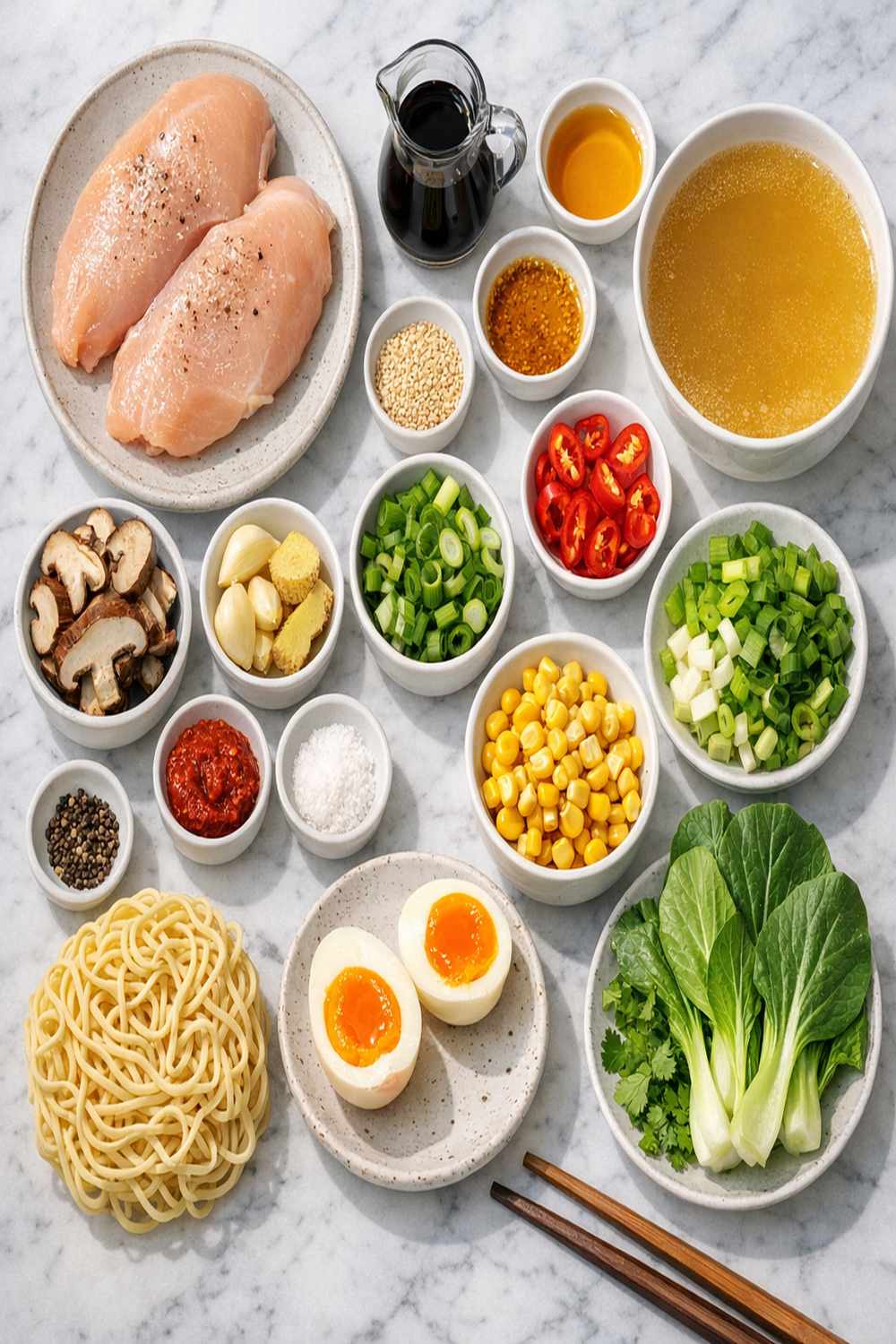
This is where resourcefulness meets indulgence. You’re working with what you likely already have, but you’re elevating it with intentional flavor-building. Notice that everything here serves a purpose—nothing is filler, nothing is for show. This is cooking with both your head and your heart.
- Fresh jalapeño or chili slices for serving (optional, but recommended for brightness and heat)
- 3 tablespoons low-sodium soy sauce (tamari works if you need gluten-free)
- 2 packs dried ramen noodles, 3 ounces each (quality matters here—look for brands with minimal additives)
- 1 ounce dried shiitake mushrooms (or ½ cup fresh, sliced)
- ½ cup scallions, sliced thin (plus extra for garnish)
- 4 cups rich chicken stock (homemade preferred, or low-sodium store-bought at minimum)
- 1 tablespoon unsalted butter (room temperature, for finishing)
- 2 tablespoons mirin (sweet rice wine; this is non-negotiable for authentic depth)
- 2 large eggs (room temperature, for soft-boiling)
- 2 teaspoons sesame or vegetable oil (sesame for luxury, vegetable for neutrality)
- 1 to 2 teaspoons sea salt, to your taste preference
- 2 teaspoons fresh ginger, minced fine (not pre-minced; the fresh aromatics matter)
- 1 tablespoon fresh garlic, minced (about 2-3 cloves, depending on size)
- 2 chicken breasts, boneless and skin-on (cooked from yesterday, or freshly prepared for best results)
Serves: 2 generous bowls
The Transformation: How to Make Chicken Ramen From Leftovers
This is where magic happens. You’re taking yesterday’s chicken and turning it into something that tastes like you spent hours in the kitchen. The technique here is all about gentle heat, intentional layering of flavors, and understanding that transformation doesn’t mean masking—it means revealing the best in what you already have.
Step 1: Revive Your Chicken With Gentle Heat
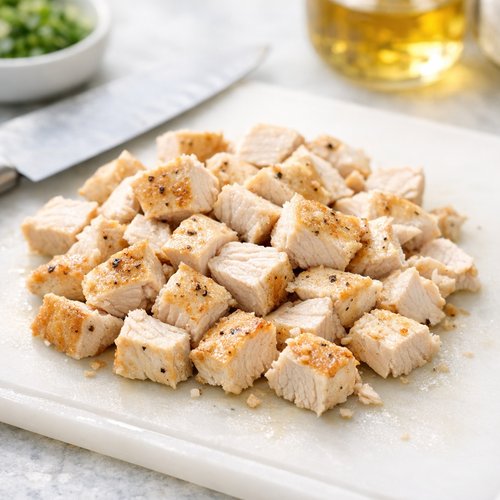
If your chicken breasts are truly from yesterday, they’ve likely lost some moisture. Slice them into bite-sized pieces and set them aside on a clean cutting board. We’re not going to drown them in broth immediately; instead, gently warm them in a small saucepan over medium-low heat with just a splash of water and a teaspoon of butter for about two minutes. This reintroduces moisture without making them tough. If your chicken was roasted with skin, crisp that skin briefly under the broiler before slicing—this adds textural contrast that’s absolutely luxurious.
Step 2: Build Your Flavor Foundation
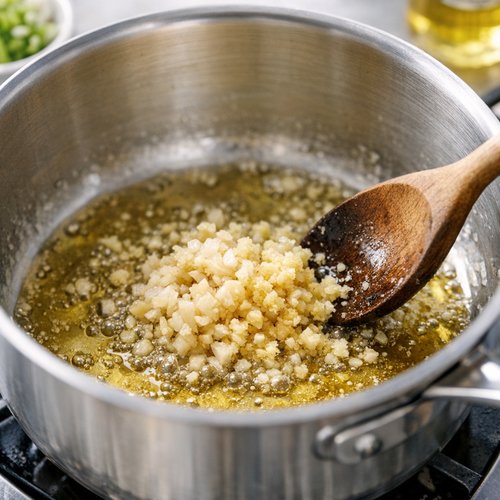
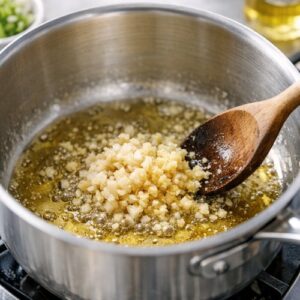
In a medium saucepan, warm your sesame oil over medium heat and add the minced ginger and garlic together. Don’t rush this step—let them bloom for exactly ninety seconds, until the kitchen smells incredible and you can see the garlic just starting to turn golden at the edges. The aromatics should be releasing their essential oils, creating a fragrant base. Add your dried shiitake mushrooms at this point and let them toast briefly, about one minute. This technique—toasting before simmering—deepens their umami character in ways that feel almost indulgent.
Step 3: Create Your Luxurious Broth
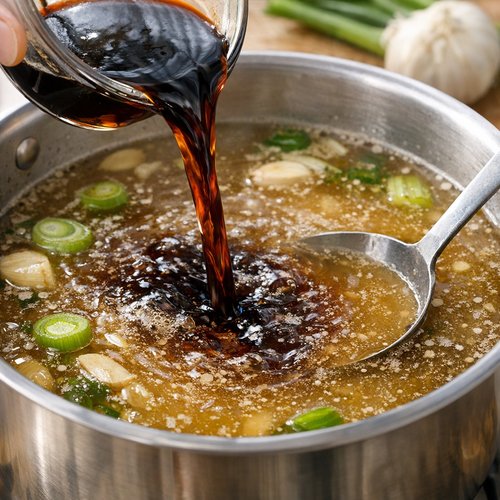
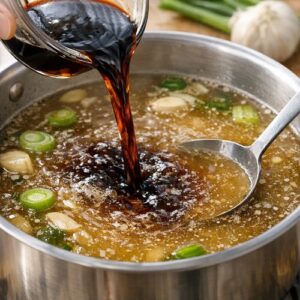
Pour in your chicken stock, then add the soy sauce and mirin together. Stir gently and bring everything to a simmer over medium heat. Taste the broth at this point and adjust seasoning with sea salt—you’re aiming for something that tastes deeply savory but not salty. From my dietitian perspective, this is where you’re controlling sodium intake while maximizing flavor impact; mirin adds sweetness that rounds out the soy’s sharpness. Let the broth simmer for five minutes so the mushrooms release their minerals and earthiness into the liquid.
Step 4: Soft-Boil Your Eggs (The Luxury Component)
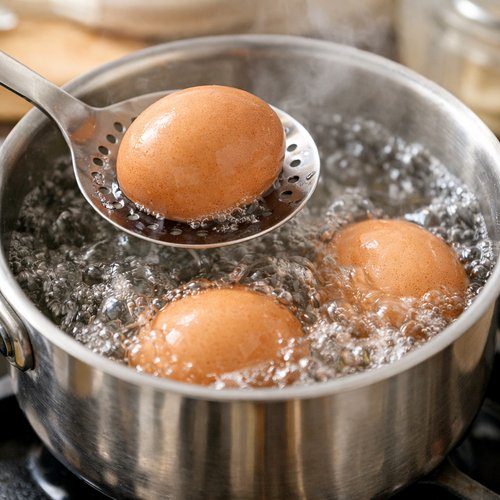
While your broth is simmering, bring a separate small pot of water to a rolling boil. Gently lower your room-temperature eggs into the boiling water and set a timer for exactly six and a half minutes. This timing is crucial—you want yolks that are just barely set on the outside but still have that luxurious, jammy center. When the timer sounds, use a slotted spoon to transfer the eggs to an ice bath. The ice bath stops the cooking process immediately. Once cooled (about two minutes), gently peel them under cool running water, starting from the wider end. The contrast between the firm white and runny yolk is what makes ramen truly special.
Step 5: Cook Your Noodles Separately (This Matters)
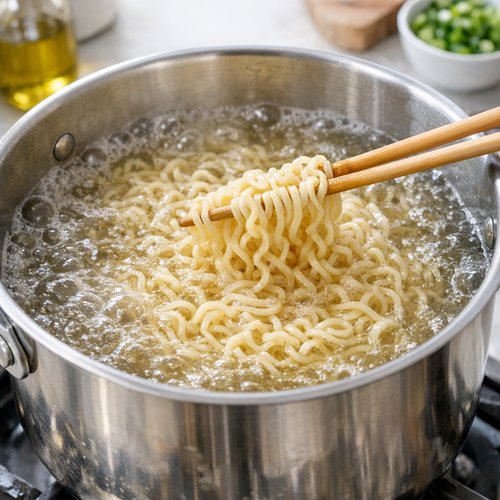
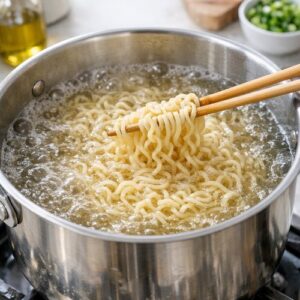
Never—and I mean never—cook your ramen noodles in the broth itself. Bring a separate pot of water to a boil and cook the noodles according to package directions, usually about three minutes. Drain them immediately and rinse under cool water to stop the cooking process, then toss them with just a touch of sesame oil to prevent sticking. This technique keeps your broth clear and lets the noodles maintain their proper texture; they won’t become mushy or absorb excess sodium from prolonged simmering.
Step 6: Add Your Transformed Chicken
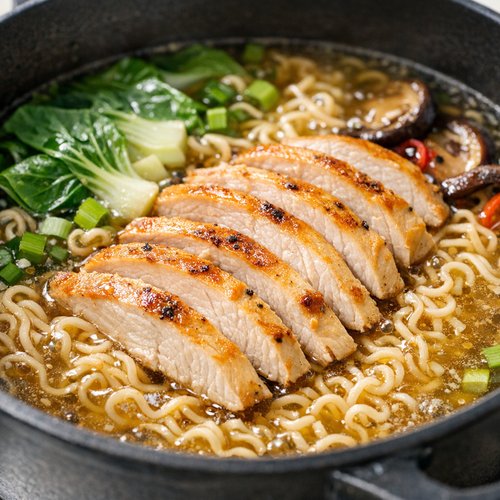
Gently nestle your sliced, warmed chicken into the simmering broth and let it warm through for one minute. You’re not cooking it further; you’re simply bringing it back to temperature and allowing it to absorb some of that luxurious broth. Finish by stirring in the room-temperature butter—this emulsifies slightly and creates a silky mouthfeel that’s absolutely indulgent but completely intentional. The butter rounds out flavors in ways that feel restaurant-quality.
Step 7: Assemble Your Bowl Like You’re Plating for a Guest
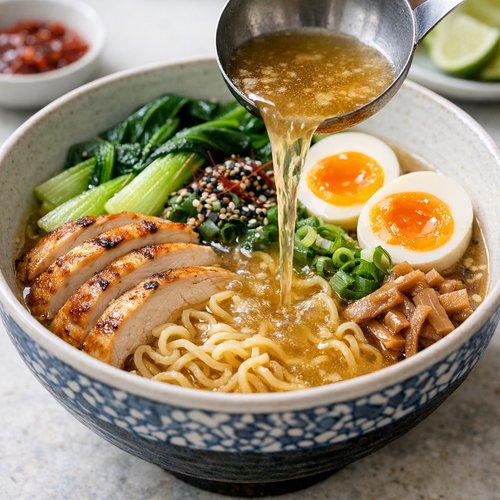
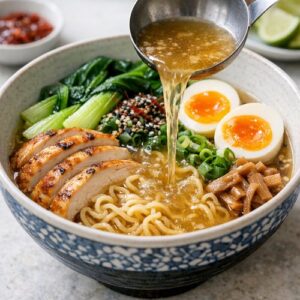
Place your cooked noodles in a large, deep bowl—ideally ceramic or Japanese-style ramen bowls that retain heat beautifully. Ladle the hot broth over the noodles, ensuring you get plenty of mushrooms and aromatics in each bowl. Top with your sliced chicken, arranging it thoughtfully rather than randomly dumping it in. Halve your soft-boiled egg and place it yolk-side up in the center—this is your visual anchor and flavor highlight. Scatter the sliced scallions over top, and finish with a small drizzle of sesame oil and fresh jalapeño slices if using. The final garnish matters; it’s the difference between a meal and an experience.
How to Adapt Based on What You Have
- If you have leftover chicken thighs instead of breasts – Use them without hesitation; the higher fat content makes them even more luxurious in this context. Simply shred them if they’re small pieces.
- If you don’t have mirin – Substitute with a mixture of one tablespoon honey and one tablespoon rice vinegar, added separately so you can balance sweet and acidic elements to taste.
- If fresh ginger isn’t available – One teaspoon of dried ginger can work in a pinch, but add it with the broth rather than toasting it, and use half the amount since dried is more concentrated.
- If your leftover chicken is very dry – Marinate the sliced pieces in a mixture of mirin and soy sauce for ten minutes before adding to the broth; this reintroduces moisture beautifully.
- If you can’t find dried shiitake mushrooms – Any mushroom works; cremini, oyster, or even fresh button mushrooms add earthiness. You might use slightly more quantity since they have less concentrated flavor.
- If you have homemade bone broth – Use less soy sauce since bone broth is already rich in umami; start with two tablespoons instead of three and adjust from there.
- If you prefer vegetarian or vegan – Substitute with mushroom-based broth, tofu for protein, and miso paste for umami depth; the transformation technique remains the same.
Zero Waste: Using Every Last Bit
One of my deepest satisfactions as both a dietitian and home cook is using every component of what I’ve purchased. In this ramen recipe, there’s virtually nothing that goes to waste. Those scallion whites that you sliced off? Toss them into your broth during the simmering phase for additional aromatic depth. Mushroom stems that seem too tough? Simmer them with your broth for the full five minutes—they’ll soften and contribute mineral content. Any leftover broth that doesn’t make it into bowls can be refrigerated and used as a base for quick soups throughout the week. Chicken skin that you’ve crisped? Save those precious bits as a garnish or crumble them into grain bowls. Even the water from boiling your noodles, if it’s relatively salt-free, makes an excellent base for vegetable soups. This is cooking with purpose—every element serves you, and nothing is discarded thoughtlessly.
Can I Store Chicken Ramen Recipe?
Since you’re already working with leftover chicken, storage strategy is essential. The good news is that each component keeps beautifully when stored separately. Your broth lasts three to four days in the refrigerator when stored in an airtight glass container; in fact, it often tastes even better on day two as flavors meld. Cooked noodles should be eaten the same day or stored separately with a light coating of oil to prevent sticking; they’ll keep for two days maximum. Soft-boiled eggs last for three days when refrigerated in their shells. I recommend storing everything separately rather than assembling complete bowls, which allows maximum flexibility.
For reheating: gently warm your broth in a saucepan over medium-low heat rather than microwaving, which can create hot spots. Refresh your noodles by placing them in a fine-mesh strainer and running hot water through them for thirty seconds; this restores their texture beautifully. If you’re building from frozen leftover broth, thaw it overnight in the refrigerator and proceed with gentle reheating.
Expert’s Nutritional Insight
As a registered dietitian, I want to highlight something that my clients often miss: this ramen recipe is a masterclass in complete protein and bioavailable nutrients. Your chicken provides amino acids in their most absorbable form, and when combined with the egg yolk’s choline and the mushrooms’ beta-glucans, you’re creating a meal that supports cognitive function and immune health. The ginger and garlic aren’t just flavor—they’re functional foods containing gingerol and allicin, compounds with documented anti-inflammatory properties. Mirin and soy sauce contribute B vitamins and mineral content. This isn’t indulgence at the expense of nutrition; it’s indulgence that happens to be nourishing. The bone broth base, if you’re using homemade stock, adds collagen and glycine—compounds that support joint health and gut integrity. This is why I love this recipe: it proves that luxurious food and functional nutrition don’t compete; they complement each other beautifully.
Make-Ahead Guide for Busy Weeks
I design many of my recipes with real life in mind—the life where you’re working full-time, managing a household, and still wanting to eat beautifully. This ramen recipe is perfect for Sunday meal prep. Make your broth on Sunday morning and store it in glass containers; it actually improves as it sits. Prep your mushrooms, ginger, and garlic on Sunday afternoon, storing them in separate small containers so you’re never starting from scratch. If you’re using leftover chicken, cook it on Sunday as well; knowing you have quality protein ready transforms how you approach weeknight cooking. When Wednesday night hits and you’re exhausted, you can have a complete ramen bowl on the table in under fifteen minutes by simply combining pre-made components. This is strategic cooking—not meal prep in the sacrificial sense where you’re eating the same thing all week, but preparation that honors your future self’s need for ease without sacrificing quality.
Common Mistakes to Avoid
- Cooking noodles in the broth: This clouds your beautiful liquid and makes noodles mushy. Always cook noodles separately in salted water, as you would for pasta.
- Using pre-minced garlic or ginger: These oxidize quickly and lose their aromatic punch. Fresh is non-negotiable for this recipe; it’s the difference between good and transcendent.
- Boiling eggs too long: Hard-boiled eggs create a sulfurous taste that clashes with the delicate broth. Six and a half minutes gives you that creamy yolk that makes ramen special.
- Skipping the ice bath for eggs: Even thirty seconds in ice water stops the cooking process and preserves that jammy center. This one small step changes everything.
- Overseasoning with soy sauce: This soup is meant to taste balanced and refined, not aggressively salty. Taste as you go and adjust gradually.
- Using low-quality ramen noodles: Cheap instant ramen has a different texture and often contains unwanted additives. Invest in quality dried ramen from Asian markets when possible.
Seasonal Variations
Spring: Add fresh pea shoots and thinly sliced radish for bright crunch; replace regular scallions with tender baby scallions for sweeter, more delicate flavor. Asparagus tips add springtime elegance.
Summer: Use lighter, fresher mushrooms like oyster or enoki instead of the earthier shiitakes. Add cucumber ribbons and fresh mint for cooling contrast. A squeeze of fresh yuzu or lemon brightens the broth beautifully.
Fall: Incorporate roasted sweet potato chunks for sweetness and autumn comfort. Add a splash of apple cider vinegar for acidity that complements harvest flavors. Toasted sesame seeds become more important as a garnish.
Winter: Stay true to the traditional recipe—shiitakes, deep soy, warming spice from ginger. Add dried chile for warmth and metabolism support. Embrace the luxurious, cozy nature of the dish.
Nutrition Information
Per serving (one generous bowl): approximately 385 calories, 24 grams protein, 18 grams fat, 32 grams carbohydrates, 4 grams fiber, and 920 milligrams sodium. This nutritional profile aligns with USDA guidelines for a balanced meal, particularly regarding the 10-35% recommendation for protein calories. The beauty of this recipe is that you’re getting complete protein from both chicken and egg, complex carbohydrates from the noodles, and healthy fats from the sesame oil and egg yolk. The broth-based preparation keeps calories in check while the functional ingredients support overall health markers.
What to Serve With Chicken Ramen Recipe?
Ramen is often a complete meal on its own, but I love serving it alongside something that provides textural contrast. Since your bowl already contains warmth, richness, and deep umami, you want something cool, bright, and refreshing on the side.
- Cucumber salad with sesame-ginger vinaigrette – The cooling cucumber and sharp vinegar balance the warm broth’s richness; this is classic pairing that works every single time
- Quick pickled vegetables – Carrots, daikon, or any vegetables you have on hand, pickled with rice vinegar and sugar, provide brightness and aid digestion
- Edamame with sea salt – Simple, protein-forward, and adds variety without competing with your ramen
- Simple green salad with ginger dressing – Arugula or mixed greens with a light sesame-ginger vinaigrette gives you fresh vegetables and textural variety
- Steamed bok choy with garlic – If you want something warm but lighter, quickly steamed bok choy complements the ramen’s richness
For something sweet after ramen, consider something light and refreshing. My Blender Sorbet Recipe offers a palate-cleansing finish that’s elegant without being heavy, perfect after a rich, warming broth.

Chicken Ramen Recipe
Ingredients
Method
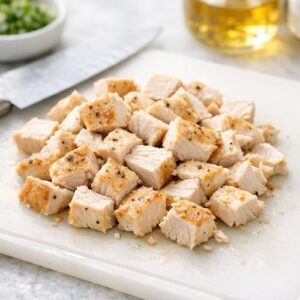
- If your chicken breasts are truly from yesterday, they've likely lost some moisture. Slice them into bite-sized pieces and set them aside on a clean cutting board. We're not going to drown them in broth immediately; instead, gently warm them in a small saucepan over medium-low heat with just a splash of water and a teaspoon of butter for about two minutes. This reintroduces moisture without making them tough. If your chicken was roasted with skin, crisp that skin briefly under the broiler before slicing—this adds textural contrast that's absolutely luxurious.
- In a medium saucepan, warm your sesame oil over medium heat and add the minced ginger and garlic together. Don't rush this step—let them bloom for exactly ninety seconds, until the kitchen smells incredible and you can see the garlic just starting to turn golden at the edges. The aromatics should be releasing their essential oils, creating a fragrant base. Add your dried shiitake mushrooms at this point and let them toast briefly, about one minute. This technique—toasting before simmering—deepens their umami character in ways that feel almost indulgent.
- Pour in your chicken stock, then add the soy sauce and mirin together. Stir gently and bring everything to a simmer over medium heat. Taste the broth at this point and adjust seasoning with sea salt—you're aiming for something that tastes deeply savory but not salty. From my dietitian perspective, this is where you're controlling sodium intake while maximizing flavor impact; mirin adds sweetness that rounds out the soy's sharpness. Let the broth simmer for five minutes so the mushrooms release their minerals and earthiness into the liquid.
- While your broth is simmering, bring a separate small pot of water to a rolling boil. Gently lower your room-temperature eggs into the boiling water and set a timer for exactly six and a half minutes. This timing is crucial—you want yolks that are just barely set on the outside but still have that luxurious, jammy center. When the timer sounds, use a slotted spoon to transfer the eggs to an ice bath. The ice bath stops the cooking process immediately. Once cooled (about two minutes), gently peel them under cool running water, starting from the wider end. The contrast between the firm white and runny yolk is what makes ramen truly special.

- Never—and I mean never—cook your ramen noodles in the broth itself. Bring a separate pot of water to a boil and cook the noodles according to package directions, usually about three minutes. Drain them immediately and rinse under cool water to stop the cooking process, then toss them with just a touch of sesame oil to prevent sticking. This technique keeps your broth clear and lets the noodles maintain their proper texture; they won't become mushy or absorb excess sodium from prolonged simmering.
- Gently nestle your sliced, warmed chicken into the simmering broth and let it warm through for one minute. You're not cooking it further; you're simply bringing it back to temperature and allowing it to absorb some of that luxurious broth. Finish by stirring in the room-temperature butter—this emulsifies slightly and creates a silky mouthfeel that's absolutely indulgent but completely intentional. The butter rounds out flavors in ways that feel restaurant-quality.
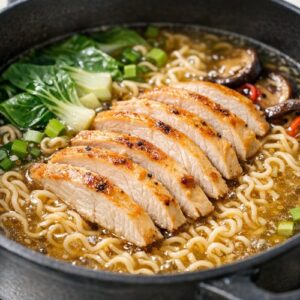
- Place your cooked noodles in a large, deep bowl—ideally ceramic or Japanese-style ramen bowls that retain heat beautifully. Ladle the hot broth over the noodles, ensuring you get plenty of mushrooms and aromatics in each bowl. Top with your sliced chicken, arranging it thoughtfully rather than randomly dumping it in. Halve your soft-boiled egg and place it yolk-side up in the center—this is your visual anchor and flavor highlight. Scatter the sliced scallions over top, and finish with a small drizzle of sesame oil and fresh jalapeño slices if using. The final garnish matters; it's the difference between a meal and an experience.
Notes
FAQs
Can I make this recipe completely from scratch without leftovers?
Absolutely. If you don’t have leftover chicken, poach or roast two boneless, skin-on chicken breasts fresh the day you’re making ramen. The transformation techniques—the toasting of aromatics, the gentle reheating, the broth building—remain exactly the same. You’re simply adding the chicken cooking step to your timeline. Everything else is identical, and honestly, the process of making ramen from scratch teaches you so much about how flavors layer and build.
Is store-bought chicken broth acceptable, or do I need homemade?
Store-bought is absolutely acceptable; I use it regularly in my practice when working with clients on quick meal solutions. I recommend low-sodium varieties so you maintain control over final seasoning, and I look for brands with minimal additives—ideally just chicken, water, and salt. That said, if you ever make homemade stock, freeze it in ice cube trays for moments exactly like this. The difference in depth is noticeable but not life-changing; good technique trumps perfect ingredients every time.
What if I don’t have access to mirin or shiitake mushrooms?
Mirin is increasingly available in regular grocery stores, but if your area doesn’t carry it, the honey-and-rice-vinegar substitution I mentioned works beautifully. For shiitakes, any mushroom adds umami; cremini and oyster mushrooms are excellent alternatives. You might slightly increase quantity and add an extra teaspoon of soy sauce to compensate for the earthiness you’d get from shiitakes, but this is adjusting by taste, not by strict formula.
How can I make this recipe vegetarian or vegan?
Skip the chicken entirely and use extra-firm tofu pressed and cubed, or mushroom-based protein. Replace the chicken stock with vegetable broth or mushroom broth (you can make this by simmering dried mushrooms, kombu, and aromatics). Replace soy sauce with tamari if you need gluten-free, and use miso paste as your umami base. For the egg, skip it entirely or use vegan egg replacer if you want that creamy element. The technique and flavor-building approach remains identical; you’re simply adjusting protein sources.
Can I freeze this recipe, and if so, which components freeze best?
Yes, but strategically. Your broth freezes beautifully for up to three months; I recommend freezing in portion-sized containers for maximum convenience. Cooked noodles don’t freeze well—they become mushy upon thawing. Soft-boiled eggs shouldn’t be frozen (the whites become rubbery). Frozen chicken is acceptable but thaw it overnight in the refrigerator before using. The beauty of freezing components separately is that you can build fresh bowls throughout the month using your frozen broth base combined with freshly cooked noodles and fresh garnishes.
More Leftover Transformation Recipes
- Best Recipe For Pavlova – Transform leftover egg whites into an elegant dessert that proves nothing goes to waste in an intentional kitchen
- Brown Sugar Boba Pearls Recipe – Create something luxurious and playful that transforms simple pantry staples into restaurant-quality experience
- Best Profiterole Recipe – Turn leftover pastry cream into something showstopping that proves transformation is an art form
Final Thoughts: Cooking With Purpose
This Chicken Ramen Recipe represents everything I believe about cooking: that transformation isn’t sacrifice, that leftovers are invitations rather than failures, and that mindfulness and indulgence are completely compatible. When you sit down with a bowl of steaming ramen that you’ve thoughtfully assembled, knowing that you’ve honored your ingredients and resourcefully used what was already in your kitchen, you’re doing something profound. You’re practicing abundance consciousness instead of scarcity thinking. You’re proving to yourself that you have the skill and creativity to turn the ordinary into the extraordinary. You’re demonstrating that the most luxurious meals often come from intention rather than expense.
This recipe has become something sacred in my kitchen—a moment where my training as a dietitian meets my passion for cooking, where nutrition and indulgence dance together perfectly. I hope it becomes sacred in yours too. The next time you have leftover chicken, tomorrow’s forgotten vegetables, or pantry staples gathering dust, remember this recipe. Remember that transformation is possible, that creativity trumps convenience, and that the best meals are built on mindfulness, quality ingredients, and genuine care.
Savor the joy of cooking!
META DESCRIPTION: Master the best chicken ramen recipe that transforms leftovers into restaurant-quality comfort bowls. Complete guide from registered dietitian Rachel Ortiz.