
This post contains affiliate links. As an Amazon Associate I earn from qualifying purchases.
There’s something profoundly luxurious about a bowl of aromatic crab curry—the way the sweet, tender meat mingles with warm spices and creamy coconut milk feels like an indulgent escape. I love pairing this with authentic ramen for a complete Asian-inspired dinner that celebrates both mindfulness and decadence in every spoonful.
How a Kitchen Memory Led Me to Master This Spiced Treasure
I remember the first time my abuela made curry in her kitchen—the one where I learned to bake those holiday cookies that sparked my entire nutrition journey. The house filled with the most intoxicating blend of coriander, cumin, and fresh ginger, and I watched her move through the kitchen with such intention, toasting each spice separately, letting me smell the transformation happening in her cast iron skillet. She explained that cooking wasn’t just about following steps; it was about honoring each ingredient enough to prepare it properly.
That lesson stayed with me through my registered dietitian training, through countless client consultations, and directly into my philosophy around food. This crab curry recipe embodies that philosophy perfectly—it proves that mindful eating and pure indulgence aren’t opposing forces. They’re dance partners, and when you source quality crabs and take time with your spice blend, magic happens.
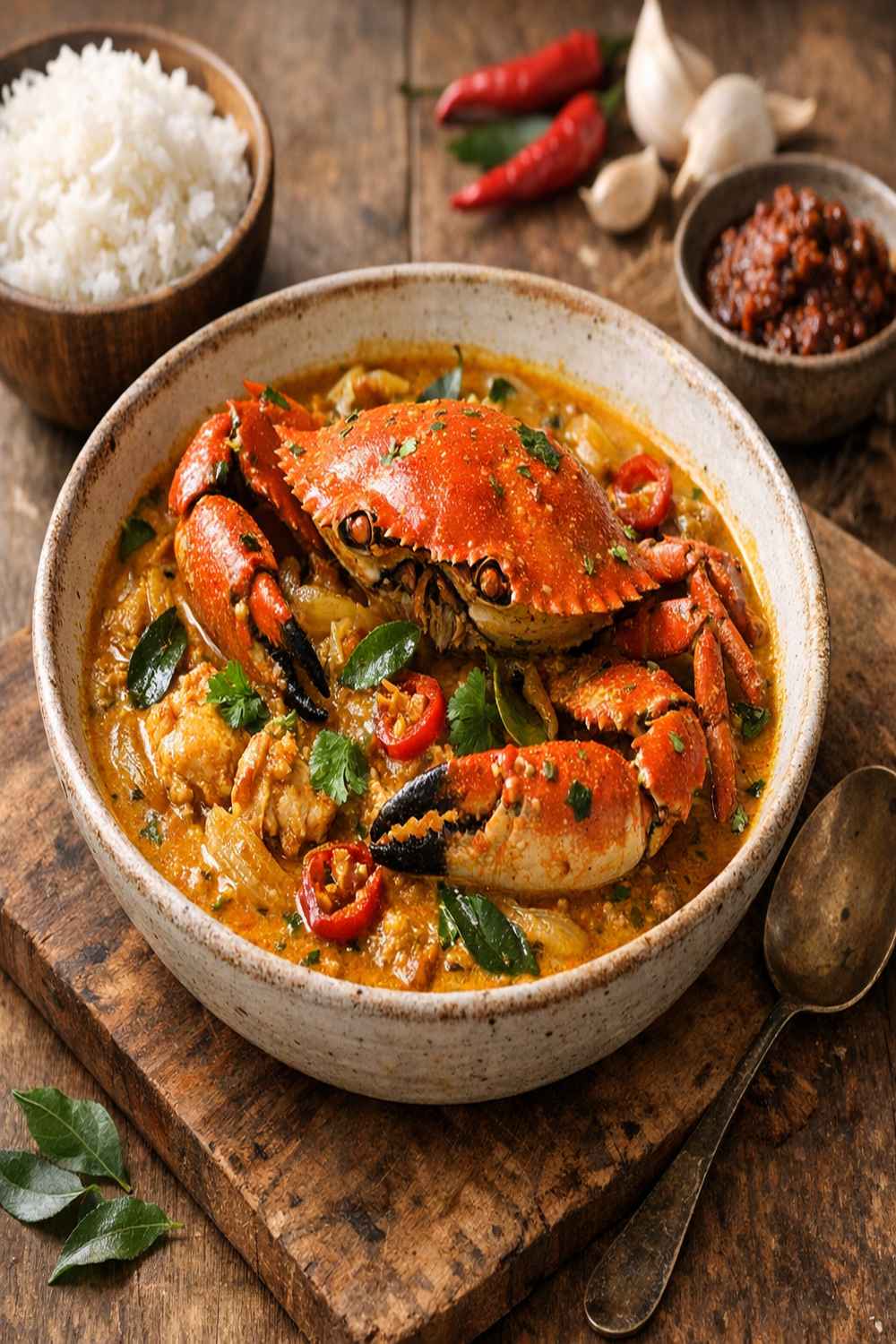
What is Crab Curry?
Crab curry is a Southeast Asian treasure—particularly celebrated in Malaysian and Indian coastal cuisines—where fresh crustaceans meet an intensely aromatic blend of toasted spices, coconut milk, and herbs. The beauty of this dish lies in its layers: the earthiness of the spice blend creates a foundation, while fresh curry leaves, ginger, and chilies add brightness and heat.
What makes this version special is the technique of blooming whole spices before grinding them. This step—which takes just minutes—releases essential oils that create a complexity you simply cannot achieve with pre-ground curry powder alone. The crabs themselves become vehicles for this gorgeous sauce, their sweet meat absorbing every nuance of flavor while maintaining its delicate texture.
This isn’t fast food. This is the kind of cooking that requires presence, good equipment, and an understanding of how heat and time transform ingredients. As a dietitian, I’m equally invested in the nutritional profile: crabs provide exceptional protein, selenium, and omega-3 fatty acids, while the coconut milk offers MCT fats that support satiety and satisfaction.
Why You’ll Love This Crab Curry Recipe
- Restaurant-quality results at home – When you toast your own whole spices and build the curry base intentionally, you create depth that takeout simply cannot match. I use a high-quality mortar and pestle (I recommend a granite one—the weight matters) to grind my spices fresh.
- Proof that indulgence and nutrition coexist – Each serving delivers approximately 28 grams of protein from the crab, paired with healthy fats from coconut milk. This isn’t guilt; this is nourishment that happens to taste extraordinary.
- Adaptable to your heat preference – The recipe gives you control over spice level. I personally use a heaped teaspoon of cayenne because my family loves extra fire, but you can adjust to your comfort level without compromising flavor.
- Impressive enough for entertaining – Serving this to guests signals that you care about quality ingredients and proper technique. The aroma alone sets expectations, and the first taste delivers.
- Makes excellent leftovers – Unlike many seafood dishes, this curry actually deepens in flavor over 24-48 hours as the crabs absorb more of the spiced coconut broth.
The Ingredients
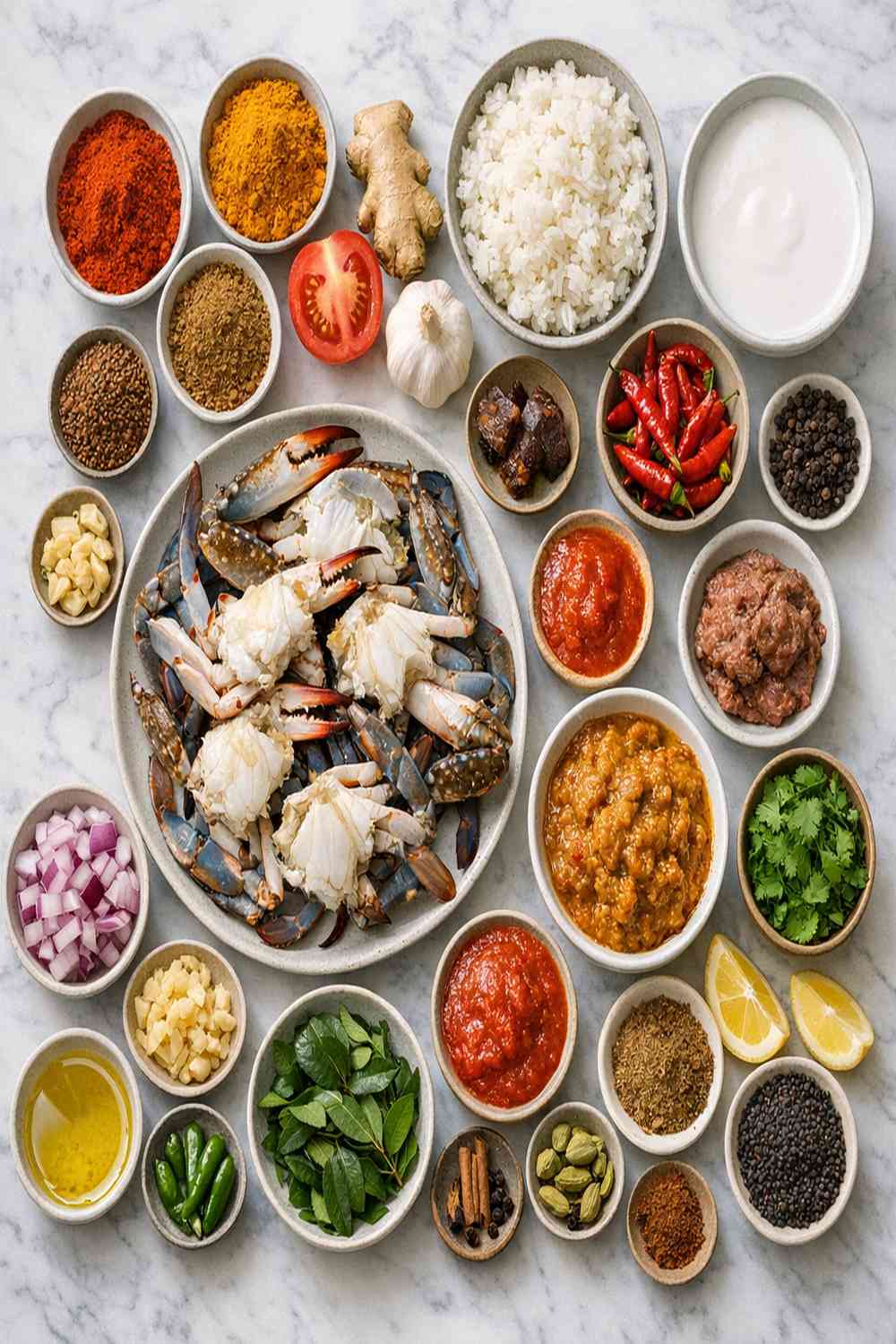
I’ve organized these ingredients by function because understanding why each element matters will help you make smart substitutions if needed. Every single ingredient serves a purpose in creating that luxurious, complex flavor profile.
For the Spice Blend
- 4 teaspoons whole coriander seeds (the foundation of warmth)
- 1½ tablespoons unroasted curry powder (the bridge between whole spices and final blend)
- 1 teaspoon fennel seeds (brings subtle anise notes)
- ½ teaspoon cayenne pepper (adjust to your heat preference; I use 1 heaped teaspoon)
- ½ teaspoon mustard seeds (provides subtle heat and texture)
- 1½ teaspoons black peppercorns (freshly ground, never pre-ground)
- 3 teaspoons whole cumin seeds (adds earthiness and depth)
For the Aromatics and Base
- 4 tablespoons unsweetened desiccated coconut or ¼ cup freshly grated coconut (fresh is superior if available)
- 6 whole garlic cloves (left intact for gentle infusion of flavor)
- 2 teaspoons coconut sugar or palm sugar (balances heat and acidity)
- 1 tablespoon raw basmati rice (this toasts and thickens the curry naturally)
- 1 tablespoon tamarind paste (adds subtle tang that brightens everything)
- ½ yellow onion, finely chopped (use a sharp knife and take your time)
- 1 inch fresh ginger, minced (not jarred; the difference in vibrancy is significant)
For the Crabs and Liquid
- Water as needed (to adjust curry consistency)
- Sea salt to taste (I prefer fleur de sel for finishing)
- 6 to 8 blue swimmer crabs, cleaned and halved (see detailed cleaning instructions in steps below)
- 1 fresh pandan leaf, about 4 inches (adds subtle fragrance; optional but recommended)
- 6 to 8 fresh curry leaves (not dried; dried loses too much potency)
- 2 to 3 fresh red or green chili peppers, sliced or halved (adjust quantity based on heat tolerance)
- 1½ cups full-fat coconut milk, high quality (never lite; the richness is essential)
- ½ cup fresh drumstick leaves or cilantro as substitute (optional garnish)
How to Make Crab Curry
This recipe yields approximately 4 generous servings as a main course. The process takes about 45 minutes from start to finish, with most of that time being hands-on cooking rather than passive waiting. I recommend using a heavy-bottomed Dutch oven or a large, deep skillet with a lid—something substantial that distributes heat evenly.
Step 1: Toast Your Whole Spices
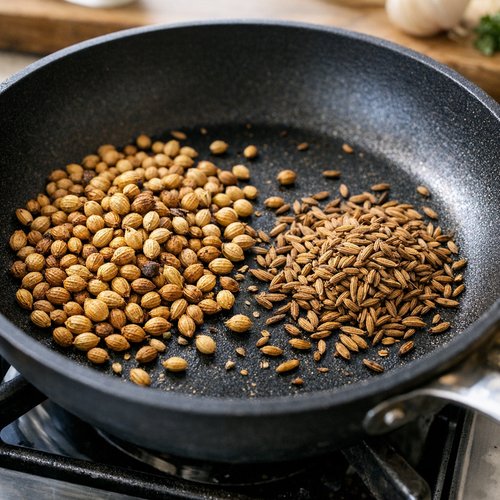
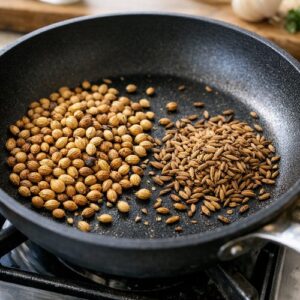
Begin with your dry spice blend because this is where the magic truly begins. In a small, dry skillet over medium heat, add your coriander seeds, cumin seeds, mustard seeds, black peppercorns, and fennel seeds. Let them toast for 3-4 minutes, stirring constantly, until the kitchen fills with an intoxicating aroma and the spices become slightly darker and fragrant. You’ll notice the mustard seeds begin to pop slightly—that’s your signal to stop. Don’t rush this step; under-toasting leaves you with flat flavors, while over-toasting creates bitterness.
Pour these toasted whole spices into a mortar and pestle (I cannot overstate how important a quality mortar and pestle is—I use a 4-cup granite one that was worth every penny). Grind them with intention, breaking them down until you have a coarse, fragrant powder. Some whole pieces remaining is actually desirable; it adds textural interest.
Step 2: Toast the Basmati Rice and Coconut
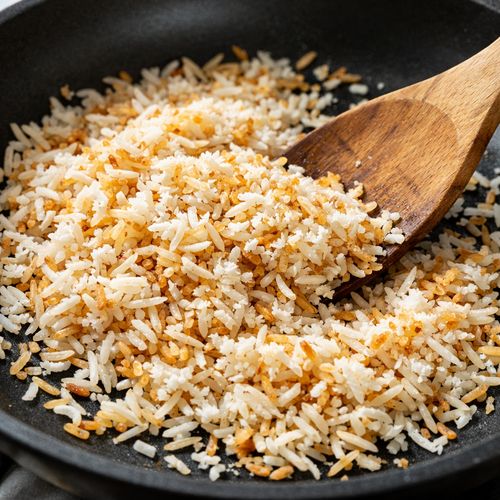
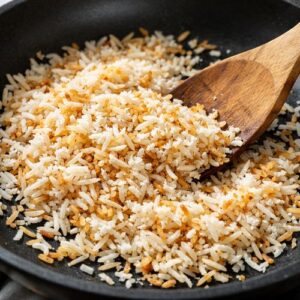
In the same dry skillet, add your tablespoon of basmati rice and the desiccated or fresh coconut. Toast over medium heat for 2-3 minutes, stirring gently, until the rice begins to turn pale golden and the coconut smells warm and toasty. This step develops nutty flavors that become the subtle foundation of your curry. Transfer this mixture to your mortar and pestle, and grind it together with your toasted spices until you have a cohesive, aromatic blend.
Step 3: Prepare Your Crabs
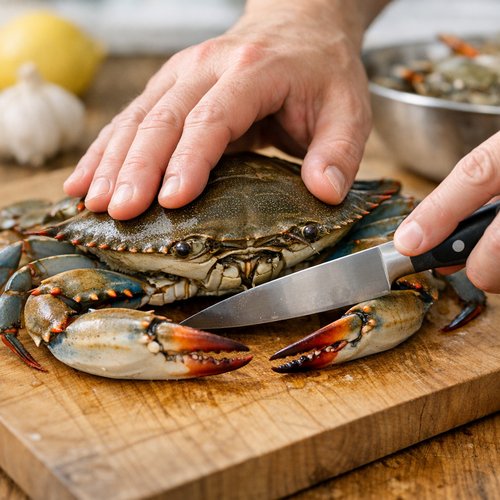
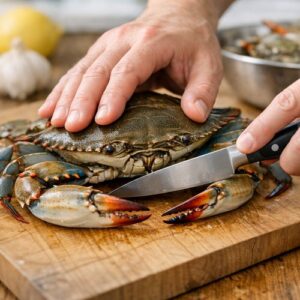
While your spices cool slightly, it’s time to address the crabs. If you’ve purchased them live, this requires quick, humane work. Place each crab in the freezer for 15-20 minutes to render it unconscious. Using a sharp chef’s knife, position it point-down at the center of the crab’s shell, directly on the cross-shaped marking. Press down firmly and quickly to destroy the nervous system. Rinse the crab under cold running water, then using kitchen shears or your knife, cut the crab in half lengthwise, then cut each half in half again to create four pieces per crab.
Remove any excess water from the crab pieces using paper towels; excess moisture will cause splattering when you sear them. The pieces should be relatively dry.
Step 4: Build Your Aromatics Base
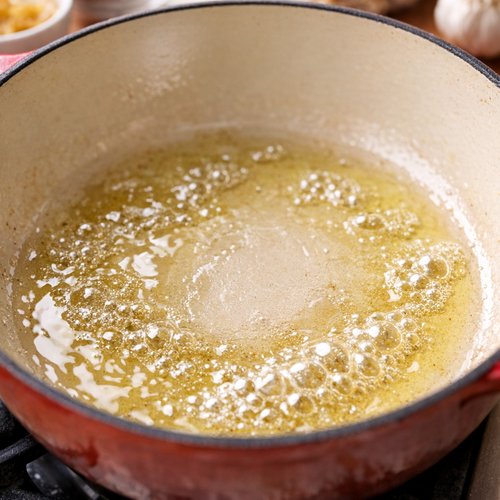
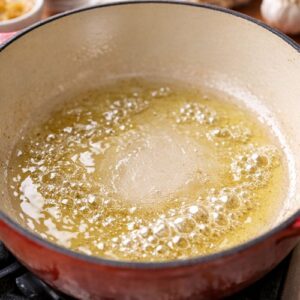
In your Dutch oven or large deep skillet, warm 2 tablespoons of neutral oil (I use avocado oil for its high smoke point) over medium-high heat until it shimmers. Add your minced ginger and let it cook for 1 minute, just until fragrant. Add your finely chopped yellow onion and cook for 3-4 minutes, stirring occasionally, until the onion begins to soften and become translucent at the edges.
Add your whole garlic cloves and continue cooking for another 1 minute. You’re building layers of flavor here, letting each aromatic element develop without browning too aggressively.
Step 5: Introduce Your Spice Blend
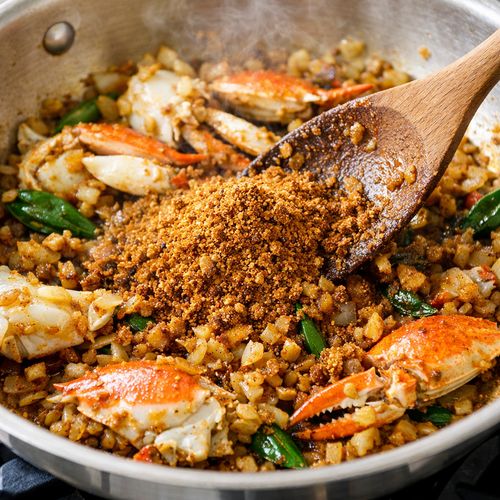
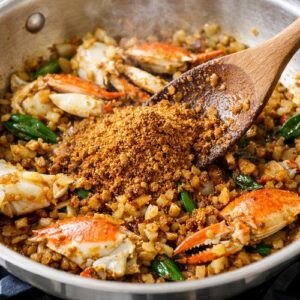
Add your ground spice mixture (the one you toasted and ground in steps 1 and 2) directly to your aromatics. Stir constantly for 2-3 minutes to bloom the spices in the hot oil. This is crucial—you’re cooking out the raw edge of the spices and marrying them with the aromatics. Your kitchen will smell absolutely incredible at this point. Add your unroasted curry powder and cayenne pepper, stirring well.
Stir in your tamarind paste and coconut sugar, mixing until everything is well combined and the mixture becomes a fragrant, oily paste.
Step 6: Create the Coconut Broth
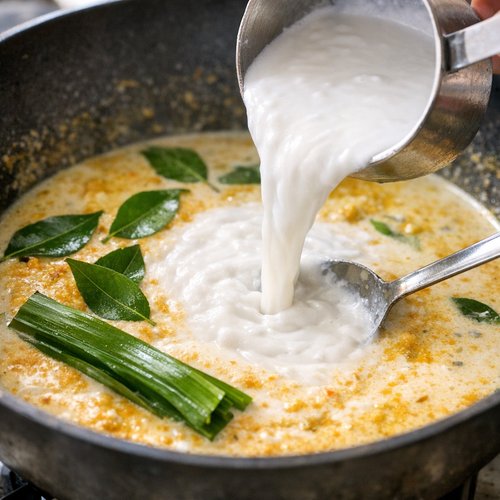
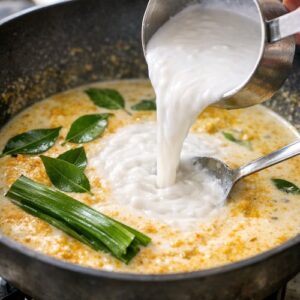
Pour in your full-fat coconut milk, stirring well to incorporate the spice paste completely. Add your fresh curry leaves and pandan leaf (if using). Bring the mixture to a gentle simmer over medium heat. Let it simmer for 5-7 minutes without the crabs, allowing the flavors to meld and the sauce to reduce slightly. Taste and adjust seasoning with sea salt.
This is your moment to assess the flavor balance: Does it need more heat? Add another pinch of cayenne. Does it need brightness? A splash of lime juice (not in the original ingredients, but sometimes I add it). Is it perfectly balanced? You’re ready for the crabs.
Step 7: Sear and Simmer the Crabs
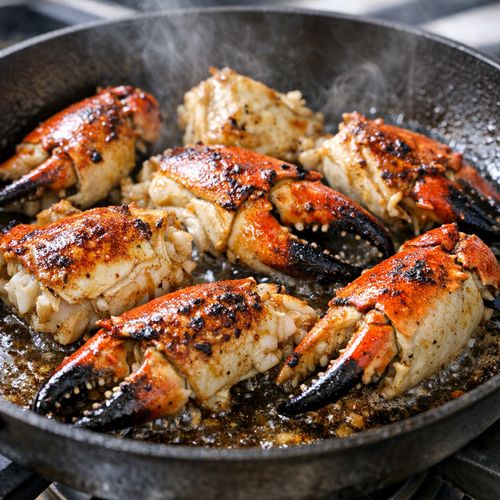
Increase heat to medium-high. In a separate skillet, quickly sear your crab pieces in a bit of hot oil for 2 minutes per side until the shell turns bright orange-red. This searing step, while optional, creates a textural contrast and seals in the delicate meat. Carefully transfer these seared crab pieces into your simmering curry sauce.
Add your fresh chili peppers (whole or halved, depending on your preference for heat distribution). Reduce heat to medium and simmer for 8-10 minutes, allowing the crabs to cook through gently. The meat should be opaque throughout and should pull away from the shell easily when tested with a fork. Do not overcook; crab meat becomes rubbery quickly.
Step 8: Final Adjustments and Garnish
Remove from heat and taste again. Adjust salt and heat as desired. If your curry seems too thick, add water 2 tablespoons at a time until you reach your preferred consistency. If it seems too thin, simmer uncovered for a few additional minutes to concentrate flavors.
Transfer to serving bowls and garnish with fresh drumstick leaves or cilantro if desired. Serve immediately while the aromatics are at their peak.

Expert’s Nutritional Insight
As a registered dietitian, I want to highlight something important about the coconut milk in this recipe. Full-fat coconut milk contains medium-chain triglycerides (MCTs) that are metabolized differently than long-chain fats—they’re more readily used for energy rather than stored. Combined with the exceptional protein content of crabs (approximately 28 grams per serving) and the mineral density (selenium, zinc, copper), this dish becomes a genuinely nourishing meal that happens to feel completely indulgent. The whole spices add polyphenols with anti-inflammatory properties. This is nutrition that tastes like celebration.
Tips and Tricks
- Source your crabs thoughtfully – Blue swimmer crabs are my preference because of their sweet, delicate meat. If you can find a fishmonger who sources directly from sustainable operations, you’re supporting both quality and ocean health. Call ahead and request live crabs; they should be active and responsive.
- Don’t skip the whole spice toasting – I know it adds a step, but the difference between pre-ground and freshly toasted spices is the difference between good and transcendent. Those volatile oils in whole spices are what create complexity.
- Use a mortar and pestle, not a spice grinder – While a spice grinder is faster, a mortar and pestle gives you control over texture. You want a blend with some texture remaining, not a fine powder.
- Keep your coconut milk at room temperature before adding – Cold coconut milk can seize slightly when added to hot oil. I let mine sit on the counter while I prepare the aromatics.
- Make-ahead advantage: prepare components the day before – Toast and grind your spices, prep your aromatics (ginger, garlic, onion), and clean your crabs up to 4 hours ahead. Keep crab pieces refrigerated in an airtight container. This transforms dinner prep into assembly, which is where the joy lives.
- Invest in a quality Dutch oven – I use a 5-quart enameled cast iron Dutch oven for this recipe. The even heat distribution and retention mean your curry cooks beautifully, and you can move directly from stovetop to table for serving. It’s worth the investment.
Make-Ahead Guide
This is where my professional experience as a dietitian informs practical weeknight cooking. Crab curry actually improves with planning.
Up to 24 hours ahead: Toast and grind your whole spices. Store in an airtight glass container away from light and heat. Prepare your aromatics (mince ginger, peel and leave garlic cloves whole, chop onion). Store in separate containers in your refrigerator. Clean and cut your crabs; store covered in the coldest part of your refrigerator.
Up to 4 hours ahead: Complete steps 1-5 (toasting spices through creating the spice paste). Once you’ve bloomed the spices in the aromatics, stop before adding coconut milk. Cool this base mixture, transfer to an airtight container, and refrigerate. When ready to cook, simply reheat this base gently, add your coconut milk, and proceed from Step 6.
Up to 2 days after cooking: Store the finished curry in an airtight glass container in the refrigerator. Reheat gently over medium-low heat, adding a splash of water or additional coconut milk if the sauce has thickened too much. The flavors actually deepen over the first 24-48 hours.
Common Mistakes to Avoid
- Overcooking the crabs – This is the biggest mistake. Crab meat continues cooking even after you remove it from heat due to carryover cooking. Aim for just opaque, not gray or chalky. Test a piece at the 8-minute mark; it should pull away from the shell easily but still feel tender.
- Using lite or reduced-fat coconut milk – The richness of full-fat coconut milk is non-negotiable here. The fats carry flavor molecules and create the luxurious mouthfeel that makes this dish special. Lite versions will taste thin and disappointing.
- Skipping the spice toasting – If you use pre-ground spices without toasting, you lose the dimensional depth. Your curry becomes one-note and flat. The 5 minutes spent toasting and grinding is what separates restaurant-quality from ordinary.
- Not adjusting for your preferred heat level – The recipe gives you the baseline. If you love heat, don’t hesitate to add more cayenne or use serrano peppers instead of regular chilies. If you prefer mild, reduce the cayenne and remove seeds from your chili peppers before adding.
Seasonal Variations
Spring: Add fresh asparagus or spring peas in the last 2 minutes of cooking. Their brightness complements the warmth of the spices beautifully.
Summer: Reduce the coconut milk slightly (use 1¼ cups instead of 1½) and add fresh lime juice at the end. Serve chilled as a curry salad over greens for a lighter interpretation.
Fall: Add roasted pumpkin or butternut squash pieces during the final simmer. The sweetness and earthiness marry gorgeously with the spice blend.
Winter: Increase the heat with extra cayenne and add warming spices like star anise. Serve with warm, comforting rice or bread rather than fresh accompaniments.
Can I Store Crab Curry?
Yes, and it’s one of the advantages of this recipe. Refrigerator storage lasts 3-4 days in an airtight glass container. As I mentioned, the flavor actually deepens after the first day as the crabs absorb more of the spiced broth. Freezer storage extends to 2-3 months, though I recommend freezing the sauce and crabs separately for best results. When reheating from frozen, thaw overnight in the refrigerator, then gently reheat over medium-low heat with an additional splash of coconut milk to restore the sauce consistency.
I don’t recommend freezing the fresh garnishes (curry leaves, cilantro, chilies), so add these when you reheat rather than beforehand.
Nutrition Information
Per serving (based on 4 servings): Calories: 385 | Protein: 28g | Total Fat: 24g | Saturated Fat: 16g | Carbohydrates: 14g | Fiber: 2g | Sodium: 420mg | Selenium: 66 mcg (94% DV) | Zinc: 6.2mg (56% DV)
Data sourced from USDA FoodData Central. This analysis is based on standard ingredient quantities. The nutritional benefits are significant: crabs provide exceptional bioavailable selenium, which supports thyroid function and antioxidant defense. The coconut milk offers satiety-promoting fats, and the whole spices provide polyphenols. This is genuinely nourishing food that supports both physical health and emotional satisfaction.
What Can I Serve With Crab Curry?
The beauty of this curry is its versatility. I think about serving it with elements that either complement the spiced intensity or provide textural contrast. Here are my favorite pairings:
- Jasmine rice – The floral notes in jasmine rice echo the pandan leaf in the curry. Cook rice in a 1:1 ratio of rice to water with a pinch of salt. Let it steam for 10 minutes after the water boils, then fluff with a fork.
- Coconut rice – Cook your rice in a mixture of half coconut milk and half water for a richer base that won’t compete with the curry.
- Naan or roti bread – The slight sweetness of naan balances the heat, and the bread becomes a vehicle for the curry sauce. If you love baking, try my braided brioche recipe for an indulgent bread experience, though traditional naan is the authentic choice here.
- Steamed or stir-fried vegetables – Bok choy, broccoli, or snap peas add brightness and crunch without overwhelming the dish.
- Cucumber and tomato salad – Cool, fresh, acidic components provide balance to the rich, warm curry.
- Lime wedges and fresh cilantro – Simple finishing elements that let diners customize brightness to their preference.
I also love serving this alongside beef curry recipes for dinner parties where I’m offering protein variety. The spice profiles complement each other beautifully.
Substitutes
- Prawns or shrimp instead of crabs – Use medium-sized prawns and reduce simmering time to just 3-4 minutes. The cooking time is shorter because shrimp are more delicate, but the flavor profile remains absolutely delicious.
- Fresh coconut milk from scratch – If you can’t find quality canned coconut milk, make your own by blending 1 cup unsweetened coconut flakes with 1 cup boiling water, then straining through cheesecloth. The flavor is superior, though it requires extra time.
- Cilantro instead of drumstick leaves – Drumstick leaves have a specific flavor, but fresh cilantro provides a similar brightness and is more widely available. The flavor profile shifts slightly but remains balanced.
- Lemongrass instead of pandan leaf – If you can’t locate fresh pandan leaf, one stalk of lemongrass (bruised and halved lengthwise) provides a similar aromatic quality. Both are optional but recommended for their subtle fragrance.
- Fish sauce instead of tamarind paste – For additional depth, you can use 1 teaspoon of high-quality fish sauce alongside the tamarind, or substitute entirely. The flavor shifts from tangy-sweet to umami-savory, which is equally delicious.
- Red curry paste as a shortcut base – If time is limited, replace the whole spice toasting and grinding with 3 tablespoons of quality red curry paste. Add it at Step 5. The flavor won’t have quite the complexity of freshly toasted spices, but it’s a legitimate time-saving option.

Crab Curry Recipe
Ingredients
Method
- Begin with your dry spice blend because this is where the magic truly begins. In a small, dry skillet over medium heat, add your coriander seeds, cumin seeds, mustard seeds, black peppercorns, and fennel seeds. Let them toast for 3-4 minutes, stirring constantly, until the kitchen fills with an intoxicating aroma and the spices become slightly darker and fragrant. You'll notice the mustard seeds begin to pop slightly—that's your signal to stop. Don't rush this step; under-toasting leaves you with flat flavors, while over-toasting creates bitterness. Pour these toasted whole spices into a mortar and pestle (I cannot overstate how important a quality mortar and pestle is—I use a 4-cup granite one that was worth every penny). Grind them with intention, breaking them down until you have a coarse, fragrant powder. Some whole pieces remaining is actually desirable; it adds textural interest.
- In the same dry skillet, add your tablespoon of basmati rice and the desiccated or fresh coconut. Toast over medium heat for 2-3 minutes, stirring gently, until the rice begins to turn pale golden and the coconut smells warm and toasty. This step develops nutty flavors that become the subtle foundation of your curry. Transfer this mixture to your mortar and pestle, and grind it together with your toasted spices until you have a cohesive, aromatic blend.
- While your spices cool slightly, it's time to address the crabs. If you've purchased them live, this requires quick, humane work. Place each crab in the freezer for 15-20 minutes to render it unconscious. Using a sharp chef's knife, position it point-down at the center of the crab's shell, directly on the cross-shaped marking. Press down firmly and quickly to destroy the nervous system. Rinse the crab under cold running water, then using kitchen shears or your knife, cut the crab in half lengthwise, then cut each half in half again to create four pieces per crab. Remove any excess water from the crab pieces using paper towels; excess moisture will cause splattering when you sear them. The pieces should be relatively dry.
- In your Dutch oven or large deep skillet, warm 2 tablespoons of neutral oil (I use avocado oil for its high smoke point) over medium-high heat until it shimmers. Add your minced ginger and let it cook for 1 minute, just until fragrant. Add your finely chopped yellow onion and cook for 3-4 minutes, stirring occasionally, until the onion begins to soften and become translucent at the edges. Add your whole garlic cloves and continue cooking for another 1 minute. You're building layers of flavor here, letting each aromatic element develop without browning too aggressively.
- Add your ground spice mixture (the one you toasted and ground in steps 1 and 2) directly to your aromatics. Stir constantly for 2-3 minutes to bloom the spices in the hot oil. This is crucial—you're cooking out the raw edge of the spices and marrying them with the aromatics. Your kitchen will smell absolutely incredible at this point. Add your unroasted curry powder and cayenne pepper, stirring well. Stir in your tamarind paste and coconut sugar, mixing until everything is well combined and the mixture becomes a fragrant, oily paste.
- Pour in your full-fat coconut milk, stirring well to incorporate the spice paste completely. Add your fresh curry leaves and pandan leaf (if using). Bring the mixture to a gentle simmer over medium heat. Let it simmer for 5-7 minutes without the crabs, allowing the flavors to meld and the sauce to reduce slightly. Taste and adjust seasoning with sea salt. This is your moment to assess the flavor balance: Does it need more heat? Add another pinch of cayenne. Does it need brightness? A splash of lime juice (not in the original ingredients, but sometimes I add it). Is it perfectly balanced? You're ready for the crabs.
- Increase heat to medium-high. In a separate skillet, quickly sear your crab pieces in a bit of hot oil for 2 minutes per side until the shell turns bright orange-red. This searing step, while optional, creates a textural contrast and seals in the delicate meat. Carefully transfer these seared crab pieces into your simmering curry sauce. Add your fresh chili peppers (whole or halved, depending on your preference for heat distribution). Reduce heat to medium and simmer for 8-10 minutes, allowing the crabs to cook through gently. The meat should be opaque throughout and should pull away from the shell easily when tested with a fork. Do not overcook; crab meat becomes rubbery quickly.

- Remove from heat and taste again. Adjust salt and heat as desired. If your curry seems too thick, add water 2 tablespoons at a time until you reach your preferred consistency. If it seems too thin, simmer uncovered for a few additional minutes to concentrate flavors. Transfer to serving bowls and garnish with fresh drumstick leaves or cilantro if desired. Serve immediately while the aromatics are at their peak.

Notes
FAQs
Can I make this curry vegan or vegetarian?
Absolutely, though you’re creating a different dish. Replace the crabs with 3 cups of cubed firm tofu or cauliflower florets. Press tofu between paper towels for 30 minutes to remove excess moisture before adding. Reduce the simmering time to 5 minutes for tofu or 8 minutes for cauliflower. The spice blend and sauce remain identical. Use vegetable broth instead of allowing the crabs to contribute subtle briny notes. It’s genuinely delicious, and I often make this version for vegetarian friends.
What’s the difference between this curry and Thai red curry?
This is Malaysian and Indian-influenced, while Thai red curry relies on Thai chilies, galangal, and lemongrass as primary aromatics. This version features more toasted warm spices (coriander, cumin, fennel) creating earthiness rather than the bright, herbaceous heat of Thai curry. Both are wonderful; they’re just different flavor profiles. I actually make both depending on my mood and what’s available at the market.
Can I use frozen crabs?
Yes, though live or very fresh crabs are preferable because the meat is more tender. If using frozen, thaw completely in the refrigerator (24 hours minimum) before cleaning and cutting. Pat thoroughly dry before searing. The cooking time remains the same once the crabs are added to the curry, but monitor closely as thawed meat can become overcooked more quickly.
How do I know when the curry is done?
The crabs are done when the meat pulls away from the shell easily with a fork and appears opaque rather than translucent. The sauce should be reduced slightly and cling to the crab pieces. The flavors should taste balanced—not overly spicy, not raw-tasting. Taste the sauce directly; if the spices still feel harsh or unblended, simmer uncovered for another 2-3 minutes. You’re looking for harmony.
Is this recipe gluten-free?
Yes, naturally. All ingredients are inherently gluten-free as written. Just verify that your curry powder and curry paste don’t contain any additives or fillers (check labels). If you’re serving to guests with celiac disease, ensure all equipment used was not cross-contaminated with gluten-containing products. This is a genuinely inclusive recipe.
More Recipes You’ll Love
- Beef Recipes Curry – A warming, rich interpretation using quality beef for equally stunning results
- Authentic Ramen Recipe – Another Asian dish celebrating aromatic broths and quality ingredients
- Beet Jelly Recipe – A stunning vegetable-forward component that pairs beautifully as a curry side
This crab curry represents everything I believe about cooking: that mindful preparation of quality ingredients creates food that nourishes both body and soul. That indulgence and nutrition aren’t enemies. That taking time to toast your own spices and source exceptional crabs isn’t indulgent excess—it’s respect for the ingredients and love for the people you’re feeding. Every time you make this curry, you’re practicing a small meditation in flavor-building, and the result is a meal that feels like celebration. Savor the joy of cooking!