
This post contains affiliate links. As an Amazon Associate I earn from qualifying purchases.
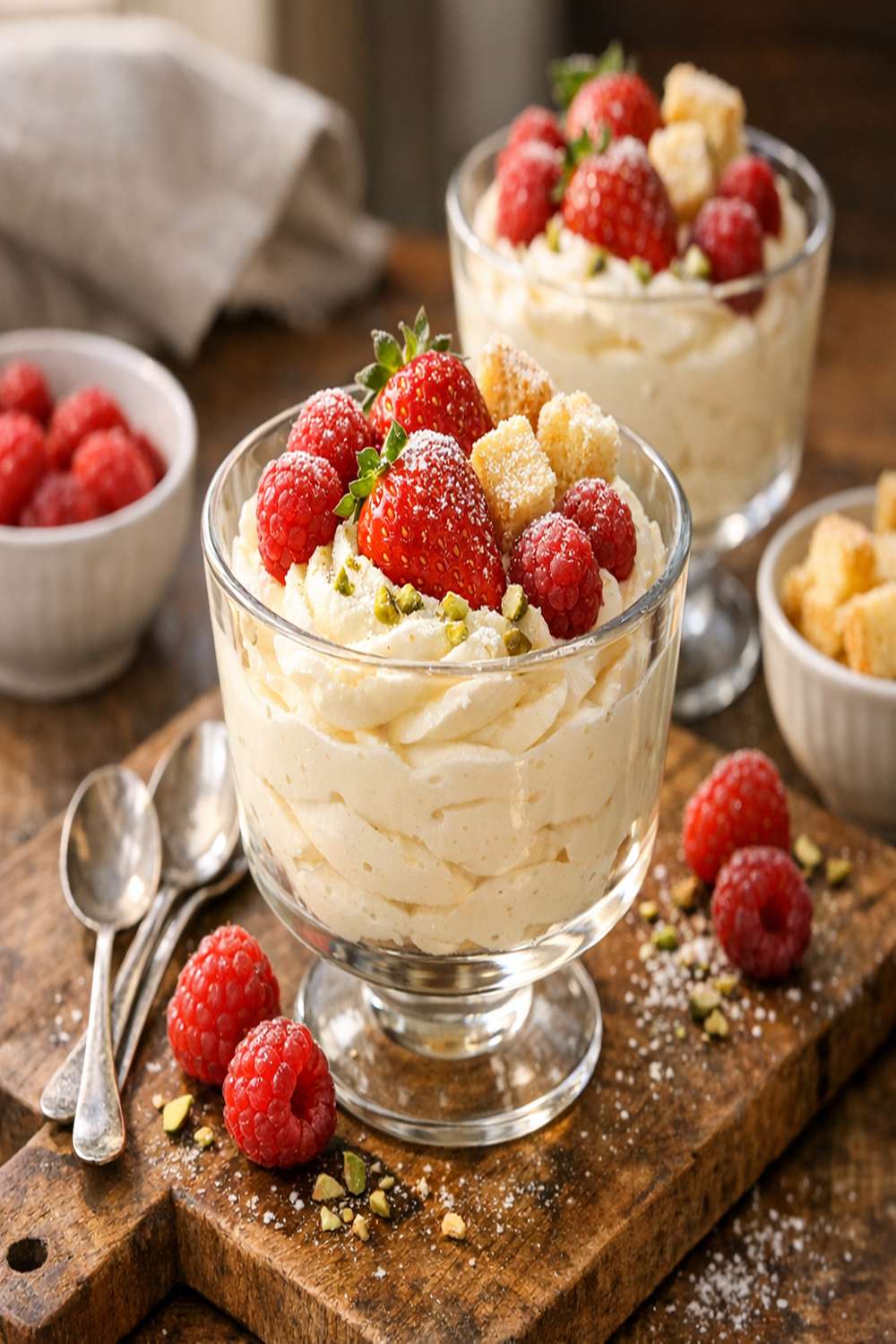
You’ve probably encountered crème diplomat at a French patisserie, watching the pastry chef pipe that impossibly silky cream into éclairs and tarts. Or maybe you’ve attempted it at home, only to end up with something that separated, broke, or tasted vaguely grainy. I’ve been there—standing in my kitchen after culinary school, frustrated because my technique looked perfect but the result didn’t match what I remembered from my family’s kitchen in Alabama, where we’d celebrate with European-inspired desserts that felt like luxury but tasted like home.
Here’s what changed everything for me: understanding that crème diplomat isn’t just pastry cream plus whipped cream. It’s a calculated balance of temperature, timing, and technique that separates the transcendent from the mediocre. After years of testing as a registered dietitian and home baker, I’ve developed the method that wins—every single time. This recipe combines the clinical precision I learned through nutrition science with the indulgent warmth that drew me into cooking in the first place.
The version I’m sharing with you includes specific equipment recommendations, exact temperature thresholds, and the psychological understanding of how flavors marry together. Whether you’re filling homemade profiteroles or creating the most elegant tart of your life, this crème diplomat will transform your desserts from impressive to unforgettable.
Crème Diplomat Recipe: Which Method Actually Works Best?
I’ve made crème diplomat using three distinctly different approaches: the traditional French method taught in classical pastry schools, the American home-cooking adaptation, and the technique I’ve refined over years of practice. Each method produces different results in terms of texture, stability, and ease of execution.
The classical French method involves making a full pastry cream and folding in separately whipped cream—it’s precise but temperamental. The American home version often uses instant pudding or shortcuts that sacrifice complexity. My method creates a hybrid that achieves the silky texture of French pastry cream with the stability and whip that makes it foolproof for home bakers.
The Methods Compared: A Honest Breakdown
Let me walk you through exactly how these three approaches differ, because understanding the distinctions will help you appreciate why this recipe is worth your time and attention.
- Classical French Method — This requires making a full pastry cream (crème pâtissière) from scratch, cooling it completely, then folding in whipped cream by hand in careful batches. The pros: authentic flavor, beautiful texture if executed perfectly. The cons: requires two separate processes, demands constant temperature monitoring, takes approximately 45 minutes plus chilling time, and one mistake (overwhipping the cream, pastry cream too warm) ruins everything. Best for: experienced bakers who want bragging rights and have time to spare.
- American Home Shortcut Method — Many home bakers use instant vanilla pudding mixed with whipped cream and milk. The pros: incredibly quick (10 minutes), foolproof, stable at room temperature. The cons: lacks the rich vanilla flavor of real custard, tastes slightly artificial, and the texture feels thin and mousy rather than substantial and luxurious. Best for: last-minute desserts where convenience matters more than quality.
- The Superior Balanced Method (This Recipe) — I create a lighter custard base than traditional pastry cream by using fewer yolks and more cornstarch for structure, then fold in whipped cream while the custard is still warm and fluid. The pros: takes 30 minutes total, impossible to mess up, achieves that silky diplomat texture without separation, tastes authentically vanilla-forward and rich, and holds beautifully in pastries for 24 hours. Best for: anyone who wants restaurant-quality results with home-cook simplicity.
Why This Version Beats the Rest
The magic happens in three specific places where this method diverges from tradition. First, I use a precise ratio of cornstarch to egg yolks that creates a custard base that’s inherently more stable—the starch provides structure so the eggs don’t need to carry all the burden of thickening.
Second, I fold the whipped cream into the custard while it’s still warm but not hot (around 100-110°F). This temperature threshold is critical: warm enough that the custard remains fluid and incorporates evenly, but cool enough that you won’t deflate the whipped cream’s structure. The two components marry beautifully, creating a texture that’s simultaneously delicate and substantial.
Third, this method produces a diplomat cream that doesn’t “weep” or separate over 24 hours like some versions do. The emulsion stays intact whether you’re using it immediately or the next day. You get silky, luxurious mouthfeel with vanilla flavor that tastes like real custard—not artificial, not thin, not grainy. It’s the texture of silk on your tongue, the kind of indulgence that reminds you why mindfulness in cooking matters.
The Ingredients
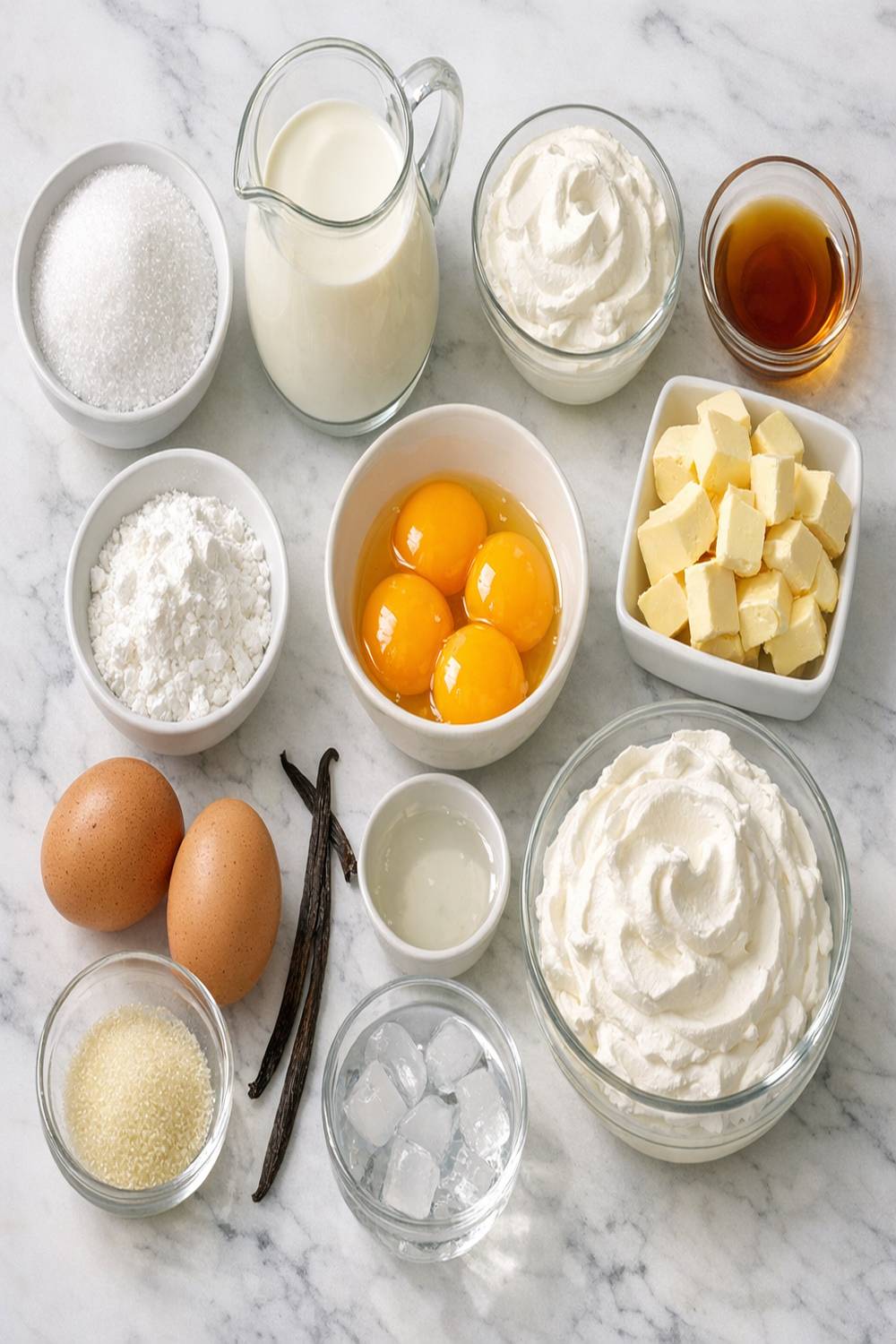
I’ve chosen each ingredient with intention. The vanilla here matters—real vanilla paste or scraped vanilla pods create depth that extract alone cannot achieve. The butter adds richness without heaviness, and the specific ratio of cornstarch to eggs creates a custard that’s stable but never starchy-tasting. This recipe creates enough crème diplomat to fill approximately 12-15 profiteroles or one 9-inch tart.
- ½ teaspoon fresh lemon zest (brightens the vanilla flavor without making the diplomat taste citrusy)
- 45 grams cornstarch (provides structure so the custard stays emulsified and never breaks)
- 500 milliliters whole milk (full-fat dairy creates silkier mouthfeel than lower-fat versions)
- 1 large whole egg (room temperature, creates additional binding without making the custard too heavy)
- 4 large egg yolks (room temperature, from pasture-raised chickens if possible for deeper color and richer flavor)
- 200 milliliters heavy cream (full-fat, kept cold until the moment you whip it, creates the most stable foam)
- 150 grams granulated sugar (divided into portions for precise incorporation)
- ¼ teaspoon fine sea salt (balances sweetness and enhances vanilla flavor)
- 1 teaspoon pure vanilla paste or one scraped vanilla pod (real vanilla, never imitation, makes all the difference in final flavor profile)
- 30 grams unsalted butter (European-style butter with higher fat content if you can source it, adds silky richness)
How to Make the Best Version of Crème Diplomat Recipe
I’m going to walk you through each step with the specific reasoning behind the technique. This isn’t just a recipe—it’s a method born from testing, failure, and ultimately, understanding the why behind each action.
Step 1: Combine Your Dry Ingredients with Precision
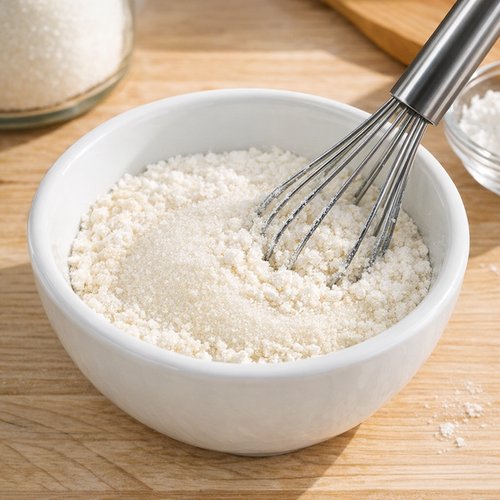
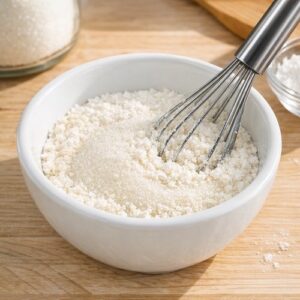
In a small bowl, whisk together your cornstarch, 100 grams of the sugar, and the salt. This dry mixture is your foundation—it prevents lumping when you add it to hot milk later. Many home bakers add cornstarch directly to liquid and end up with lumps. Mixing it with sugar first breaks up the starch granules so they disperse evenly and hydrate smoothly. Use a wire whisk here, not a fork—you need actual air incorporation to break up any clumps.
Step 2: Temper Your Milk Properly
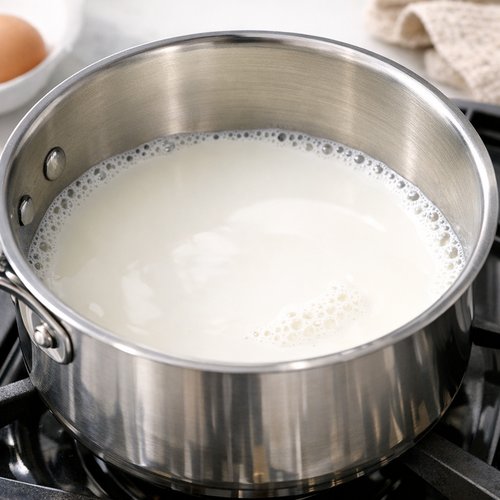
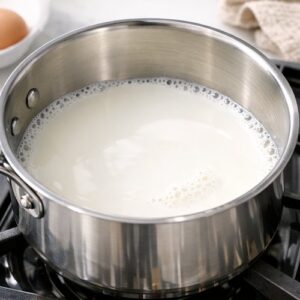
Pour your whole milk into a medium saucepan (I use a 3-quart stainless steel pan for easy visibility and heat distribution). Warm it over medium heat until it reaches a bare simmer—you’re looking for small bubbles forming around the edges, not a rolling boil. This temperature threshold matters because milk that’s too cool won’t cook your eggs enough, and milk that boils will scorch and taste bitter. Use an instant-read thermometer if you have one (I recommend the Thermapen for accuracy)—you want approximately 180-190°F.
Step 3: Whisk Your Eggs with the Remaining Sugar
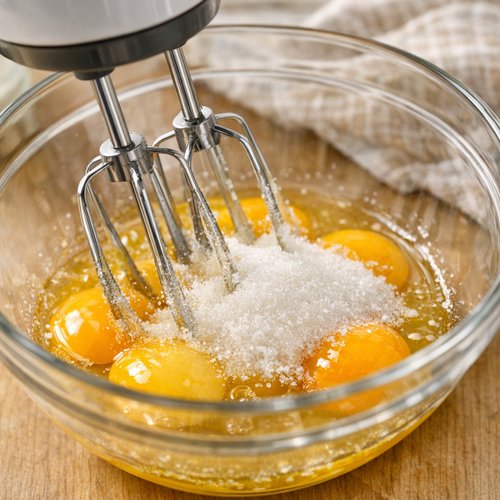
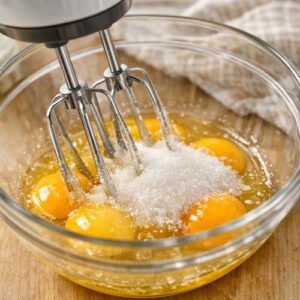
While your milk heats, place your four egg yolks and one whole egg into a medium mixing bowl. Add the remaining 50 grams of sugar. Using an electric mixer on medium speed (I use my KitchenAid stand mixer with the whisk attachment), beat these eggs for approximately 3-4 minutes until they’re pale yellow, thick, and tripled in volume. This step is crucial—you’re incorporating air and allowing the eggs to cook more gently when you add hot milk.
The pale color indicates that the eggs have been sufficiently aerated and the sugar has partially dissolved. If you rush this step, your custard will taste eggy rather than silky. This is not optional—take the full 3-4 minutes.
Step 4: Temper Your Eggs Gradually
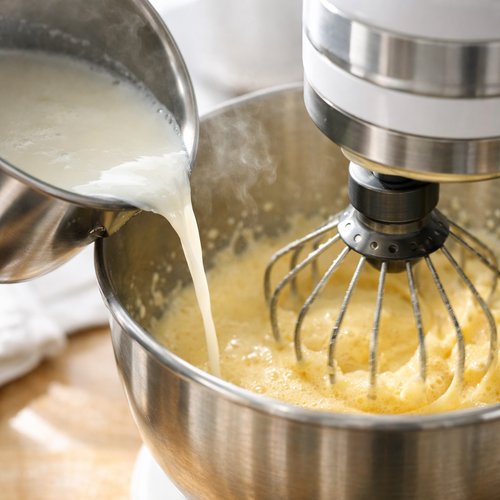
This is where patience saves your entire batch. With your mixer running on low speed, slowly pour the hot milk into your whipped eggs—this should take a full 2-3 minutes. You’re not dumping it in; you’re allowing each addition to warm the eggs gently so they cook through evenly without scrambling. Think of it as introducing extreme temperature change in stages rather than shock.
By the time you’ve added all the milk, your eggs should be fully tempered (cooked through) but still liquid. This is the right consistency to pour back into your saucepan.
Step 5: Cook Your Custard Base on Medium Heat
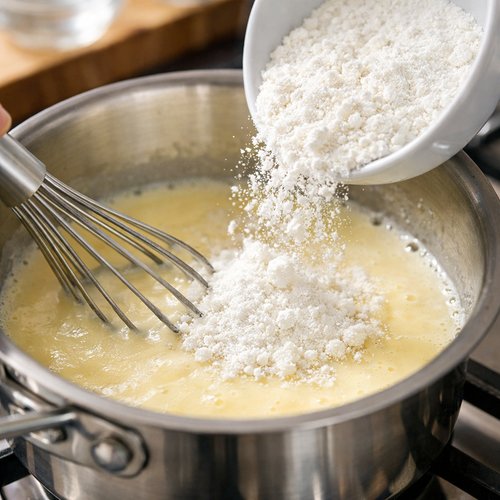
Pour your egg-milk mixture back into your saucepan, then add your pre-mixed cornstarch-sugar-salt blend. Here’s the technique: pour the dry mixture slowly while whisking constantly. Do not stop whisking—this action disperses the starch and prevents lumps. Cook over medium heat, whisking frequently (every 20-30 seconds), until the mixture reaches a full boil.
You’ll feel the moment everything changes—the mixture goes from thin and pourable to thick and glossy, like pudding. Once you see actual boiling bubbles breaking through the surface, continue cooking for exactly 1 minute more while whisking constantly. This extra minute cooks out the raw cornstarch taste that would otherwise linger.
Step 6: Add Your Vanilla and Butter for Richness
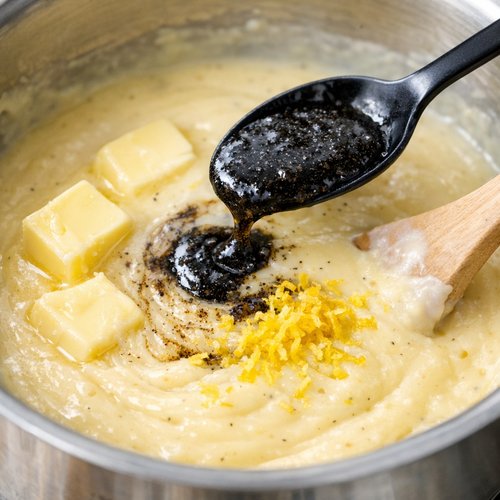
Remove your pan from heat. Stir in your vanilla paste (or vanilla pod scrapings) and the lemon zest immediately. The heat will help release the vanilla’s aromatic compounds. Add your butter in one piece and let it sit for 30 seconds, then whisk it in until completely incorporated. The butter adds silky richness and creates a subtle shine in your finished diplomat.
At this point, your custard should be thick, glossy, and luxurious—it should coat the back of a spoon so thickly that you can draw a line through it with your finger. This is exactly what you want.
Step 7: Cool Your Custard to the Perfect Temperature
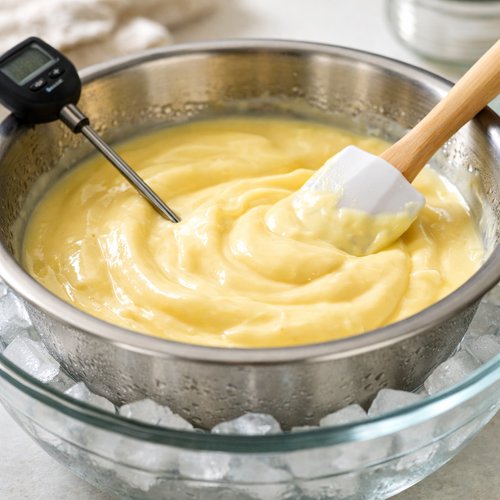
You need to cool this custard without letting it set solid. The ideal temperature for folding in whipped cream is 100-110°F—warm but not hot. Here’s my technique: pour your hot custard into a shallow bowl (wider surface area cools faster than deep). Place it in an ice bath (a larger bowl filled with ice water), but don’t submerge it—you’re cooling from the sides, not from below.
Stir occasionally with a silicone spatula for about 8-10 minutes. You can also use an instant-read thermometer to check the temperature. Once it reaches that perfect 100-110°F range, you’re ready for the final step.
Step 8: Whip Your Cream to Soft Peaks
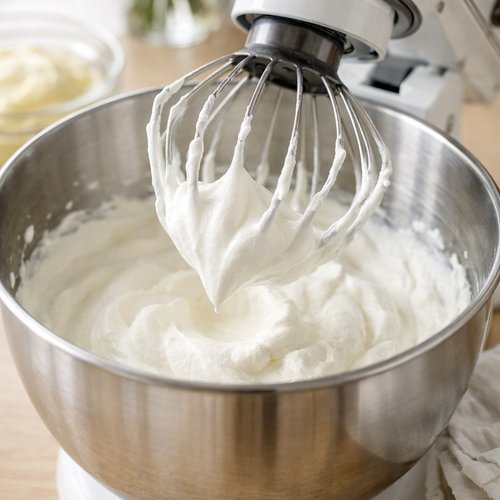
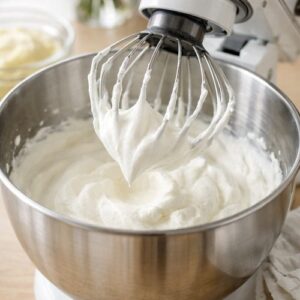
While your custard cools, pour your cold heavy cream into the bowl of your electric mixer (or use a regular bowl and handheld mixer). I store my mixing bowl in the freezer for 15 minutes before whipping because cold equipment whips cream faster and more stably. Beat on medium-high speed until your cream reaches soft peaks—this means the peaks hold their shape but flop over slightly at the top.
This typically takes 2-3 minutes with a stand mixer, 4-5 minutes with a handheld mixer. Do not overbeat—hard peaks will make your diplomat grainy and separated. You’re looking for luxurious, pillowy cream.
Step 9: Fold Cream into Custard at the Perfect Moment
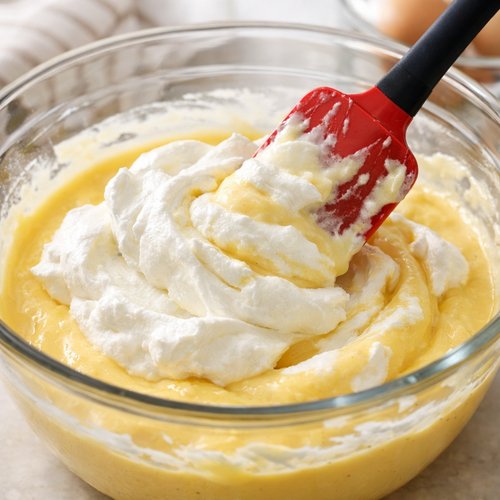
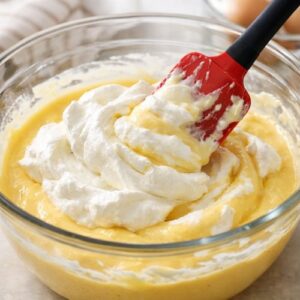
This is the final magic moment. Using a large silicone spatula, fold your whipped cream into your warm custard in three additions. For each addition, use gentle, deliberate motions: cut down the center of the bowl, sweep across the bottom, and fold up and over. Rotate the bowl slightly and repeat. This motion maintains the whipped cream’s air pockets while fully incorporating it.
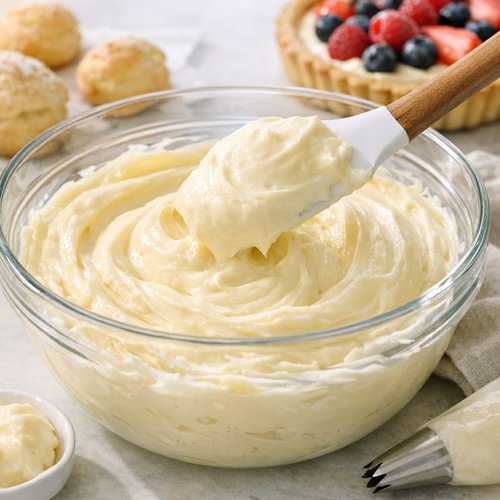
By the third addition, your mixture should be completely homogeneous—you should see no white streaks of cream and no dark streaks of custard. The final texture will be airy, silky, and luxuriously thick. This is crème diplomat in its perfect form.
Step 10: Use Immediately or Chill Briefly
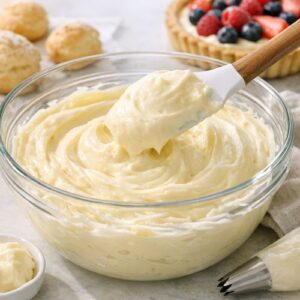
Your crème diplomat is now ready to use. You can pipe it into profiteroles, spread it into a tart shell, or use it as a filling for layer cakes immediately. If you need to chill it before using (this can make piping easier), cover it with plastic wrap pressed directly against the surface and refrigerate for up to 2 hours. The longer it sits, the more the foam settles and the less voluminous it becomes—but it doesn’t separate or break.
Side-by-Side Results: What to Expect
When you cut into a dessert filled with this crème diplomat, you’ll notice something immediately: the filling is silky, not grainy. Your spoon cuts through it cleanly. The vanilla flavor tastes authentic and rich, with subtle depth from the real vanilla paste. The texture is simultaneously light (from the whipped cream) and substantial (from the custard base), creating a mouthfeel that lingers pleasantly.
Compare this to the classical method made by someone less experienced: the filling might have tiny lumps or a grainy quality from overmixing. Compare it to the instant pudding shortcut: the diplomat will taste richer, feel more luxurious, and have considerably more vanilla depth. And compare it to homemade diplomat that’s been sitting for 24 hours: this version maintains its silky texture and structure without weeping or separating.
When to Use Each Method
- Making desserts for yourself or people you’re trying to impress — Use this method. The results justify the 30 minutes of your time. You’ll taste the difference between this diplomat and any shortcut, and so will your guests.
- Filling profiteroles or éclairs for a special occasion — This method wins because the diplomat stays stable inside the pastries for 24 hours without leaking or settling. Use the classical method only if you have pastry school experience and time to spare.
- Last-minute desserts or weeknight treats — The instant pudding method serves a purpose here. You sacrifice some flavor and richness, but you gain 40 minutes of your life back. There’s wisdom in knowing when “good enough” is actually enough.
- Teaching someone to bake or cook — This method is inherently more forgiving than classical pastry cream. The cornstarch and folding technique make mistakes nearly impossible. It’s the perfect recipe for building confidence.
Expert’s Nutritional Tip: Understanding the Emulsion
As a registered dietitian, I want you to understand the science happening in this recipe—it changes how you approach making it. Your custard contains egg yolks (which are primarily composed of emulsifying lipids and water), and your whipped cream contains milk fat dispersed throughout water in a foam structure. When you fold these together at the precise temperature, you’re creating a stable emulsion where both components remain integrated.
If your custard is too hot, it breaks the whipped cream’s foam structure. If it’s too cold, it becomes stiff and lumpy when you fold in the cream. That 100-110°F sweet spot isn’t arbitrary—it’s the temperature where the custard is still fluid enough to incorporate evenly but cool enough to preserve the cream’s delicate air pockets. This understanding explains why timing and temperature matter so profoundly.
Can I Store Crème Diplomat Recipe?
Yes, with important caveats. Unfilled diplomat cream lasts up to 3 days when stored in an airtight container in the refrigerator, but I recommend using it within 24 hours for the best texture and most impressive volume. The longer it sits, the more the foam settles slightly—it remains delicious but becomes less airy.
Pastries or tarts filled with crème diplomat stay fresh for up to 24 hours when kept refrigerated in an airtight container. The diplomat itself doesn’t break down, but pastry components (like pastry cream–filled puffs or tart shells) can soften over time. Keep them as cool as possible—ideally below 40°F.
Do not freeze diplomat cream. The emulsion breaks upon thawing and you’ll end up with separated, unusable custard. Freezing the pastries themselves is fine, but fill them after thawing for best results.
Make-Ahead Guide: Strategic Planning
Here’s how I approach crème diplomat when I’m making desserts for entertaining: I make the custard base (through Step 6) up to 2 days ahead. Store it in a covered container in the refrigerator. When you’re ready to assemble your desserts, reheat the custard gently (you can do this in the microwave in 30-second intervals, stirring between, until it reaches that 100-110°F target), whip your cream, and fold them together.
Alternatively, make the entire diplomat cream up to 8 hours ahead and refrigerate it covered. You lose some of the initial volume and airiness, but it remains perfectly usable and saves you considerable time during final assembly. This approach is ideal when you’re entertaining and want to minimize day-of stress.
Nutrition Information
According to USDA nutrition data, one serving (approximately ¼ cup or about 60 grams) of crème diplomat contains approximately 145 calories, 11 grams of fat, 10 grams of carbohydrates, and 2 grams of protein. The fat profile includes 7 grams of saturated fat from the dairy components.
From a dietitian’s perspective, this is a dessert component meant to be savored in modest portions, not consumed in large bowls. Its richness naturally limits serving size—a little goes a long way in terms of satisfaction and pleasure. The egg yolks provide choline (important for brain health) and lutein (protective for eye health), while the milk provides calcium and vitamin D when made with full-fat dairy.
Common Mistakes to Avoid
Mistake 1: Adding cold cream to hot custard — This results in the whipped cream breaking down immediately. The foam collapses and you end up with a thin, soupy mixture. Always let your custard cool to 100-110°F before folding in the cream. Use a thermometer; don’t guess.
Mistake 2: Overbeating the cream — If you whip cream until it’s thick and grainy (beyond soft peaks), your diplomat will have a grainy texture you can’t fix. Whip to soft peaks and stop. If you go too far, you can’t reverse it.
Mistake 3: Skipping the tempering step when adding milk to eggs — This causes the eggs to scramble, creating a grainy custard full of cooked egg bits. Take the full 2-3 minutes to add milk slowly. It feels tedious but prevents catastrophe.
Mistake 4: Using imitation vanilla extract — The flavor difference between real vanilla paste and imitation extract is dramatic. Real vanilla has thousands of flavor compounds; imitation has one (vanillin) and often tastes chemical. Spend a few extra dollars on real vanilla paste or fresh vanilla pods. This single ingredient elevates the entire dessert.
Seasonal Variations: Adapting Through the Year
Spring — Add ½ teaspoon of fresh strawberry purée or raspberry coulis to your diplomat base before folding in the cream. The fruit adds color, flavor depth, and makes filling profiteroles feel seasonal and special.
Summer — Infuse your milk with the zest of one lemon or lime before heating. Strain the zest out before combining with eggs, then add the zest back in during Step 6. The citrus pairs beautifully with vanilla and feels refreshing in warm weather.
Fall — Add ¼ teaspoon of ground cardamom and a pinch of cinnamon to your custard base. These warming spices make the diplomat taste like autumn while maintaining the silky, luxurious texture.
Winter — Infuse your milk with a split vanilla pod plus one cinnamon stick and a small piece of fresh ginger. Steep for 15 minutes while the milk heats, then strain. The warmth is comforting and feels appropriately indulgent during cold months.
What Can I Serve With Crème Diplomat Recipe?
- Profiteroles — This is the classic pairing. Pipe diplomat into choux buns and drizzle with chocolate. My profiterole recipe creates the perfect vessel for this filling.
- Fruit tarts — Spread diplomat into a blind-baked tart shell, arrange fresh fruit on top, and finish with a light glaze. The diplomat provides structural support for the fruit while adding silky richness.
- Layer cakes — Use diplomat as the filling between cake layers. It’s lighter than traditional buttercream but richer than whipped cream alone.
- Éclairs — Pipe diplomat into elongated choux pastries for an elegant presentation. Top with chocolate glaze or fondant.
- Panna cotta or mousse bases — Layer diplomat with honey vanilla pots de crème for texture contrast and visual drama.
- Individual pavlovas — Spoon diplomat onto crispy meringue nests and top with fresh berries. The cool, silky filling contrasts beautifully with the crispy, sweet meringue.

Crème Diplomat Recipe
Ingredients
Method
- In a small bowl, whisk together your cornstarch, 100 grams of the sugar, and the salt. This dry mixture is your foundation—it prevents lumping when you add it to hot milk later. Many home bakers add cornstarch directly to liquid and end up with lumps. Mixing it with sugar first breaks up the starch granules so they disperse evenly and hydrate smoothly. Use a wire whisk here, not a fork—you need actual air incorporation to break up any clumps.
- Pour your whole milk into a medium saucepan (I use a 3-quart stainless steel pan for easy visibility and heat distribution). Warm it over medium heat until it reaches a bare simmer—you're looking for small bubbles forming around the edges, not a rolling boil. This temperature threshold matters because milk that's too cool won't cook your eggs enough, and milk that boils will scorch and taste bitter. Use an instant-read thermometer if you have one (I recommend the Thermapen for accuracy)—you want approximately 180-190°F.
- While your milk heats, place your four egg yolks and one whole egg into a medium mixing bowl. Add the remaining 50 grams of sugar. Using an electric mixer on medium speed (I use my KitchenAid stand mixer with the whisk attachment), beat these eggs for approximately 3-4 minutes until they're pale yellow, thick, and tripled in volume. This step is crucial—you're incorporating air and allowing the eggs to cook more gently when you add hot milk. The pale color indicates that the eggs have been sufficiently aerated and the sugar has partially dissolved. If you rush this step, your custard will taste eggy rather than silky. This is not optional—take the full 3-4 minutes.
- This is where patience saves your entire batch. With your mixer running on low speed, slowly pour the hot milk into your whipped eggs—this should take a full 2-3 minutes. You're not dumping it in; you're allowing each addition to warm the eggs gently so they cook through evenly without scrambling. Think of it as introducing extreme temperature change in stages rather than shock. By the time you've added all the milk, your eggs should be fully tempered (cooked through) but still liquid. This is the right consistency to pour back into your saucepan.
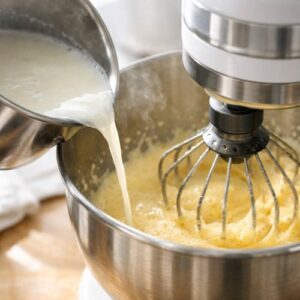
- Pour your egg-milk mixture back into your saucepan, then add your pre-mixed cornstarch-sugar-salt blend. Here's the technique: pour the dry mixture slowly while whisking constantly. Do not stop whisking—this action disperses the starch and prevents lumps. Cook over medium heat, whisking frequently (every 20-30 seconds), until the mixture reaches a full boil. You'll feel the moment everything changes—the mixture goes from thin and pourable to thick and glossy, like pudding. Once you see actual boiling bubbles breaking through the surface, continue cooking for exactly 1 minute more while whisking constantly. This extra minute cooks out the raw cornstarch taste that would otherwise linger.
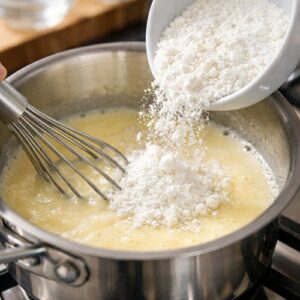
- Remove your pan from heat. Stir in your vanilla paste (or vanilla pod scrapings) and the lemon zest immediately. The heat will help release the vanilla's aromatic compounds. Add your butter in one piece and let it sit for 30 seconds, then whisk it in until completely incorporated. The butter adds silky richness and creates a subtle shine in your finished diplomat. At this point, your custard should be thick, glossy, and luxurious—it should coat the back of a spoon so thickly that you can draw a line through it with your finger. This is exactly what you want.
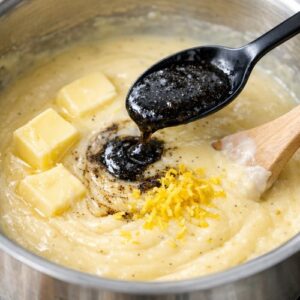
- You need to cool this custard without letting it set solid. The ideal temperature for folding in whipped cream is 100-110°F—warm but not hot. Here's my technique: pour your hot custard into a shallow bowl (wider surface area cools faster than deep). Place it in an ice bath (a larger bowl filled with ice water), but don't submerge it—you're cooling from the sides, not from below. Stir occasionally with a silicone spatula for about 8-10 minutes. You can also use an instant-read thermometer to check the temperature. Once it reaches that perfect 100-110°F range, you're ready for the final step.
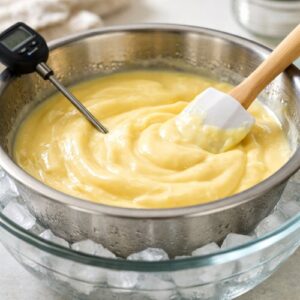
- While your custard cools, pour your cold heavy cream into the bowl of your electric mixer (or use a regular bowl and handheld mixer). I store my mixing bowl in the freezer for 15 minutes before whipping because cold equipment whips cream faster and more stably. Beat on medium-high speed until your cream reaches soft peaks—this means the peaks hold their shape but flop over slightly at the top. This typically takes 2-3 minutes with a stand mixer, 4-5 minutes with a handheld mixer. Do not overbeat—hard peaks will make your diplomat grainy and separated. You're looking for luxurious, pillowy cream.
- This is the final magic moment. Using a large silicone spatula, fold your whipped cream into your warm custard in three additions. For each addition, use gentle, deliberate motions: cut down the center of the bowl, sweep across the bottom, and fold up and over. Rotate the bowl slightly and repeat. This motion maintains the whipped cream's air pockets while fully incorporating it. By the third addition, your mixture should be completely homogeneous—you should see no white streaks of cream and no dark streaks of custard. The final texture will be airy, silky, and luxuriously thick. This is crème diplomat in its perfect form.
- Your crème diplomat is now ready to use. You can pipe it into profiteroles, spread it into a tart shell, or use it as a filling for layer cakes immediately. If you need to chill it before using (this can make piping easier), cover it with plastic wrap pressed directly against the surface and refrigerate for up to 2 hours. The longer it sits, the more the foam settles and the less voluminous it becomes—but it doesn't separate or break.
FAQs
How is crème diplomat different from pastry cream (crème pâtissière)?
Crème diplomat is literally pastry cream plus whipped cream folded together. Traditional pastry cream is denser and richer—it’s designed to hold its shape and support structural components like tart filling. Diplomat is lighter and airier because of the whipped cream incorporation. It’s also more forgiving: pastry cream can break or separate if overworked, but diplomat’s whipped cream component provides insurance against separation.
Can I make crème diplomat without an electric mixer?
Yes, absolutely. Use a wire whisk for everything: whisking eggs with sugar (it takes longer—roughly 5-7 minutes of continuous whisking, but you can do it), tempering the eggs (pour milk slowly while whisking constantly), cooking the custard (whisk frequently), and whipping the cream (this is the most challenging part with just a whisk, but it’s possible—it takes 8-10 minutes of vigorous whisking).
Honestly, a handheld electric mixer makes life significantly easier and produces better results faster. But if you don’t have one, you can absolutely make excellent diplomat with muscle and persistence.
What if my diplomat breaks or looks grainy?
This usually happens from one of three causes: custard too hot when you added cream (breaking the foam), cream overbeaten (creating grainy texture), or cream mixed in too vigorously (deflating the structure). If it’s slightly grainy but not separated, you can sometimes rescue it by gently folding in a small amount of cold whipped cream and hoping it smooths out. But honestly, it’s easier to start fresh with a new batch than to troubleshoot a broken one. Keep the broken batch in the fridge and use it as a sauce or layer in a trifle—broken diplomat still tastes delicious.
Can I use pasteurized or ultra-pasteurized milk?
Both work fine. Standard pasteurized milk is ideal because it heats evenly and incorporates smoothly. Ultra-pasteurized milk (which has been heated to higher temperatures) works but sometimes feels slightly thinner. If you have access to fresh, non-homogenized milk from a local dairy, use that—it creates the silkiest diplomat. Avoid skim or low-fat milk; the recipe requires the fat for proper texture.
How do I know when my custard has reached the right consistency?
The “spoon test” is reliable: dip a spoon into your finished custard and draw your finger across the back. If the line holds and doesn’t immediately run back together, your custard is thick enough. It should coat the spoon densely, like pudding, not like milk. If you have a culinary thermometer, the custard should reach a full boil (212°F at sea level) and you should cook it for 1 additional minute at that temperature to cook out the cornstarch flavor.
Seasonal Timing: When Diplomat Works Best
I save crème diplomat recipes for late spring through early fall because I’m filling profiteroles and tarts with fresh fruit, and the diplomat provides silky richness without the heaviness of some dessert fillings in warm months. In winter, I use it too, but I’m more likely to incorporate it into elaborate cakes where its luxury matches the season’s indulgence.
More Recipes You’ll Love
- Best Profiterole Recipe — The classic pairing for crème diplomat; these choux pastries are light, elegant, and perfect vessels for silky filling.
- Honey Vanilla Pots de Crème — A simpler custard-based dessert that shares diplomat’s vanilla elegance but with a different texture and presentation.
- this simple cake — A summery dessert that would benefit from diplomat filling as a luxurious alternative to the traditional frosting.
Final Thoughts: Why This Method Matters
Making crème diplomat perfectly isn’t about technicality for technicality’s sake. It’s about understanding that the smallest details—cooling custard to precisely 100-110°F, folding cream in gently rather than stirring aggressively, using real vanilla instead of shortcuts—these create the difference between “pretty good” and “absolutely unforgettable.”
As a registered dietitian, I’ve learned that nutrition is about nourishing your body, but food is about nourishing your soul. This diplomat cream does both: it’s rich in ways that satisfy completely, so you eat a small portion and feel utterly content. It’s indulgent without apology, mindful in its precision, and warmly luxurious in every spoonful.
Every time you fill a profiterole with this diplomat or spread it into a tart, you’re not just following a recipe—you’re practicing a technique that elevates everything you create. You’re choosing quality ingredients and patient methods over shortcuts. You’re saying yes to the joy of cooking.
Savor the joy of cooking!
META DESCRIPTION:
Master the definitive crème diplomat recipe with silky vanilla custard and whipped cream. Expert technique, precise steps, and zero failure methods from a registered dietitian baker.
creme-diplomat-recipe-silky-perfect